
Question 89
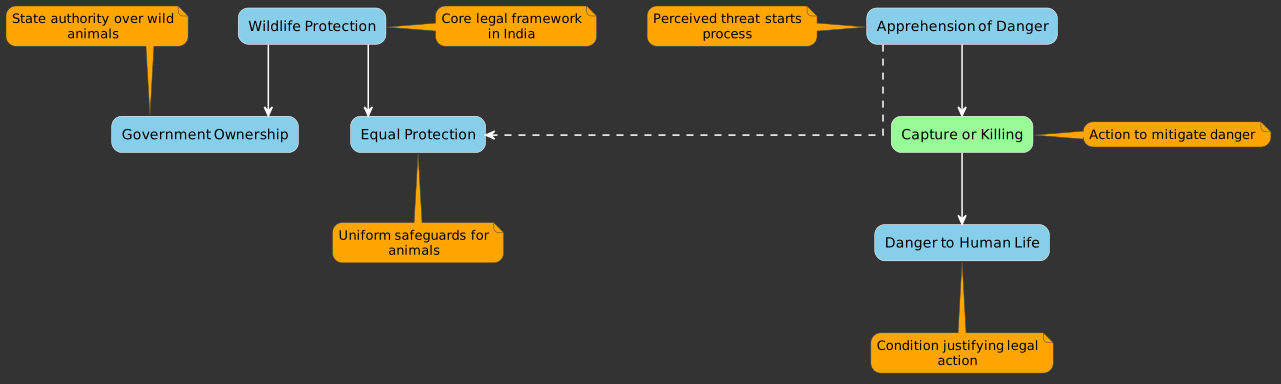
1. Wild animals are the sole property of the government.
2. When a wild animal is declared protected, such animal is entitled for equal protection whether it is found in protected areas or outside.
3. Apprehension of a protected wild animal becoming a danger to human life is sufficient ground for its capture or killing.
Which of the statements given above is/are correct?
AOptions
BSolution
Statement 1 is incorrect. While the Wild Life (Protection) Act, 1972, places the ownership and custody of wild animals with the state government (acting as a trustee for the public), it's not a literal 'sole property' in the conventional sense. The Act aims to protect wildlife and their habitats, with the state having control for conservation purposes.
Statement 2 is incorrect. While protected animals receive protection wherever they are found, the level of protection and the management interventions can differ significantly between protected areas (like National Parks and Sanctuaries) and areas outside them. 'Equal protection' is a strong term that does not fully reflect the nuances of enforcement and management across different landscapes.
Statement 3 is correct. Section 11 of the Wild Life (Protection) Act, 1972, provides provisions for hunting (which includes capturing, killing, or wounding) any wild animal if it has become dangerous to human life or is disabled or diseased beyond recovery. This acts as a ground for intervention to protect human life or for mercy killing in specific circumstances defined by the Chief Wildlife Warden.
Therefore, only statement 3 is correct.
CStrategy
For questions on environmental laws like the Wildlife Protection Act, it is important to study the specific provisions and exceptions, especially concerning issues like ownership of wild animals, varying levels of protection, and conditions for intervention (e.g., capture or killing).
DSyllabus Analysis
This question is from Environment and Ecology, specifically focusing on Indian environmental laws and wildlife protection legislation.
EQuestion Analysis
Difficult. This question requires a precise understanding of the nuances and specific sections of the Wild Life (Protection) Act, 1972, particularly concerning the legal status of wild animals and permissible interventions.