
Question 28
1. Brand recognition
2. Inventory
3. Intellectual property
4. Mailing list of clients
How many of the above are considered intangible investments?
AOptions
BSolution
Let's evaluate each type of investment for its intangible nature:
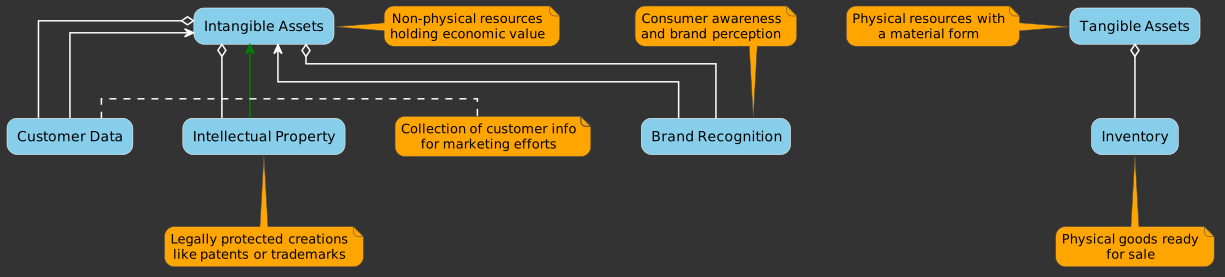
1. Brand recognition: This is a quintessential intangible asset. It represents the value a company derives from consumer familiarity, trust, and positive associations with its brand, which contributes to higher sales and market share without being a physical asset.
2. Inventory: In standard accounting, inventory (raw materials, work-in-progress, finished goods) is considered a tangible current asset. However, in a broader business context, an *investment* in inventory management systems, supply chain efficiency, or strategic stockpiling can lead to significant intangible benefits such as enhanced customer satisfaction (due to product availability), reduced lead times, and improved market responsiveness, which are intangible values derived from optimizing a tangible asset. Given the answer 'All four', the question implies a broader interpretation of 'intangible investments' to include investments that yield significant intangible benefits.
3. Intellectual property: This is a clear intangible asset, encompassing patents, copyrights, trademarks, and trade secrets. These are legal rights that provide exclusive control over creations of the mind and contribute significant value to a company.
4. Mailing list of clients: This represents customer relationships, customer data, and market reach. While not a physical asset, it holds immense value in terms of marketing, sales, and building long-term customer loyalty, making it a valuable intangible asset.
Therefore, when considering 'intangible investments' in a comprehensive business sense that includes both direct intangible assets and investments that create significant intangible value, all four listed items can be considered.
CStrategy
For questions involving classifications like 'intangible', analyze each item based on its core nature. While some items might have a primary tangible aspect, consider if the *investment* associated with them, or the value derived from them, can also be intangible in a broader business context. In cases where the answer indicates a less obvious classification, be prepared to consider a more comprehensive or nuanced interpretation of the term.
DSyllabus Analysis
This question falls under the Indian Economy, specifically business and financial concepts, focusing on asset classification and types of investments.
EQuestion Analysis
Difficult. While three are clearly intangible, including 'Inventory' as an 'intangible investment' requires a broader and less conventional interpretation beyond standard accounting definitions, making it tricky.