
66
Question 66
As per Article 368 of the Constitution of India,
the Parliament may amend any provision of
the Constitution by way of :
1. Addition
2. Variation
3. Repeal
Select the correct answer using the code given below:
1. Addition
2. Variation
3. Repeal
Select the correct answer using the code given below:
AOptions
A
A) 1 and 2 only
B
B) 2 and 3 only
C
C) 1 and 3 only
D
D) 1, 2 and 3
BSolution
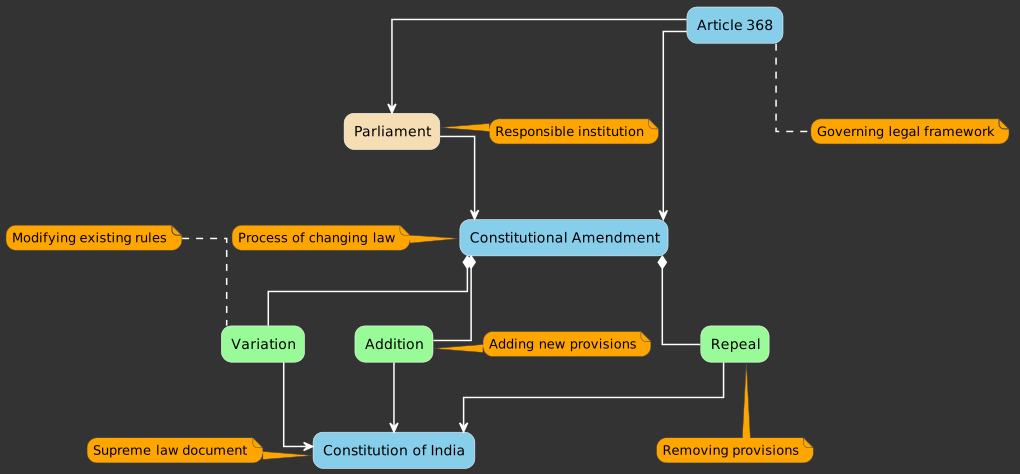
Article 368 of the Constitution of India deals with the power of Parliament to amend the Constitution and the procedure for doing so. An amendment implies changing the existing provisions, which can involve:
1. Addition: Correct. Parliament can add new provisions to the Constitution. For example, the addition of Fundamental Duties (Article 51A) or Part IXA (Municipalities).
2. Variation: Correct. Parliament can modify or change existing provisions of the Constitution. This involves altering the language, scope, or impact of an existing article or part.
3. Repeal: Correct. Parliament can repeal or delete existing provisions of the Constitution. For example, the right to property was removed as a Fundamental Right and made a legal right. This effectively repeals its status as a fundamental right from that part of the Constitution.
The term 'amendment' itself, in constitutional law, encompasses all these forms of change. The Supreme Court, in various judgments, has affirmed Parliament's power to amend the Constitution through addition, variation, or repeal, subject to the Basic Structure Doctrine.
Therefore, all three are correct.
1. Addition: Correct. Parliament can add new provisions to the Constitution. For example, the addition of Fundamental Duties (Article 51A) or Part IXA (Municipalities).
2. Variation: Correct. Parliament can modify or change existing provisions of the Constitution. This involves altering the language, scope, or impact of an existing article or part.
3. Repeal: Correct. Parliament can repeal or delete existing provisions of the Constitution. For example, the right to property was removed as a Fundamental Right and made a legal right. This effectively repeals its status as a fundamental right from that part of the Constitution.
The term 'amendment' itself, in constitutional law, encompasses all these forms of change. The Supreme Court, in various judgments, has affirmed Parliament's power to amend the Constitution through addition, variation, or repeal, subject to the Basic Structure Doctrine.
Therefore, all three are correct.
CStrategy
For questions on constitutional amendments, understand that 'amendment' is a broad term encompassing adding, changing, or removing parts of the document. This is a fundamental concept of constitutional law.
DSyllabus Analysis
Polity: Constitutional Amendment (Article 368).
EQuestion Analysis
This is a conceptual question from Indian Polity. It tests the basic understanding of what constitutes an 'amendment' under Article 368. All three options are valid ways to amend a document. Easy difficulty.