
29
Question 29
Consider the following :
1. Butterflies
2. Fish
3. Frogs
How many of the above have poisonous species among them?
1. Butterflies
2. Fish
3. Frogs
How many of the above have poisonous species among them?
AOptions
A
A) Only one
B
B) Only two
C
C) All three
D
D) None
BSolution
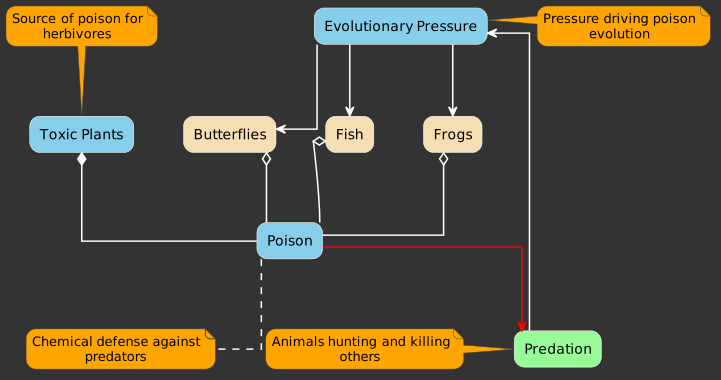
All three categories of organisms (Butterflies, Fish, and Frogs) have poisonous species among them.
1. Butterflies: Many butterfly species are poisonous or toxic, often due to sequestering toxins from the plants they feed on during their larval stage (e.g., Monarch butterflies accumulating cardenolides from milkweed). These toxins make them unpalatable to predators, and they often display warning coloration (aposematism).
2. Fish: There are numerous poisonous fish species. Some produce toxins in their flesh (e.g., pufferfish with tetrodotoxin), while others have venomous spines or glands (e.g., stonefish, lionfish). Consumption or contact with these fish can be harmful or even fatal.
3. Frogs: Many frog species, particularly those in tropical regions (e.g., poison dart frogs), produce potent toxins in their skin glands as a defense mechanism against predators. These toxins can be highly dangerous to touch or ingest.
Therefore, all three categories contain species that are poisonous.
1. Butterflies: Many butterfly species are poisonous or toxic, often due to sequestering toxins from the plants they feed on during their larval stage (e.g., Monarch butterflies accumulating cardenolides from milkweed). These toxins make them unpalatable to predators, and they often display warning coloration (aposematism).
2. Fish: There are numerous poisonous fish species. Some produce toxins in their flesh (e.g., pufferfish with tetrodotoxin), while others have venomous spines or glands (e.g., stonefish, lionfish). Consumption or contact with these fish can be harmful or even fatal.
3. Frogs: Many frog species, particularly those in tropical regions (e.g., poison dart frogs), produce potent toxins in their skin glands as a defense mechanism against predators. These toxins can be highly dangerous to touch or ingest.
Therefore, all three categories contain species that are poisonous.
CStrategy
For questions on 'poisonous' or 'venomous' animals, remember that toxicity can manifest in various ways (ingestion, contact, injection). Be aware that even common groups can have toxic members. Think broadly about defense mechanisms in the animal kingdom.
DSyllabus Analysis
Environment & Ecology: Biodiversity (Animal Classification, Defense Mechanisms, Zoology).
EQuestion Analysis
This is a factual question from Biology/Environment, testing knowledge about poisonous animals. It requires awareness that toxic species exist within common groups like butterflies, fish, and frogs. Easy to Medium difficulty.