
7
Question 7
Consider the following statements :
Statement-I :
Rainfall is one of the reasons for weathering of rocks.
Statement-II :
Rain water contains carbon dioxide in solution.
Statement-III :
Rain water contains atmospheric oxygen.
Which one of the following is correct in respect of the above statements?
Statement-I :
Rainfall is one of the reasons for weathering of rocks.
Statement-II :
Rain water contains carbon dioxide in solution.
Statement-III :
Rain water contains atmospheric oxygen.
Which one of the following is correct in respect of the above statements?
AOptions
A
A) Both Statement-II and Statement-III are correct and both of them explain Statement-I
B
B) Both Statement-II and Statement-III are correct, but only one of them explains Statement-I
C
C) Only one of the Statements II and III is correct and that explains Statement-I
D
D) Neither Statement-II nor Statement-III is correct
BSolution
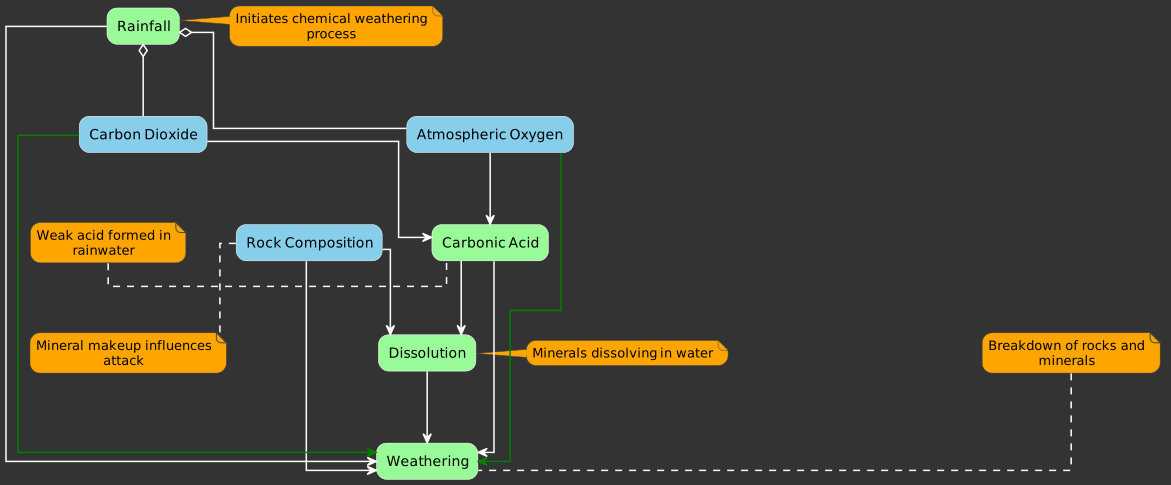
Statement-I is correct. Rainfall plays a significant role in various types of weathering, both physical and chemical. For example, direct impact can cause physical weathering, and the presence of dissolved gases in rainwater facilitates chemical weathering.
Statement-II is correct. Rainwater naturally dissolves atmospheric carbon dioxide (CO₂) to form carbonic acid (H₂CO₃), making it slightly acidic. This acidic rainwater is a primary agent of chemical weathering, particularly carbonation, which dissolves carbonate rocks like limestone.
Statement-III is correct. Rainwater also dissolves atmospheric oxygen (O₂). Dissolved oxygen is crucial for the chemical weathering process of oxidation, which is particularly effective in breaking down iron-rich minerals in rocks.
Both Statement-II and Statement-III describe the composition of rainwater (containing dissolved CO₂ and O₂) which contribute to chemical weathering (Statement-I). For instance, carbonic acid from dissolved CO₂ leads to carbonation, and dissolved O₂ leads to oxidation. Both are forms of chemical weathering directly linked to rainfall. Therefore, both Statement-II and Statement-III are correct and collectively explain Statement-I.
Thus, option A is the most appropriate choice.
Statement-II is correct. Rainwater naturally dissolves atmospheric carbon dioxide (CO₂) to form carbonic acid (H₂CO₃), making it slightly acidic. This acidic rainwater is a primary agent of chemical weathering, particularly carbonation, which dissolves carbonate rocks like limestone.
Statement-III is correct. Rainwater also dissolves atmospheric oxygen (O₂). Dissolved oxygen is crucial for the chemical weathering process of oxidation, which is particularly effective in breaking down iron-rich minerals in rocks.
Both Statement-II and Statement-III describe the composition of rainwater (containing dissolved CO₂ and O₂) which contribute to chemical weathering (Statement-I). For instance, carbonic acid from dissolved CO₂ leads to carbonation, and dissolved O₂ leads to oxidation. Both are forms of chemical weathering directly linked to rainfall. Therefore, both Statement-II and Statement-III are correct and collectively explain Statement-I.
Thus, option A is the most appropriate choice.
CStrategy
When evaluating 'explanation' questions, first determine the correctness of each statement independently. Then, assess if the explanatory statements provide a direct and sufficient cause for the first statement. In this case, understanding the chemical properties of rainwater is key.
DSyllabus Analysis
Geography: Geomorphology (Weathering Processes, Physical and Chemical Weathering, Role of Water). Environment: Basic Chemistry of Rainwater.
EQuestion Analysis
This is a conceptual question from Geomorphology with an interdisciplinary touch of basic chemistry. It requires understanding the mechanisms of chemical weathering. All three statements are correct and the latter two collectively explain the first. Medium difficulty.