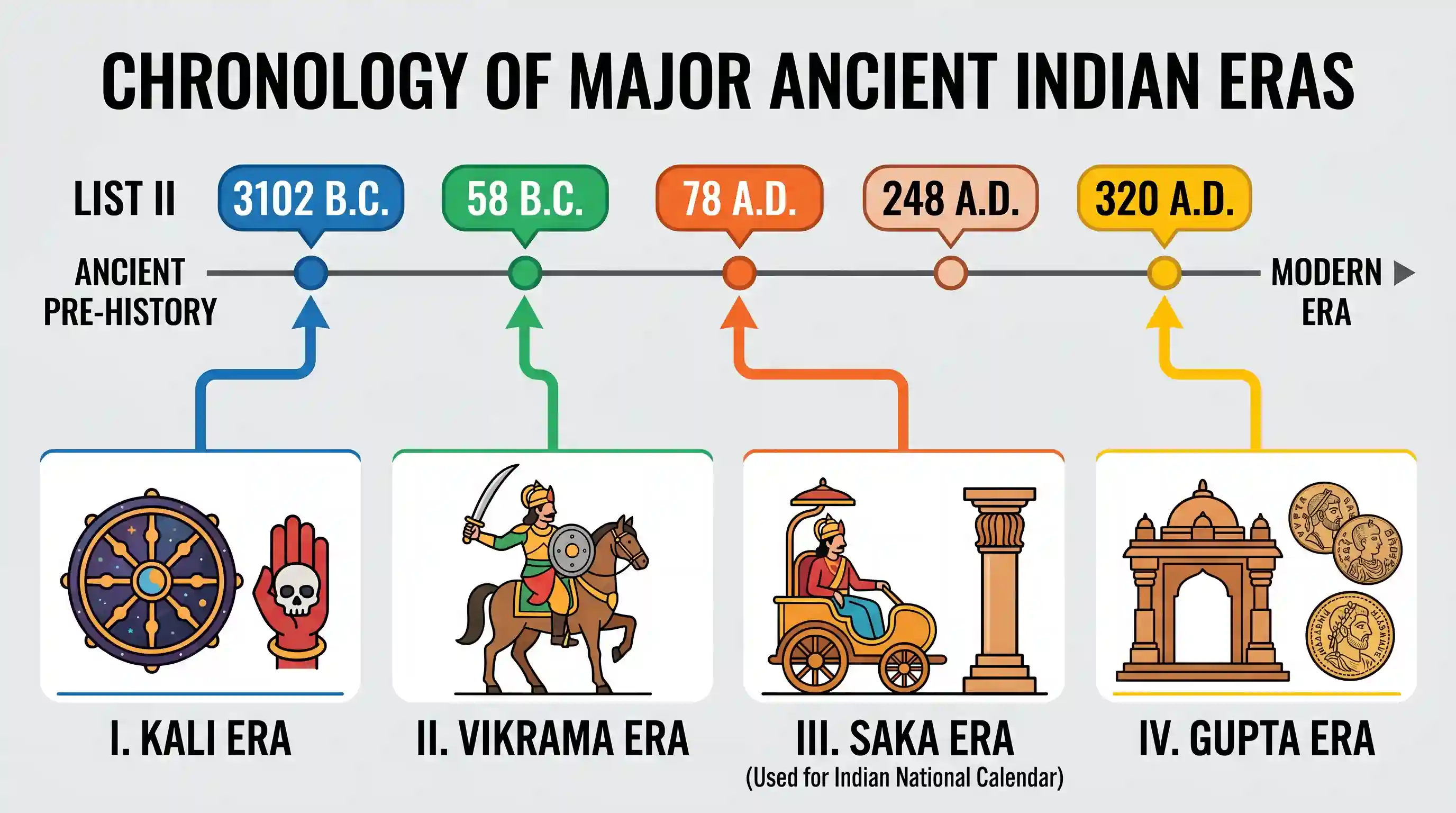
Match List I with List II and select the correct answer by using the codes given below the lists. List I (Eras) List II (I. Vikrama era A) 3102 B.C. II. Saka era B) 320 A.D. III. Gupta era C) 78 A.D. IV. Kali era D) 58 B.C. E) 248 A.D.

- AI-B, II-D, III-E, IV-A
- BI-A, II-C, III-B, IV-D
- CI-D, II-E, III-B, IV-C
- DI-D, II-C, III-B, IV-ACorrect
Explanation
The correct answer is D because it accurately matches the historical start dates of the various Indian eras.
I. Vikrama era matches with D (58 B.C.). It was founded by King Vikramaditya to commemorate his victory over the Shakas.
II. Saka era matches with C (78 A.D.). It was initiated by the Kushana king Kanishka and is currently the basis for the Indian National Calendar.
III. Gupta era matches with B (320 A.D.). This era began with the coronation of Chandragupta I, the first major ruler of the Gupta Dynasty.
IV. Kali era matches with A (3102 B.C.). According to Puranic tradition, this era marks the beginning of the Kali Yuga following the end of the Mahabharata war and the departure of Lord Krishna.
The extra date provided in the list (248 A.D.) refers to the Kalachuri era, which is not required for this specific match. Therefore, the sequence I-D, II-C, III-B, IV-A is the only correct arrangement.
Related questions
More UPSC Prelims practice from the same subject and topic.
- Prelims 1995GS1history
The word ‘Hindu’ as reference to the people of Hind (India) was first used by
- Prelims 1995GS1history
Who among the following was a Brahmavadini who composed some hymns of the Vedas?
- Prelims 1995GS1history
The original home of the gypsies was
- Prelims 1995GS1history
In Sanskrit plays written during the Gupta Period women and sudras speak
- Prelims 1995GS1history
The name by which Asoka is generally referred to in his inscriptions is
- Prelims 1995GS1history
The term Yavanapriya, mentioned in ancient Sanskrit texts, denoted