Which one of the following texts of ancient India allows divorce to a wife deserted by her husband?

- AKamasutra
- BManavadharmashastra
- CSukra Nitisara
- DArthashastraCorrect
Explanation
The correct answer is D, Arthashastra.
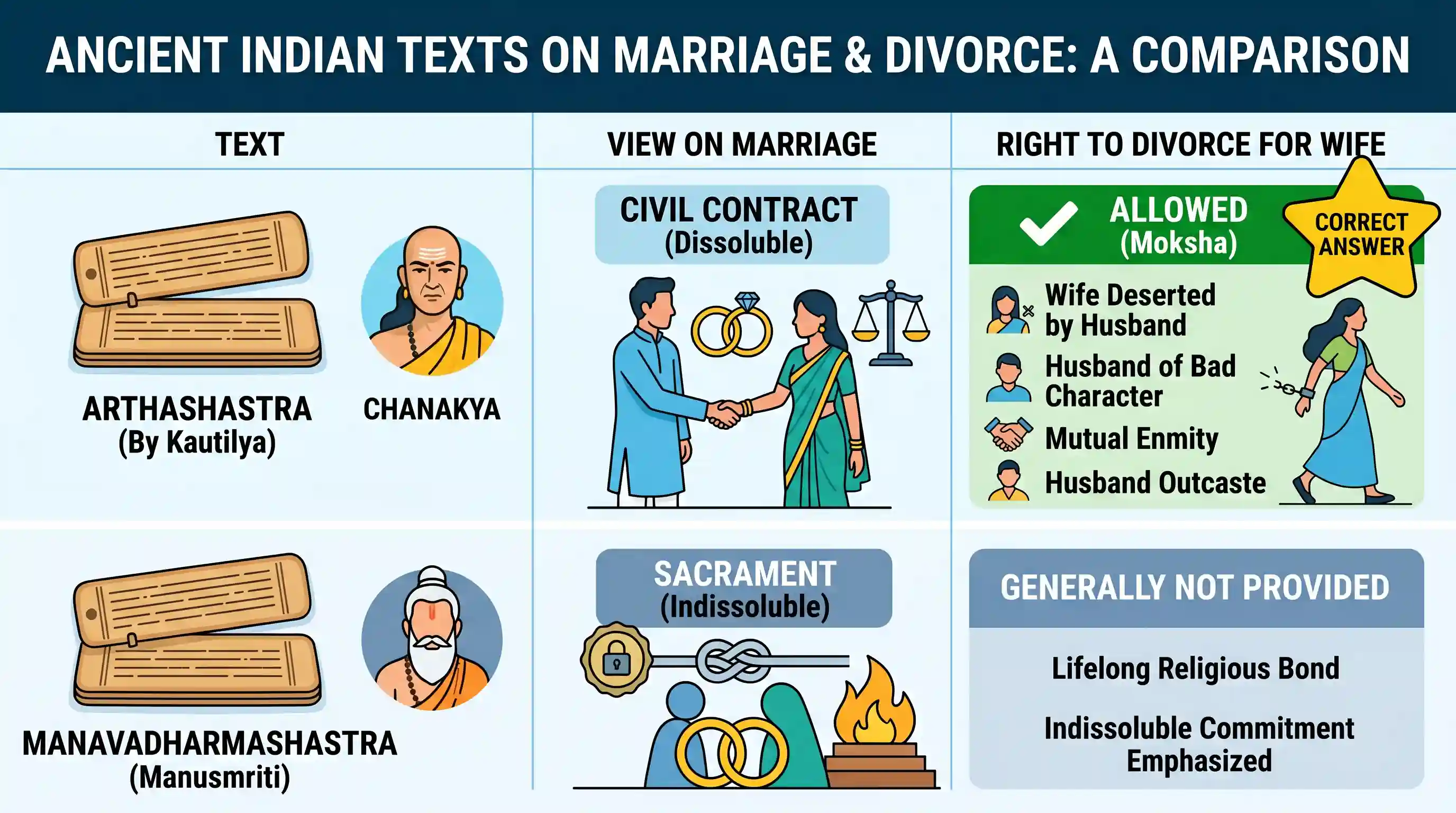
Written by Chanakya (Kautilya), the Arthashastra is a comprehensive treatise on statecraft, economic policy, and military strategy. Unlike many other ancient Indian legal texts that viewed marriage as an indissoluble sacrament, the Arthashastra recognized marriage more as a civil contract.
In the chapter concerning the duties of husband and wife, Kautilya details specific conditions under which a marriage can be dissolved. It explicitly allows a woman to seek a divorce (Moksha) if she has been deserted by her husband for a long period, if he is of bad character, or if he has become an outcaste. It also allows for mutual separation if both parties agree to it due to mutual enmity.
In contrast, texts like the Manavadharmashastra (Manusmriti) generally emphasize the lifelong bond of marriage and do not formally provide for divorce in the same legal manner.
Related questions
More UPSC Prelims practice from the same subject and topic.
- Prelims 1996GS1history
According to ancient Indian cosmogonic ideas the sequential order of the cycle of four aeons (Yugas) is
- Prelims 1996GS1history
The river most mentioned in early Vedic literature is
- Prelims 1996GS1history
In the context of ancient Indian society, which one of the following terms does not belong to the category of the other three?
- Prelims 1996GS1history
Who among the following is known for his work on medicine during the Gupta period?
- Prelims 1996GS1history
Match List I with List II and select the correct answer by using the codes given below the lists: List I I. Visakhadatta II. Varahamihira III. Charaka IV. Brahmagupta List II A) Medicine B) Drama C) A…
- Prelims 1996GS1history
Which one of the following was a Saiva sect in ancient India?