Which one of the following techniques can be used to establish the paternity of a child?

- AProtein analysis
- BChromosome counting
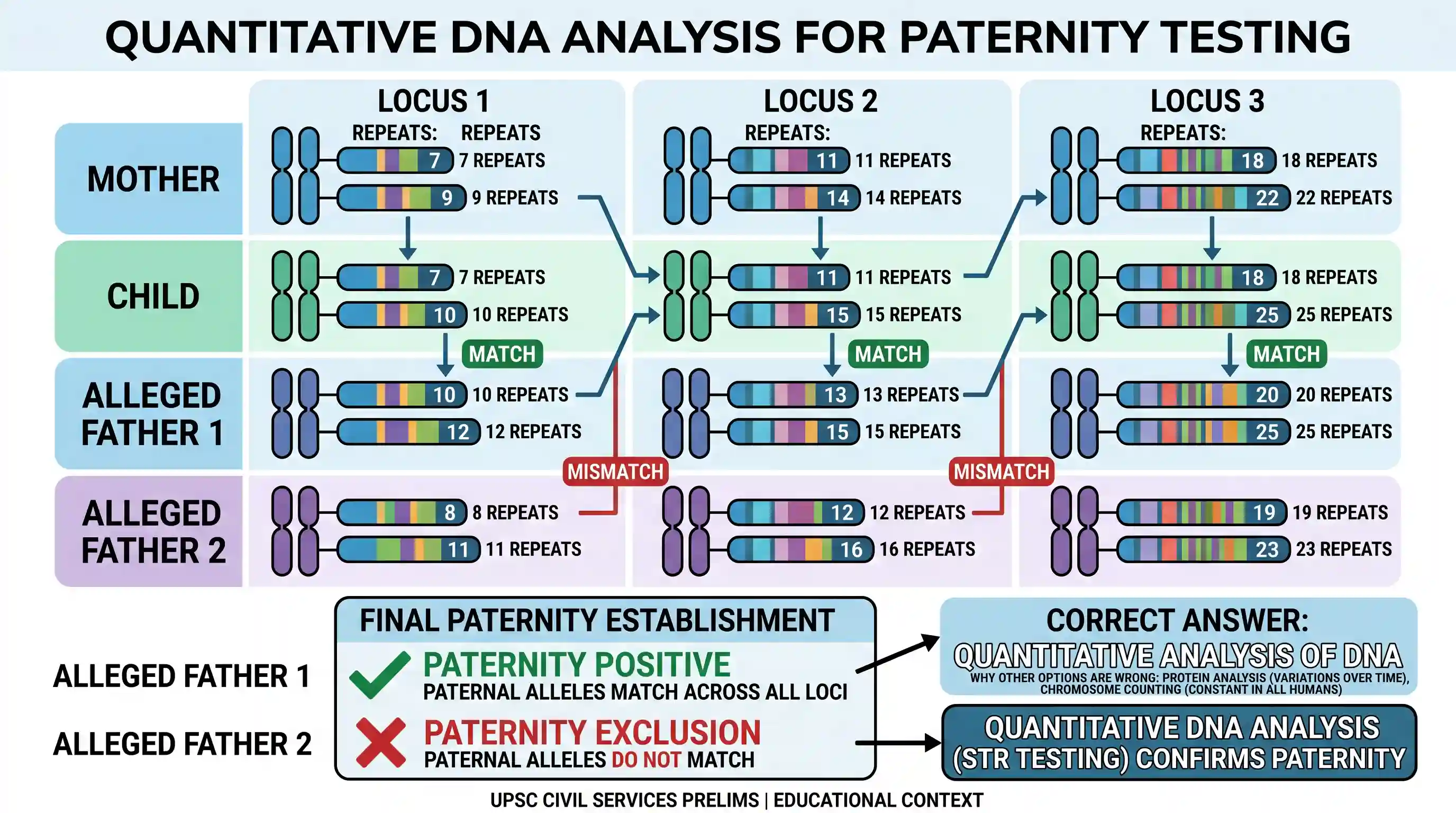
- CQuantitative analysis of DNACorrect
- DDNA finger-printing
Explanation
The correct answer is C because paternity testing relies on the quantitative comparison of specific DNA sequences called Short Tandem Repeats. While DNA fingerprinting is the general process used, the technical mechanism involves analyzing the precise number of these repeating units at specific locations on the chromosomes. By measuring and comparing these quantities between the child, the mother, and the alleged father, scientists can mathematically establish biological parenthood. Protein analysis and chromosome counting are ineffective because proteins vary based on environmental factors and all humans typically have the same number of chromosomes regardless of parentage.
Related questions
More UPSC Prelims practice from the same subject and topic.
- Prelims 1997GS1science-and-technology
The sequencing of the entire genome (the totality of all genes) of an organism was completed in 1996. The organism was
- Prelims 1997GS1science-and-technology
Which one of the following was used as a chemical weapon in the First World War?
- Prelims 1997GS1science-and-technology
The world’s fastest computer has been able to perform (as of Dec. 1996)
- Prelims 1997GS1science-and-technology
The tendency of a liquid drop to contract and occupy minimum area is due to
- Prelims 1997GS1science-and-technology
Which one of the following is a vector quantity?
- Prelims 1997GS1science-and-technology
The working principle of a washing machine is