Which one of the following was used as a chemical weapon in the First World War?

- ACarbon monoxide
- BHydrogen cyanide
- CMustard gasCorrect
- DWater gas
Explanation
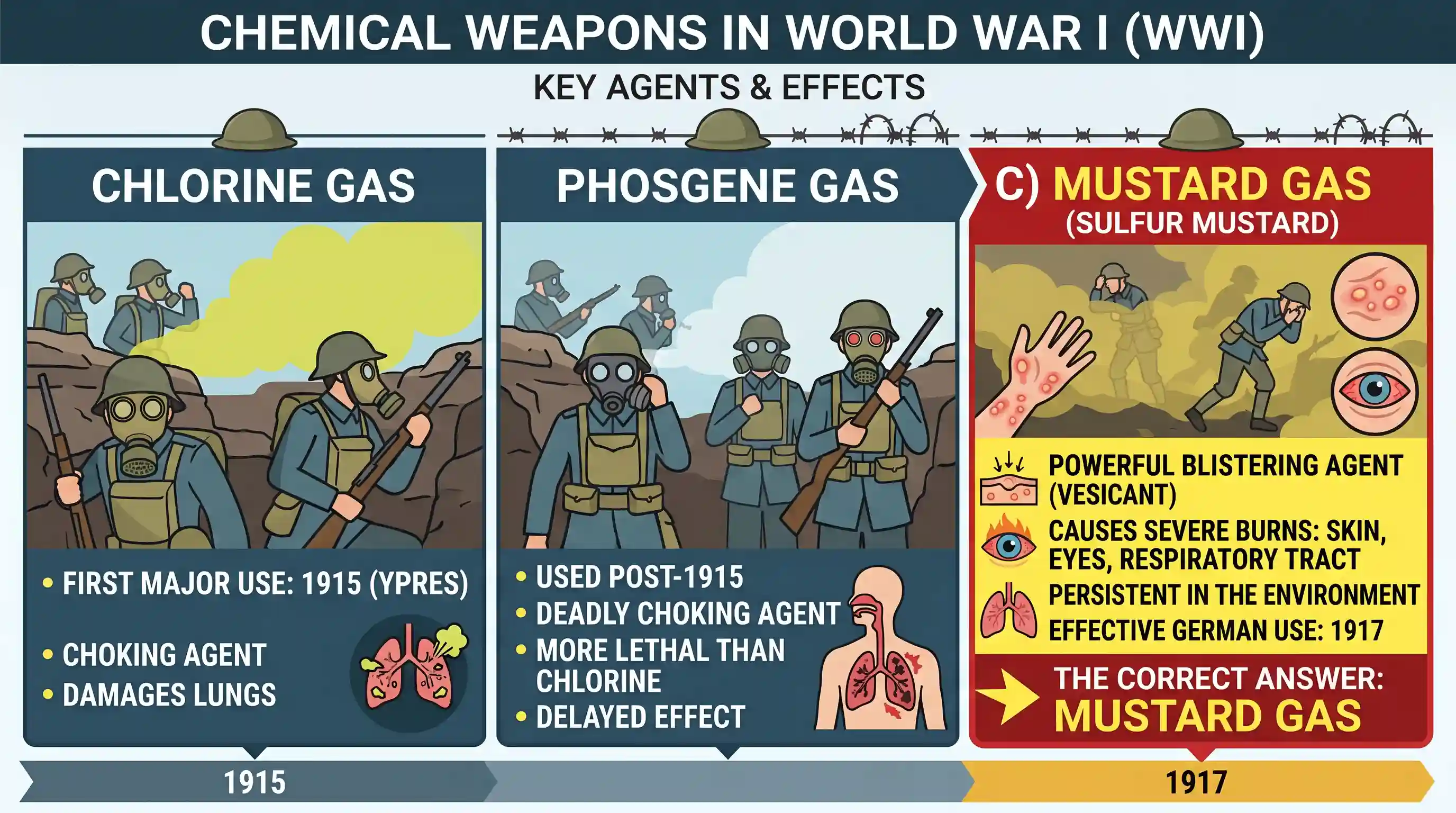
The correct answer is C because mustard gas, technically known as sulfur mustard, was one of the most widely used and lethal chemical weapons during World War I. It was first used effectively by the German military in 1917. Mustard gas is a powerful blistering agent that causes severe burns to the skin, eyes, and respiratory tract. While other gases like chlorine and phosgene were also used, mustard gas became the most iconic chemical weapon of the conflict due to its persistence in the environment and the horrific nature of the injuries it caused. Carbon monoxide, hydrogen cyanide, and water gas were not used as primary chemical warfare agents on the battlefields of the First World War.
Related questions
More UPSC Prelims practice from the same subject and topic.
- Prelims 1997GS1science-and-technology
The tendency of a liquid drop to contract and occupy minimum area is due to
- Prelims 1997GS1science-and-technology
Which one of the following is a vector quantity?
- Prelims 1997GS1science-and-technology
The working principle of a washing machine is
- Prelims 1997GS1science-and-technology
The characteristic odour of garlic is due to
- Prelims 1997GS1science-and-technology
Which one of the following is an active component of oil of clove?
- Prelims 1997GS1science-and-technology
The most reactive among the halogens is