Assertion (A): The Gandhara School of art bears the mark of Hellenistic influence. Reason (R): Hinayana form was influenced by that art.

- ABoth A and R are true, and R is the correct explanation of A
- BBoth A and R are true, but R is NOT a correct explanation of A
- CA is true, but R is falseCorrect
- DA is false, but R is true
Explanation
The correct answer is C because Assertion A is true while Reason R is false.
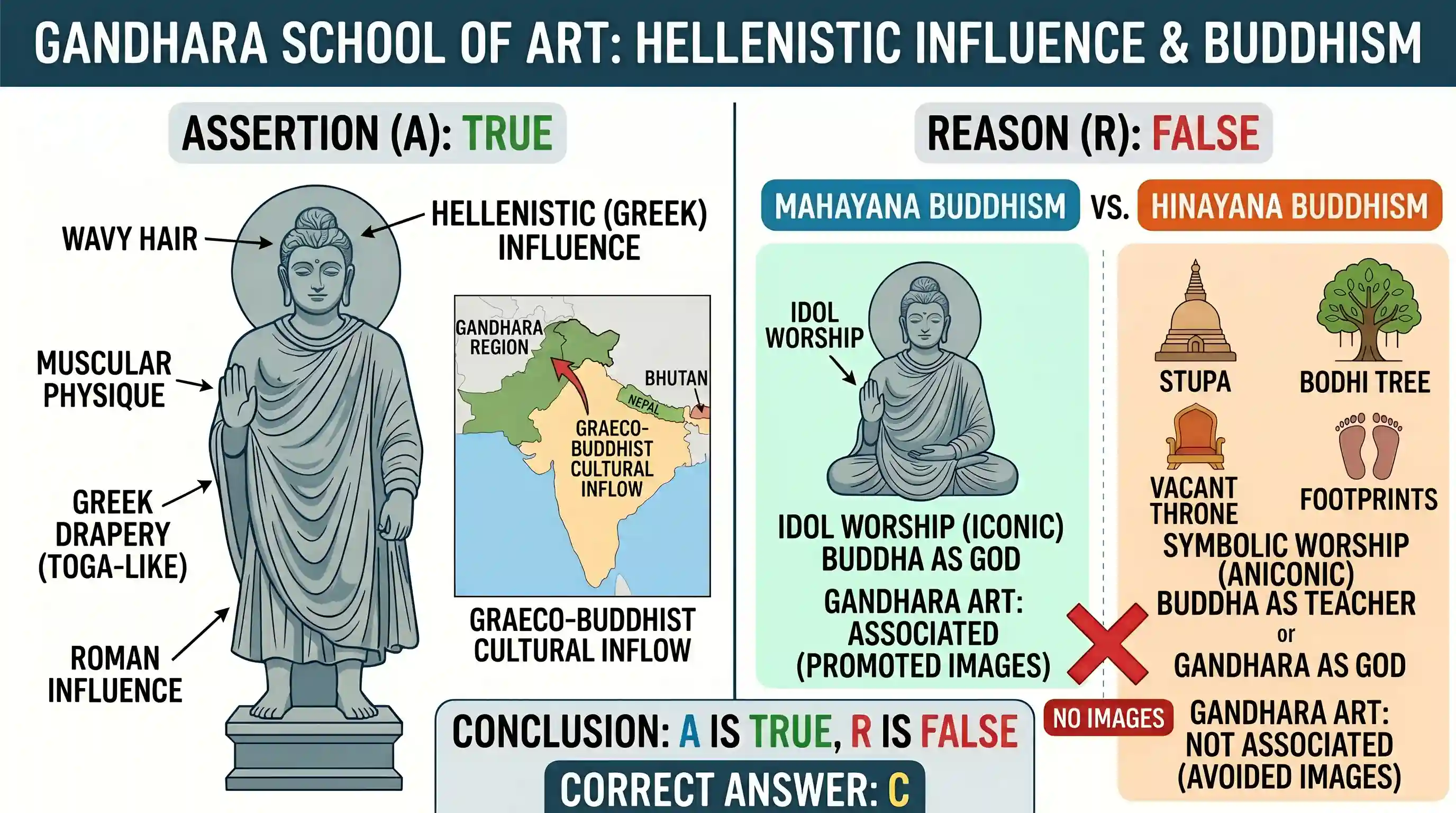
Assertion A is true because the Gandhara School of art developed in the northwestern part of the Indian subcontinent and was heavily influenced by Greek and Roman styles, often referred to as Graeco-Buddhist art. It used Hellenistic elements such as muscular bodies and wavy hair to depict Indian subjects.
Reason R is false because the Gandhara School of art was primarily associated with the Mahayana form of Buddhism, not Hinayana. Mahayana Buddhism encouraged the worship of the Buddha in physical human form, which led to the creation of these statues. In contrast, the Hinayana form strictly avoided idol worship and represented the Buddha only through symbols like footprints or a vacant throne. Therefore, the reason provided is factually incorrect.
Related questions
More UPSC Prelims practice from the same subject and topic.
- Prelims 1998GS1art-and-culture
Which one of the following languages belongs to the Austric group?
- Prelims 1998GS1art-and-culture
Bharat Ratna was awarded in 1997 to
- Prelims 1998GS1art-and-culture
The concept of Eight-fold path forms the theme of
- Prelims 2025GS1art-and-culture
The first Gandharva Mahavidyalaya, a music training school, was set up in 1901 by Vishnu Digambar Paluskar in
- Prelims 2025GS1art-and-culture
Consider the following statements in respect of the first Kho Kho World Cup : I. The event was held in Delhi, India. II. Indian men beat Nepal with a score of 78-40 in the final to become the World Ch…
- Prelims 2025GS1art-and-culture
Consider the following statements : I. In the finals of the 45th Chess Olympiad held in 2024, Gukesh Dommaraju became the world's youngest winner after defeating the Russian player Ian Nepomniachtchi.…