Consider the following climatic conditions (northern hemisphere): | Temperature | Rainfall | | :--- | :--- | | January | 3.9 | 4.7 | | February | 4.4 | 5.7 | | March | 8.3 | 8.2 | | April | 14.4 | 9.2 | | May | 20.0 | 9.2 | | June | 23.3 | 17.7 | July 27.8 14.5 August 27.8 14.0 September 22.3 12.7 October 18.3 7.0 November 12.2 5.0 December 6.7 3.5 These are most likely to be found in the natural regions of [ | Temperature | Rainfall ; °C | | cm ; January | 3.9 | 4.7 ; February | 4.4 | 5.7 ; March | 8.3 | 8.2 ; April | 14.4 | 9.2 ; May | 20.0 | 9.2 ; June | 23.3 | 17.7] [July | 27.8 | 14.5 ; August | 27.8 | 14.0 ; September | 22.3 | 12.7 ; October | 18.3 | 7.0 ; November | 12.2 | 5.0 ; December | 6.7 | 3.5]

- AChina typeCorrect
- BEquatorial type
- CHot desert type
- DMonsoon type
Explanation
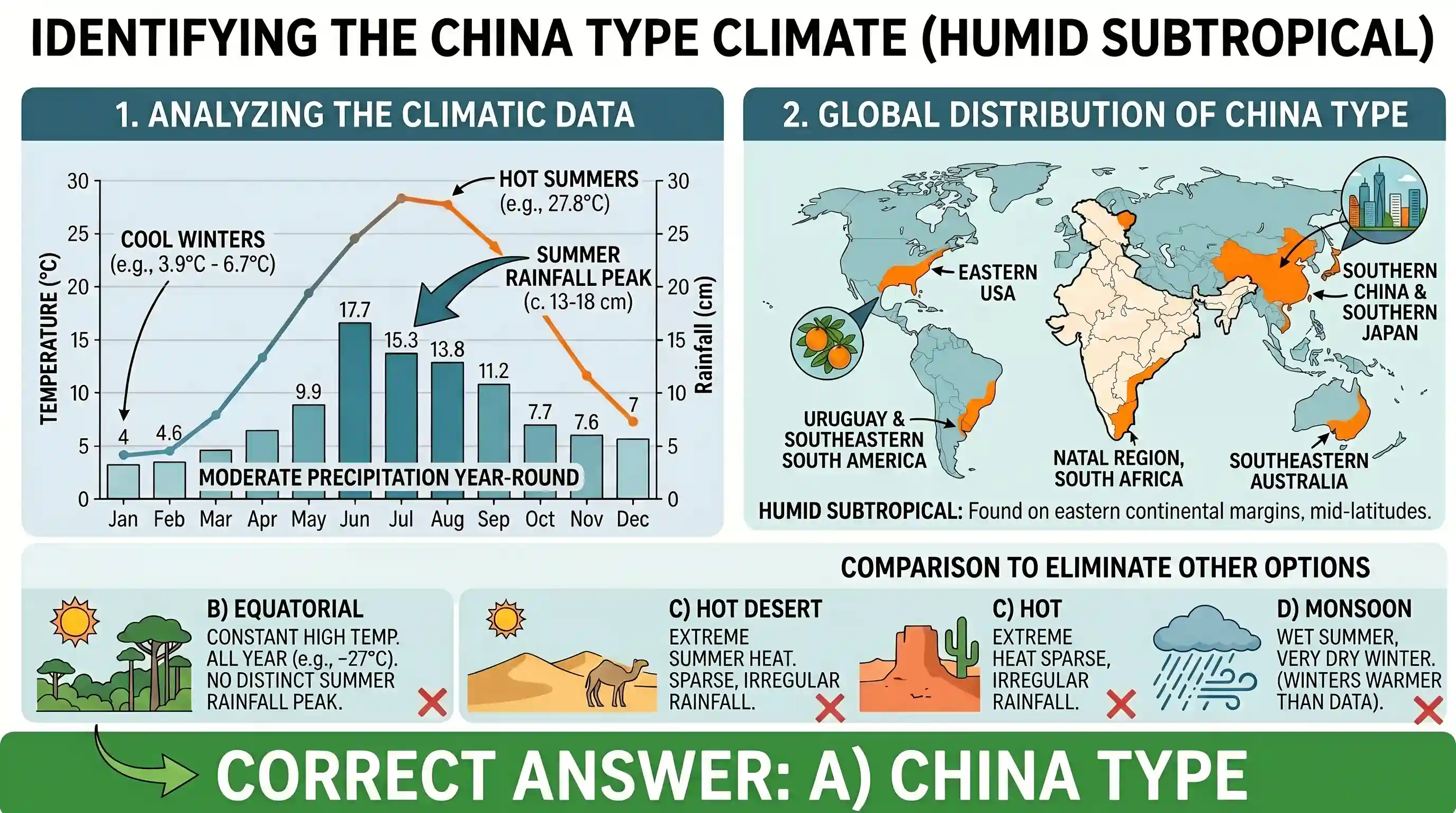
The correct answer is A because of two primary factors observed in the data: the temperature range and the rainfall pattern.
First, the temperature shows a distinct seasonality typical of a subtropical climate. The winters are cool but not freezing around 4 degrees Celsius, while the summers are hot, reaching nearly 28 degrees Celsius. This eliminates the Equatorial type, which stays hot year round, and the Hot Desert type, which usually has higher summer peaks and different patterns.
Second, the rainfall is distributed throughout the year but shows a significant peak during the summer months from June to September. This concentration of precipitation in the warm season is the defining characteristic of the China type climate, also known as the Natal type or Humid Subtropical climate.
While the Monsoon type also has summer rains, its winters are typically much drier and warmer than the figures shown here. The steady increase in both temperature and rainfall during the summer months most accurately reflects the China type climatic region.
Related questions
More UPSC Prelims practice from the same subject and topic.
- Prelims 1998GS1geography
The correct sequence of different layers of the atmosphere from the surface of the Earth upwards is
- Prelims 1998GS1geography
What is the correct sequence of the following Indian states in descending order of their length of surface roads per 100 km² of their area? I. Haryana II. Maharashtra III. Punjab IV. Tamil Nadu Select…
- Prelims 1998GS1geography
Olympics 2000 is to be held in
- Prelims 1998GS1geography
Which one of the following sets of states stands to benefit the most from the Konkan Railway?
- Prelims 1998GS1geography
Indonesian forest fire in 1997 was caused by
- Prelims 1998GS1geography
Which one of the following pairs of cities has recently been connected through a 6-lane express way?