Which one of the following types of micro-organisms is most widely used in industries?

- ABacteria
- BBacteria and fungi
- CBacteria and algae
- DBacteria, micro-algae and fungiCorrect
Explanation
The correct answer is D because all three groups of micro organisms play vital and diverse roles in modern industrial processes.
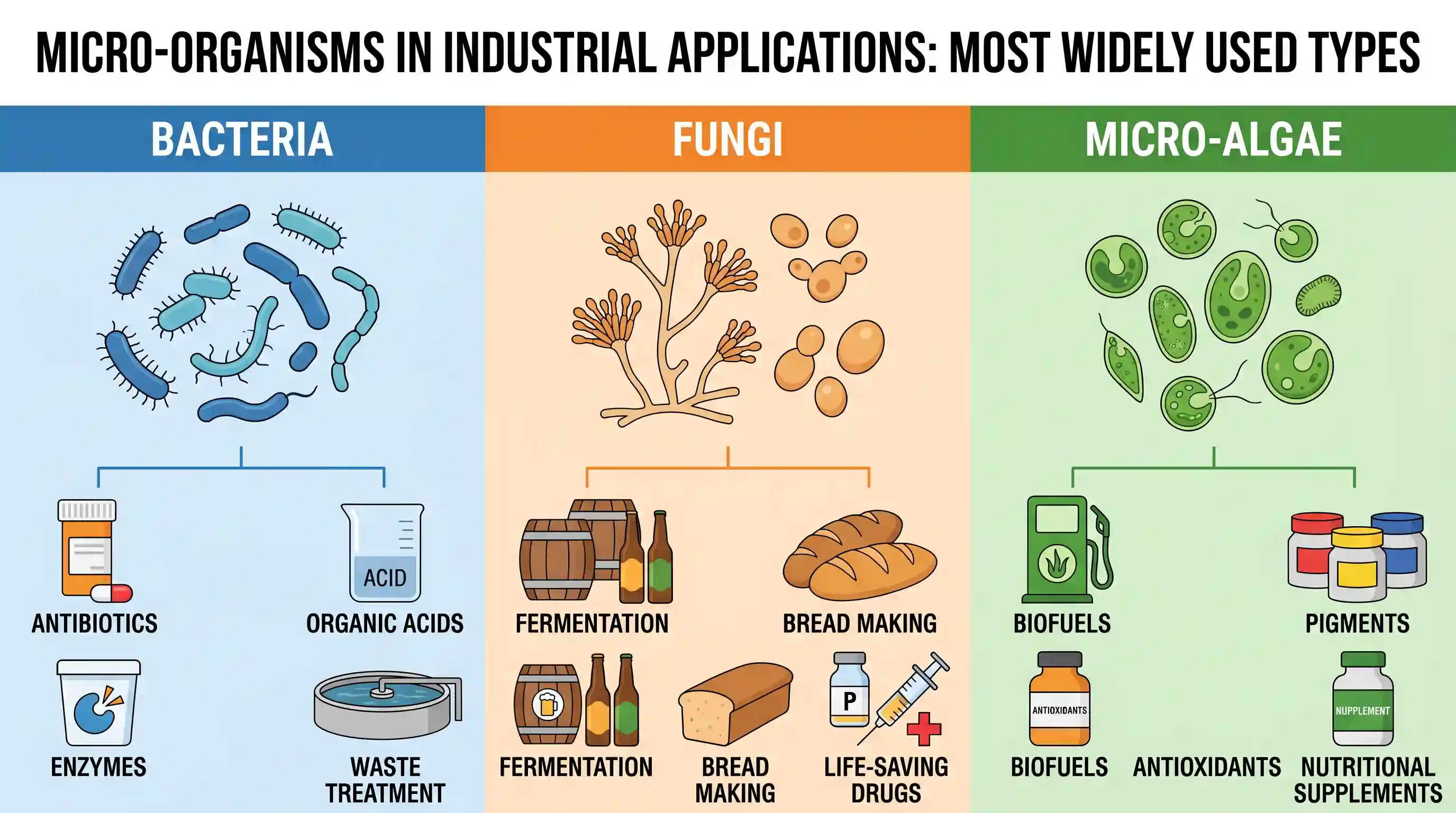
Bacteria are used extensively in the production of antibiotics, organic acids, enzymes, and in waste treatment. Fungi, particularly yeasts and molds, are indispensable for the fermentation industry, bread making, and the production of life saving drugs like penicillin. Micro algae are increasingly utilized for the commercial production of biofuels, pigments, antioxidants, and nutritional supplements.
While bacteria and fungi have traditionally been the pillars of industrial microbiology, the inclusion of micro algae in option D reflects the contemporary industrial landscape where all three categories are widely exploited for commercial applications. Therefore, option D is the most comprehensive and accurate choice.
Related questions
More UPSC Prelims practice from the same subject and topic.
- Prelims 1998GS1science-and-technology
A fuse is used in main electric supply as a safety device. Which one of the following statements about the fuse is correct?
- Prelims 1998GS1science-and-technology
Match List I with List II and select the correct answer using the codes given below the lists: List I (Disease) (Organism) I. Malaria A) Fungi II. Poliomyelitis B) Bacteria III. Tuberculosis C) Virus …
- Prelims 1998GS1science-and-technology
Haemophilia is a genetic disorder which leads to
- Prelims 1998GS1science-and-technology
A ball is dropped from the top of a high building with a constant acceleration of 9.8 m/s². What will be its velocity after 3 seconds?
- Prelims 1998GS1science-and-technology
Match the names of outstanding Indian scientists given in List I with area of their specialised work given in List II and select the correct answer using the codes given below the lists: List I List I…
- Prelims 1998GS1science-and-technology
Match List I with List II and select the correct answer using the codes given below the lists: List I List II I. Fruit A) Ovule II. Seed B) Leaf III. Wood C) Stem IV. Starch D) Ovary Codes: