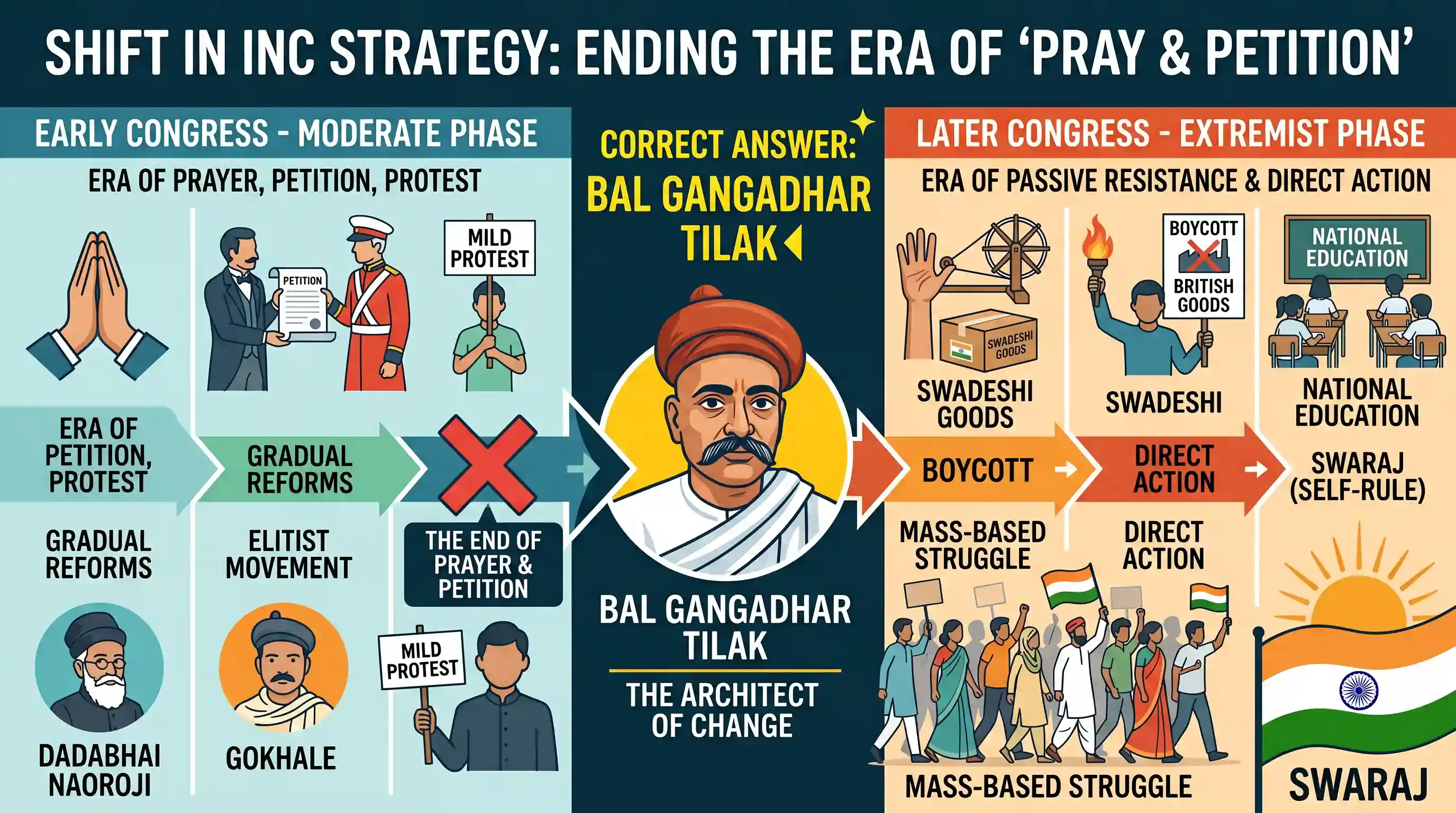
The Congress policy of pray and petition ultimately came to an end under the guidance of

- AAurobindo Ghosh
- BBal Gangadhar TilakCorrect
- CLala Lajpat Rai
- DMahatma Gandhi
Explanation
The correct answer is B because Bal Gangadhar Tilak was the primary leader of the Extremist faction within the Indian National Congress who openly criticized the Moderate methods of prayer, petition, and protest. He advocated for more radical methods like Boycott, Swadeshi, and National Education to achieve Swaraj or self rule. Tilak shifted the Congress movement from elite intellectual discussions to a mass based struggle, effectively ending the era of passive petitions. While Aurobindo Ghosh and Lala Lajpat Rai were also Extremist leaders, Tilak is considered the main architect who transformed the Congress policy into a more assertive and defiant stance against British rule.
Related questions
More UPSC Prelims practice from the same subject and topic.
- Prelims 1999GS1history
The first venture of Gandhi in all India politics was the
- Prelims 1999GS1history
Match List I with List II and select the correct answer using the codes given below the Lists: List I (Persons) (Journals) I. Shyamji Krishna Varma A) Bande Mataram II. Madame Bhikaji Cama B) Indian S…
- Prelims 1999GS1history
There was no independent development of industries in India during British rule because of the
- Prelims 1999GS1history
‘Abhinav Bharat’ a secret society of revolutionaries was organised by
- Prelims 1999GS1history
The most short-lived of all of Britain’s constitutional experiments in India was the
- Prelims 1999GS1history
“It made its proposals in May. It still wanted a united India. There was to be a Federal Union composed of British provinces.” The above quotation is related to