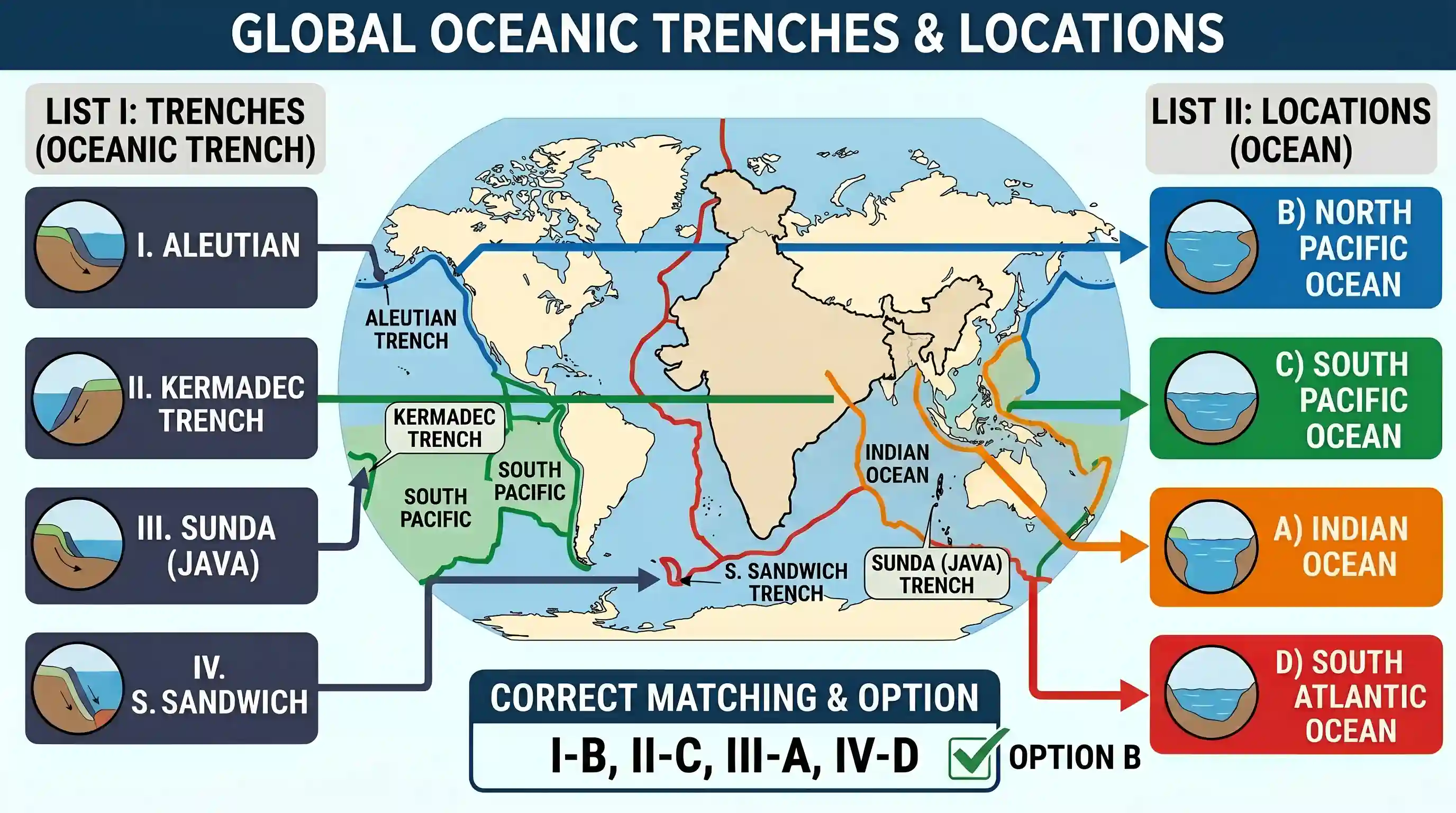
Match List I with List II and select the correct answer using the codes given below the Lists: List I (Oceanic Trench) (Location) I. Aleutian A) Indian Ocean II. Kermadec B) North Pacific Ocean III. Sunda C) South Pacific Ocean IV. S. Sandwich D) South Atlantic Ocean

- AI-B, II-D, III-A, IV-C
- BI-B, II-C, III-A, IV-DCorrect
- CI-A, II-C, III-B, IV-D
- DI-A, II-D, III-B, IV-C
Explanation
The correct option is B because of the following geographical locations of the oceanic trenches:
I. Aleutian Trench: Located in the North Pacific Ocean, extending along the southern coastline of Alaska and the Aleutian Islands.
II. Kermadec Trench: Located in the South Pacific Ocean, north of New Zealand.
III. Sunda Trench: Also known as the Java Trench, it is located in the Indian Ocean, south of the Indonesian archipelago.
IV. South Sandwich Trench: Located in the South Atlantic Ocean, to the east of the South Sandwich Islands.
Matching these pairs leads to I-B, II-C, III-A, and IV-D.
Related questions
More UPSC Prelims practice from the same subject and topic.
- Prelims 2000GS1geography
Along which one of the following meridians did India experience the first light of the sunrise of the new millennium?
- Prelims 2000GS1geography
Consider the following statements: I. Tides are of great help in navigation and fishing. II. High tide enables big ships to enter or leave the harbour safely. III. Tide prevents siltation in the harbo…
- Prelims 2000GS1geography
Match the drainage basins labelled as A, B, C and D with the names listed below and select the correct answer using the codes given below the names of the drainage basins. 1. Ganga Brahmaputra 2. Indu…
- Prelims 2000GS1geography
Match List I with List II and select the correct answer using the codes given below the Lists: List I (Minerals) I. Mineral oil II. Copper III. Manganese IV. Bauxite List II (Major producer) A) Zambia…
- Prelims 2000GS1geography
Which one of the following is known as the “Coffee port” of the world?
- Prelims 2000GS1geography
Consider the following statements about the ‘Roaring Forties’: I. They blow uninterrupted in the Northern and Southern Hemispheres. II. They blow with great strength and constancy. III. Their directio…