In which one of the following areas did the Indira Gandhi Centre for Atomic Research make significant progress in the year 2005?

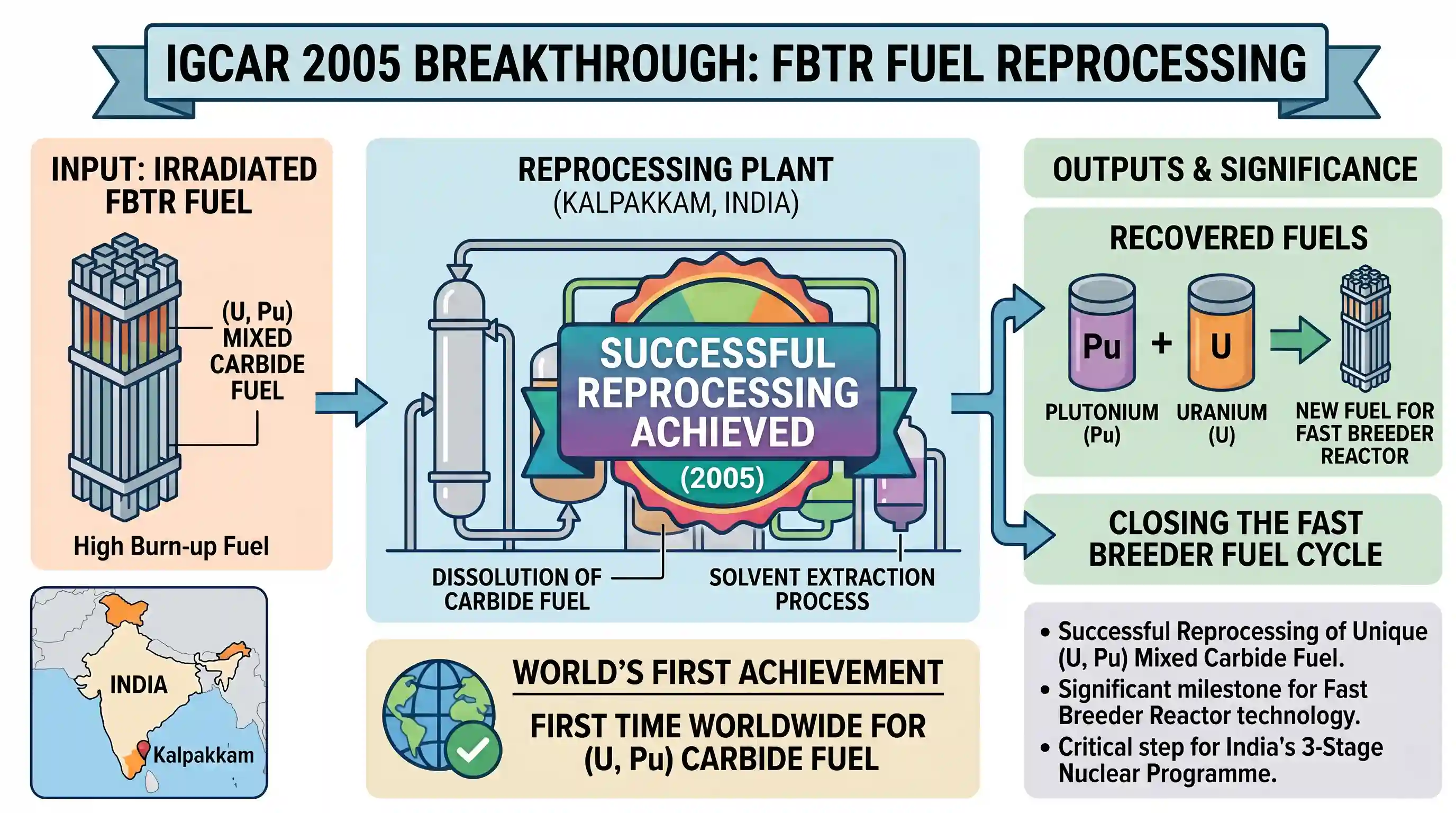
- AReprocessing the uranium plutonium mixed carbide fuel of the Fast Breeder test Reactor.Correct
- BNew applications of radioisotopes in metallurgy
- CA new technology for production of heavy water
- DA new technology for high level nuclear waste management.
Explanation
The correct answer is A. In 2005, the Indira Gandhi Centre for Atomic Research achieved a major milestone by successfully reprocessing the unique uranium plutonium mixed carbide fuel used in the Fast Breeder Test Reactor at Kalpakkam. This was a significant technological breakthrough because it was the first time in the world that such mixed carbide fuel, which had reached a high level of burn up, was successfully reprocessed. This achievement was crucial for closing the fuel cycle for Indias fast breeder reactor program.
Related questions
More UPSC Prelims practice from the same subject and topic.
- Prelims 2006GS1science-and-technology
In which one among the following is the speed of sound maximum?
- Prelims 2006GS1science-and-technology
Consider the following chemicals: 1. Benzene 2. Carbon tetrachloride 3. Sodium Carbonate 4. Trichloroethylene Which of the above is/are used as dry-cleaning chemicals?
- Prelims 2006GS1science-and-technology
Consider the following statements: 1. Caffeine, a constituent of tea and coffee is a diuretic. 2. Citric acid is used in soft drinks. 3. Ascorbic acid is essential for the formation of bones and teeth…
- Prelims 2006GS1science-and-technology
What is the name of the vessel that delivers the nutrient rich blood from the stomach | small intestine to the liver?
- Prelims 2006GS1science-and-technology
Consider the following statements with reference to human body: 1. Common bile duct releases contents into stomach. 2. Pancreatic duct releases contents into duodenum. Which of the statements given ab…
- Prelims 2006GS1science-and-technology
Assertion (A): Cellulose is used in making shatter proof glass. Reason (R): Polysaccharides are not soluble in water.