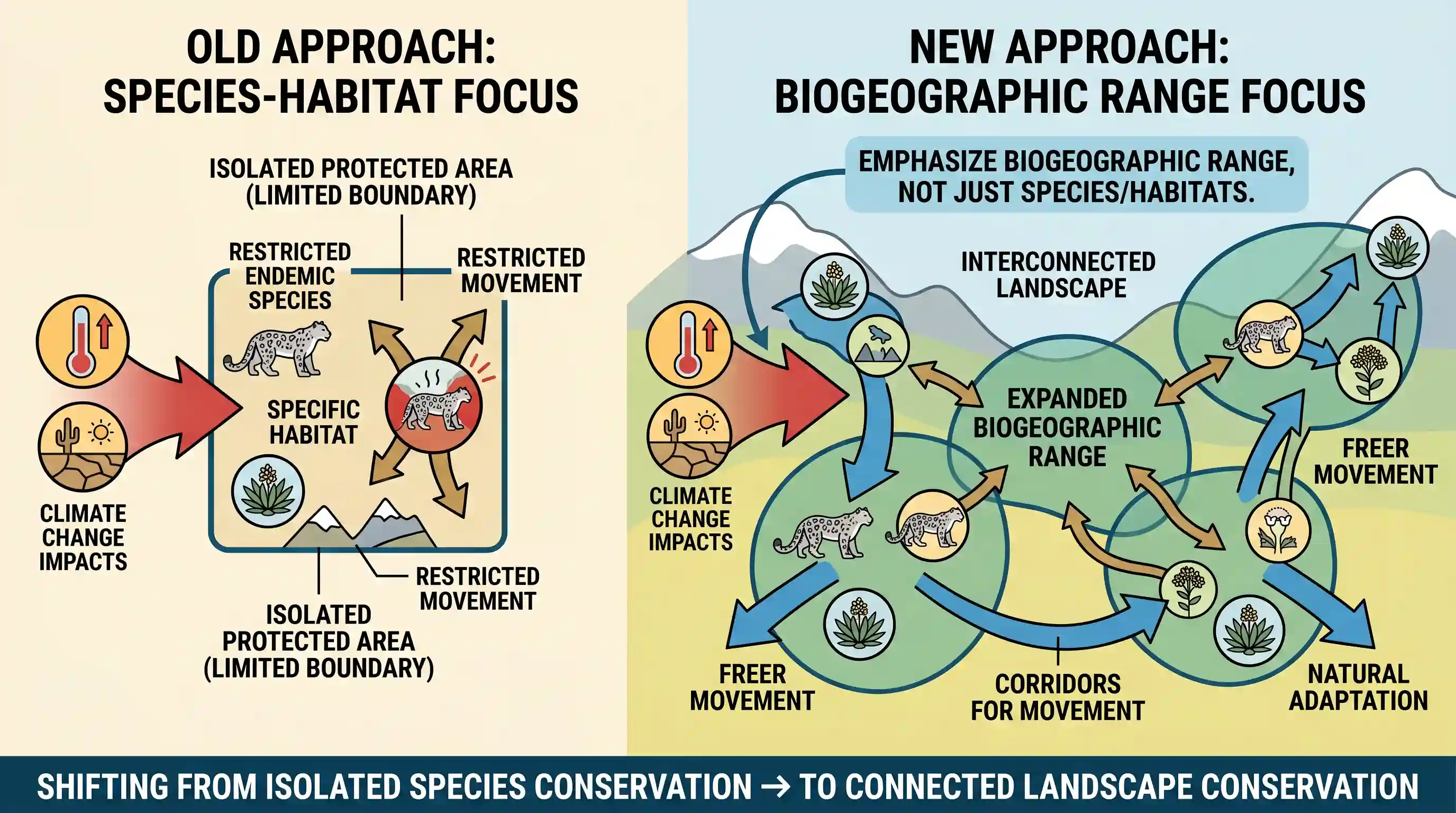
Passage-1 The Himalayan ecosystem is highly vulnerable to damage, both due to geological reasons and on account of the stress caused by increased pressure of population, exploitation of natural resources and other related challenges. These aspects may be exacerbated due to the impact of climate change. It is possible that climate change may adversely impact the Himalayan ecosystem through increased temperature altered precipitation patterns, episodes of drought and biotic influences. This would not only impact the very sustenance of the indigenous communities in uplands but also the life of downstream dwellers across the country and beyond. Therefore, there is an urgent need for giving special attention to sustain the Himalayan ecosystem. This would require conscious efforts for conserving all the representative systems. Further, it needs to be emphasized that the endemics with restricted distribution, and most often with specialized habitat requirements, are among the most vulnerable elements. In this respect the Himalayan biodiversity hotspot, with rich endemic diversity, is vulnerable to climate change. The Threats include possible loss of genetic resources and species, habitats and concomitantly a decrease in ecosystem services. Therefore, conservation of endemic elements in representative ecosystems/habitats assumes a great significance while drawing conservation plans for the region. Towards achieving the above, we will have to shift towards contemporary conservation approaches, which include a paradigm of landscape level interconnectivity between protected area systems. The concept advocates a shift from the species- habitat focus to an inclusive focus on expanding the bio- geographic range so that natural adjustments to climate change can proceed without being restrictive. What is the most important message conveyed by the passage?

- AEndemism is a characteristic feature of Himalayan region.
- BConservation efforts should emphasize on biogeographic ranges rather than on some species or habitats.Correct
- CClimate change has adverse impact on the Himalayan ecosystem.
- DWithout Himalayan ecosystem, the life of the communities of uplands and downstream will have no sustenance.
Explanation
The passage outlines the vulnerability of the Himalayan ecosystem, the adverse impacts of climate change, and the specific threat to endemic species. It then moves to discuss the urgent need for conservation. The most important message, often found in the concluding remarks or proposed solutions, is presented in the last paragraph: "Towards achieving the above, we will have to shift towards contemporary conservation approaches, which include a paradigm of landscape level interconnectivity between protected area systems. The concept advocates a shift from the species- habitat focus to an inclusive focus on expanding the bio- geographic range so that natural adjustments to climate change can proceed without being restrictive."
Let's analyze the options:
A) Endemism is a characteristic feature of Himalayan region.
- The passage mentions "the Himalayan biodiversity hotspot, with rich endemic diversity," but this is a descriptive fact used to highlight vulnerability, not the core message or solution.
B) Conservation efforts should emphasize on biogeographic ranges rather than on some species or habitats.
- This directly reflects the concluding statement of the passage, advocating a "shift from the species- habitat focus to an inclusive focus on expanding the bio- geographic range." This is the prescriptive, forward-looking message about the necessary change in conservation strategy.
C) Climate change has adverse impact on the Himalayan ecosystem.
- This is a major premise and problem statement discussed in the passage, explaining why conservation is urgent. However, it is not the ultimate message or the proposed solution.
D) Without Himalayan ecosystem, the life of the communities of uplands and downstream will have no sustenance.
- The passage states that damage "would not only impact the very sustenance of the indigenous communities in uplands but also the life of downstream dwellers." This highlights the severe consequences but is a statement of impact, not the overarching message about how to address the problem.
Therefore, option B, which describes the shift in conservation approach advocated by the passage, is the most important message.
Related questions
More UPSC Prelims practice from the same subject and topic.
- Prelims 2014CSATReading Comprehension
Passage - 1 The Himalayan ecosystem is highly vulnerable to damage, both due to geological reasons and on account of the stress caused by increased pressure of population, exploitation of natural reso…
- Prelims 2014CSATReading Comprehension
Passage-1 The Himalayan ecosystem is highly vulnerable to damage, both due to geological reasons and on account of the stress caused by increased pressure of population, exploitation of natural resour…
- Prelims 2014CSATReading Comprehension
Passage-1 The Himalayan ecosystem is highly vulnerable to damage, both due to geological reasons and on account of the stress caused by increased pressure of population, exploitation of natural resour…
- Prelims 2014CSATReading Comprehension
Passage-2 It is often forgotten that globalization, is not only about policies on international economic relationships and transactions, but has equally to do with domestic policies of a nation. Polic…
- Prelims 2014CSATReading Comprehension
Passage-2 It is often forgotten that globalization, is not only about policies on international economic relationships and transactions, but has equally to do with domestic policies of a nation. Polic…
- Prelims 2014CSATReading Comprehension
Passage-2 It is often forgotten that globalization, is not only about policies on international economic relationships and transactions, but has equally to do with domestic policies of a nation. Polic…