What are the significances of a practical approach to sugarcane production known as 'Sustainable Sugarcane Initiative'? 1. Seed cost is very low in this compared to the conventional method of cultivation. 2. Drip irrigation can be practiced very effectively in this. 3. There is no application of chemical/inorganic fertilizers at all in this. 4. The scope for intercropping is more in this compared to the conventional method of cultivation. Select the correct answer using the code given below.

- A1 and 3 only
- B1, 2 and 4 onlyCorrect
- C2, 3 and 4 only
- D1, 2, 3 and 4
Explanation
The 'Sustainable Sugarcane Initiative' (SSI) is an innovative method of sugarcane cultivation that offers several benefits over conventional methods:
-
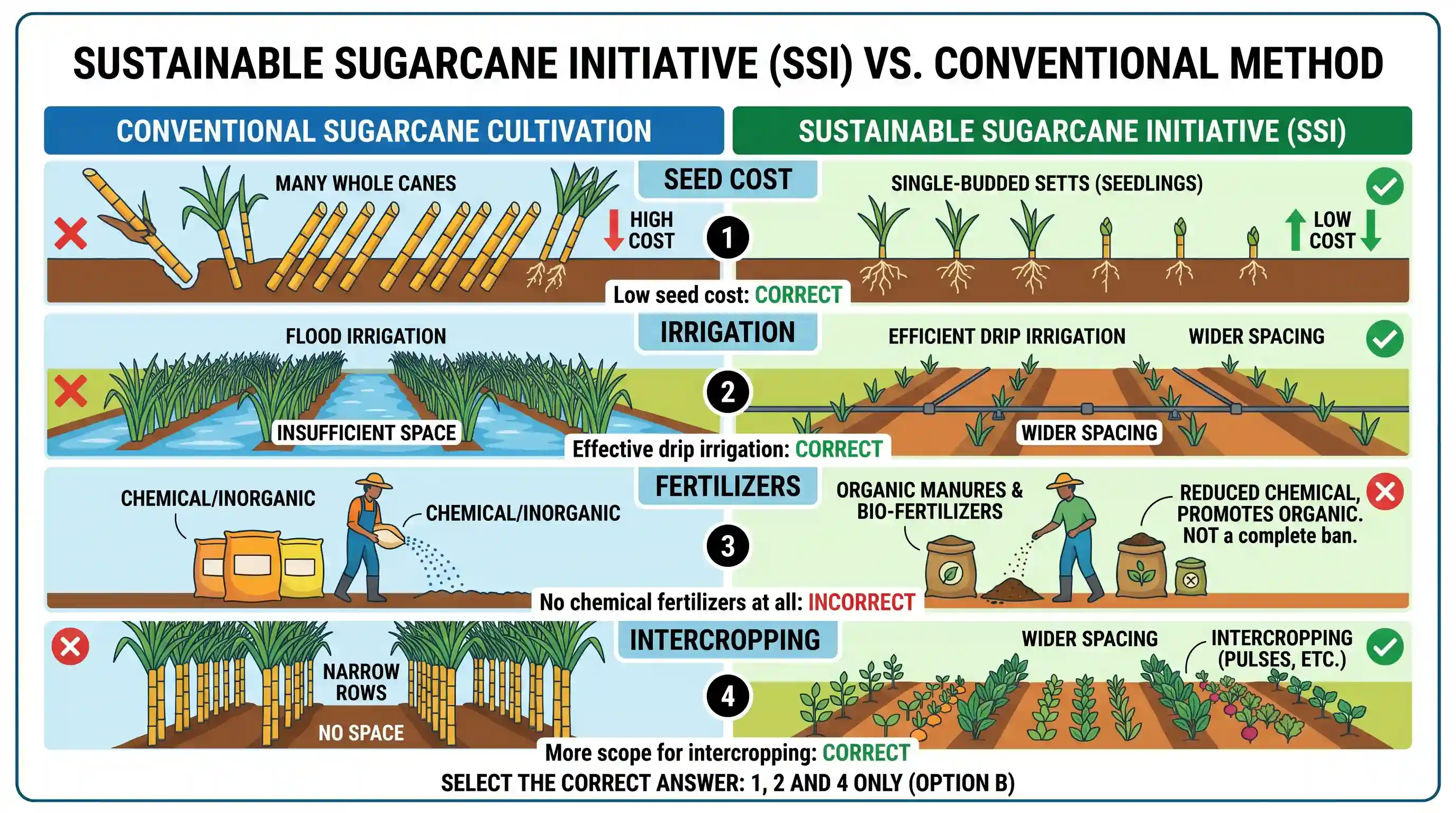
Seed cost is very low in this compared to the conventional method of cultivation: SSI promotes the use of single-budded setts (small seedlings) instead of the traditional large number of whole canes. This significantly reduces the amount of seed material required, thereby lowering seed costs. This statement is correct.
-
Drip irrigation can be practiced very effectively in this: SSI advocates for wider spacing between sugarcane plants and rows, which makes it highly conducive for the efficient application of water through drip irrigation. Drip irrigation minimizes water wastage and ensures water reaches the plant roots directly. This statement is correct.
-
There is no application of chemical/inorganic fertilizers at all in this: While SSI encourages reduced use of chemical fertilizers and promotes organic manures and bio-fertilizers for soil health, it does not mandate a complete absence of chemical/inorganic fertilizers. The phrase 'no application at all' makes this statement incorrect.
-
The scope for intercropping is more in this compared to the conventional method of cultivation: Due to the wider spacing between rows in SSI, there is ample space available for cultivating companion crops (intercropping) like pulses, vegetables, or oilseeds. This practice helps suppress weeds, improves soil fertility, and provides additional income to farmers. This statement is correct.
Based on the analysis, statements 1, 2, and 4 are correct.
Related questions
More UPSC Prelims practice from the same subject and topic.
- Prelims 2014GS1geography
Which one of the following pairs of islands is separated from each other by the "Ten Degree Channel?"
- Prelims 2014GS1geography
Consider the following pairs: Programme/Project Ministry 1. Drought-Prone Area Programme : Ministry of Agriculture 2. Desert Development Programme : Ministry of Environment and Forests 3. National Wat…
- Prelims 2014GS1geography
Consider the following pairs: 1. Dampa Tiger Reserve : Mizoram 2. Gumti Wildlife Sanctuary : Sikkim 3. Saramati Peak : Nagaland Which of the above pairs is/are correctly matched?
- Prelims 2014GS1geography
If you travel through the Himalayas, you are likely to see which of the following plants naturally growing there? 1. Oak 2. Rhododendron 3. Sandalwood Select the correct answer using the code given be…
- Prelims 2014GS1geography
With reference to two non-conventional energy sources called 'coalbed methane' and 'shale gas', consider the following statements: 1. Coalbed methane is the pure methane gas extracted from coal seams,…
- Prelims 2014GS1geography
Consider the following rivers: 1. Barak 2. Lohit 3. Subansiri Which of the above flows/flow through Arunachal Pradesh?