If the interest rate is decreased in an economy, it will

- Adecrease the consumption expenditure in the economy
- Bincrease the tax collection of the Government
- Cincrease the investment expenditure in the economyCorrect
- Dincrease the total savings in the economy
Explanation
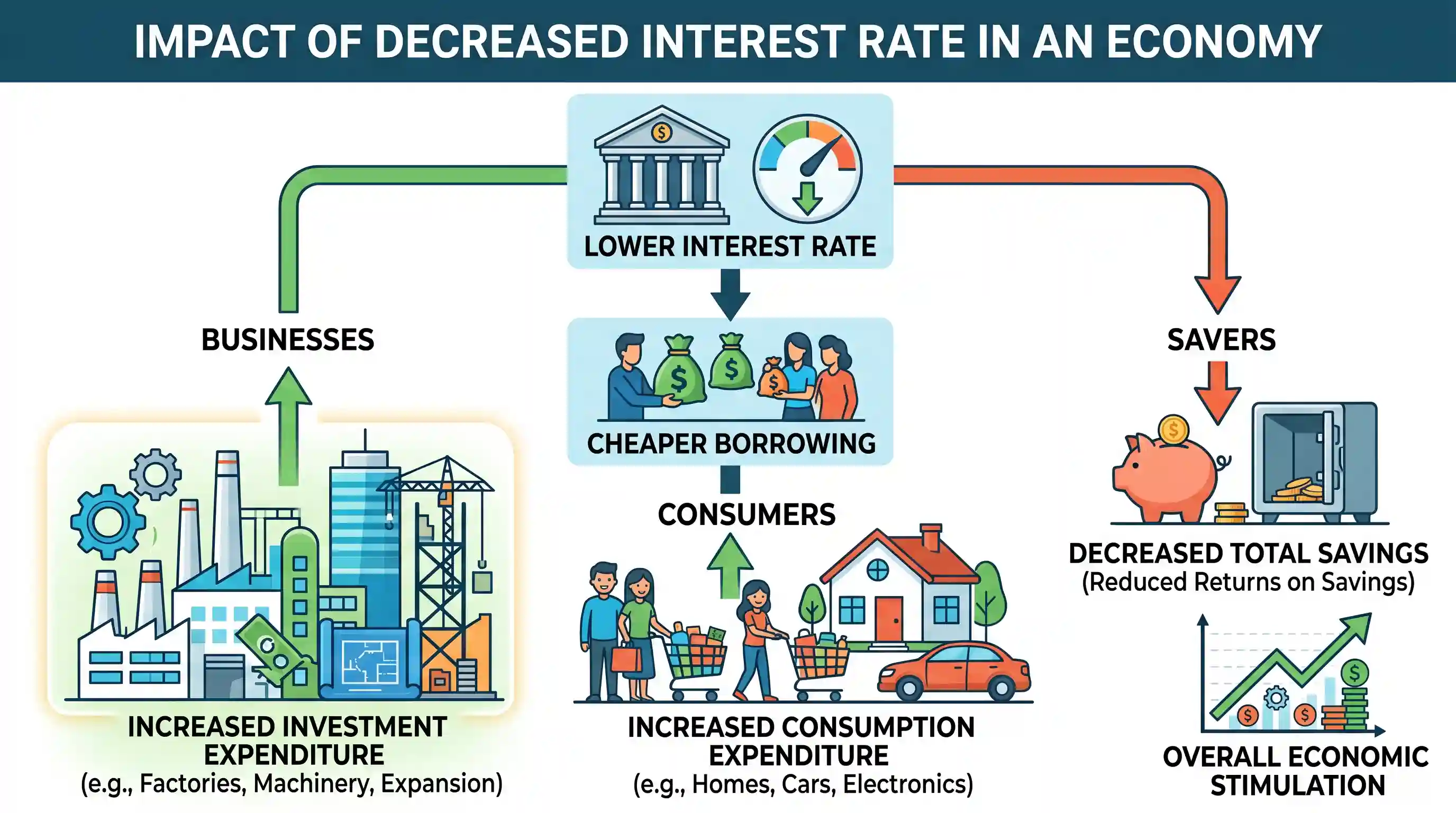
When the interest rate is decreased in an economy, it makes borrowing cheaper and saving less attractive. Let's analyze the options:
A) decrease the consumption expenditure in the economy: This is incorrect. Lower interest rates generally encourage consumption, as borrowing for big-ticket items becomes cheaper and saving yields less return, incentivizing spending. B) increase the tax collection of the Government: This is an indirect and not necessarily direct effect. While increased economic activity due to lower interest rates could lead to higher tax collections, it's not the immediate or primary direct impact of a rate decrease. C) increase the investment expenditure in the economy: This is correct. Businesses are more likely to borrow money for new projects, expansion, or capital expenditure when the cost of borrowing (interest rate) is lower. This makes potential investment projects more profitable and attractive, leading to increased investment expenditure. D) increase the total savings in the economy: This is incorrect. Lower interest rates reduce the return on savings, thereby typically discouraging saving and incentivizing consumption or investment instead. Therefore, a decrease in interest rates primarily stimulates investment expenditure.
Related questions
More UPSC Prelims practice from the same subject and topic.
- Prelims 2014GS1economy
What does venture capital mean?
- Prelims 2014GS1economy
The main objective of the 12th Five-Year Plan is
- Prelims 2014GS1economy
With reference to Balance of Payments, which of the following constitutes/constitute the Current Account? 1. Balance of trade 2. Foreign assets 3. Balance of invisibles 4. Special Drawing Rights Selec…
- Prelims 2014GS1economy
The terms 'Marginal Standing Facility Rate' and 'Net Demand and Time Liabilities', sometimes appearing in news, are used in relation to
- Prelims 2014GS1economy
What is/are the facility/facilities the beneficiaries can get from the services of Business Correspondent (Bank Saathi) in branchless areas? 1. It enables the beneficiaries to draw their subsidies and…
- Prelims 2014GS1economy
In the context of Indian economy, which of the following is/are the purpose/purposes of 'Statutory Reserve Requirements'? 1. To enable the Central Bank to control the amount of advances the banks can …