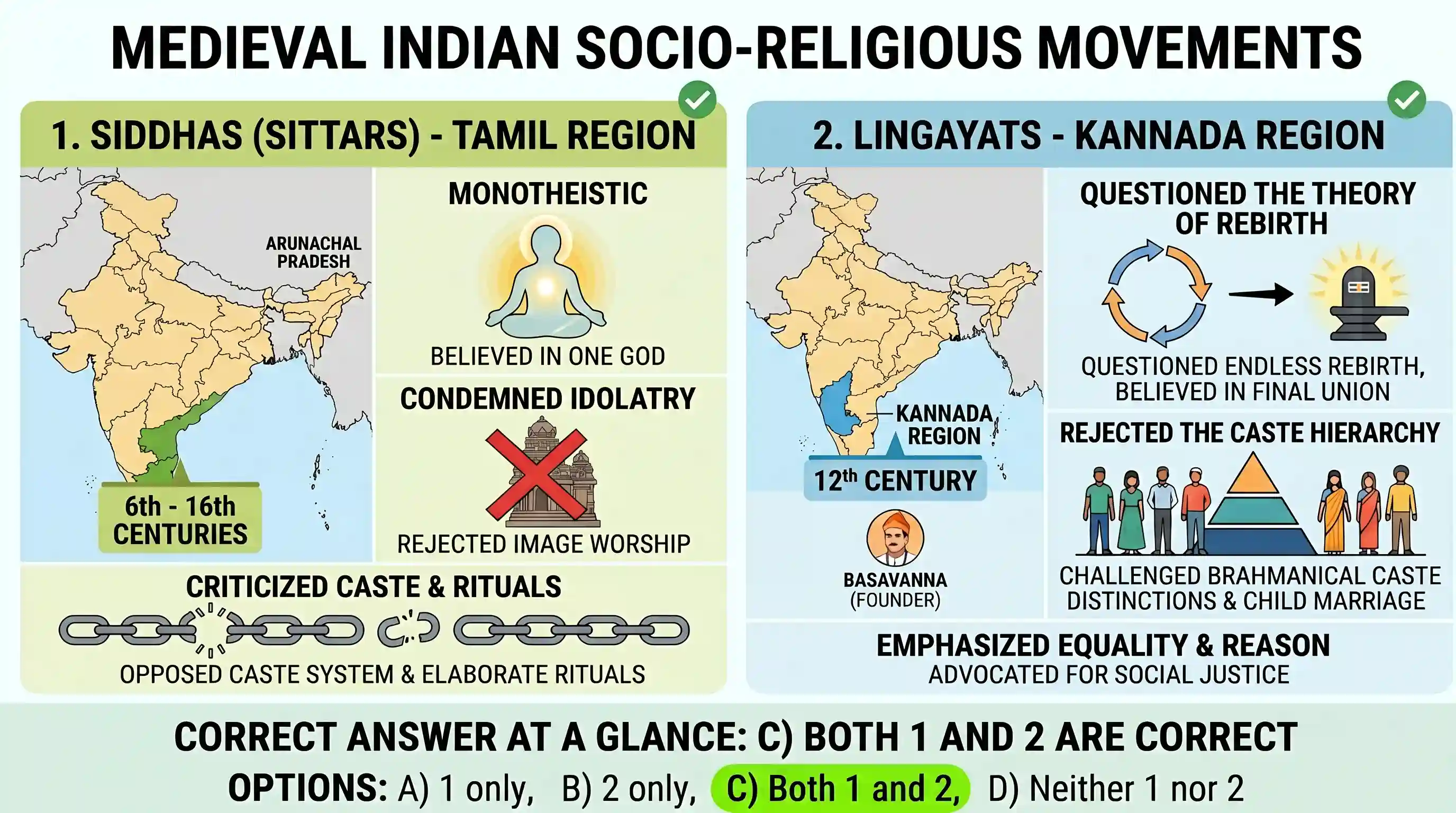
With reference to the cultural history of medieval India, consider the following statements: 1. Siddhas (Sittars) of Tamil region were monotheistic and condemned idolatry. 2. Lingayats of Kannada region questioned the theory of rebirth and rejected the caste hierarchy. Which of the statements given above is/are correct?

- A1 only
- B2 only
- CBoth 1 and 2Correct
- DNeither 1 nor 2
Explanation
Let's examine the cultural history of medieval India concerning Siddhas and Lingayats:
Siddhas (Sittars) of Tamil region were monotheistic and condemned idolatry: The Siddhas (Sittars) were a group of mystics and yogis in the Tamil region of South India, primarily from the 6th to 16th centuries. They were known for their emphasis on monotheism, their rejection of idol worship, and their criticism of caste distinctions and elaborate rituals. They stressed direct communion with God through inner discipline and spiritual practices. This statement is correct. Lingayats of Kannada region questioned the theory of rebirth and rejected the caste hierarchy: The Lingayat movement, founded by Basavanna in the 12th century in the Karnataka (Kannada) region, was a significant socio-religious reform movement. They challenged orthodox Brahmanical practices, including the theory of rebirth (they believed that upon death, a devotee would unite with Shiva and not be reborn). They strongly advocated against the caste system, child marriage, and emphasized equality, reason, and social justice. They also promoted monotheism (worship of Shiva as the one supreme being). This statement is correct. Both statements accurately reflect the beliefs and practices of the Siddhas and Lingayats, respectively.
Related questions
More UPSC Prelims practice from the same subject and topic.
- Prelims 2016GS1history
Regarding the taxation system of Krishna Deva, the ruler of Vijayanagar, consider the following statements: 1. The tax rate on land was fixed depending on the quality of the land. 2. Private owners of…
- Prelims 2016GS1history
Banjaras during the medieval period of Indian history were generally
- Prelims 2016GS1history
With reference to the economic history of medieval India, the term 'Araghatta' refers to
- Prelims 2016GS1history
Which one of the following books of ancient India has the love story of the son of the founder of Sunga dynasty?
- Prelims 2016GS1history
Who of the following had first deciphered the edicts of Emperor Ashoka?
- Prelims 2016GS1history
The 'Swadeshi' and 'Boycott' were adopted as methods of struggle for the first time during the