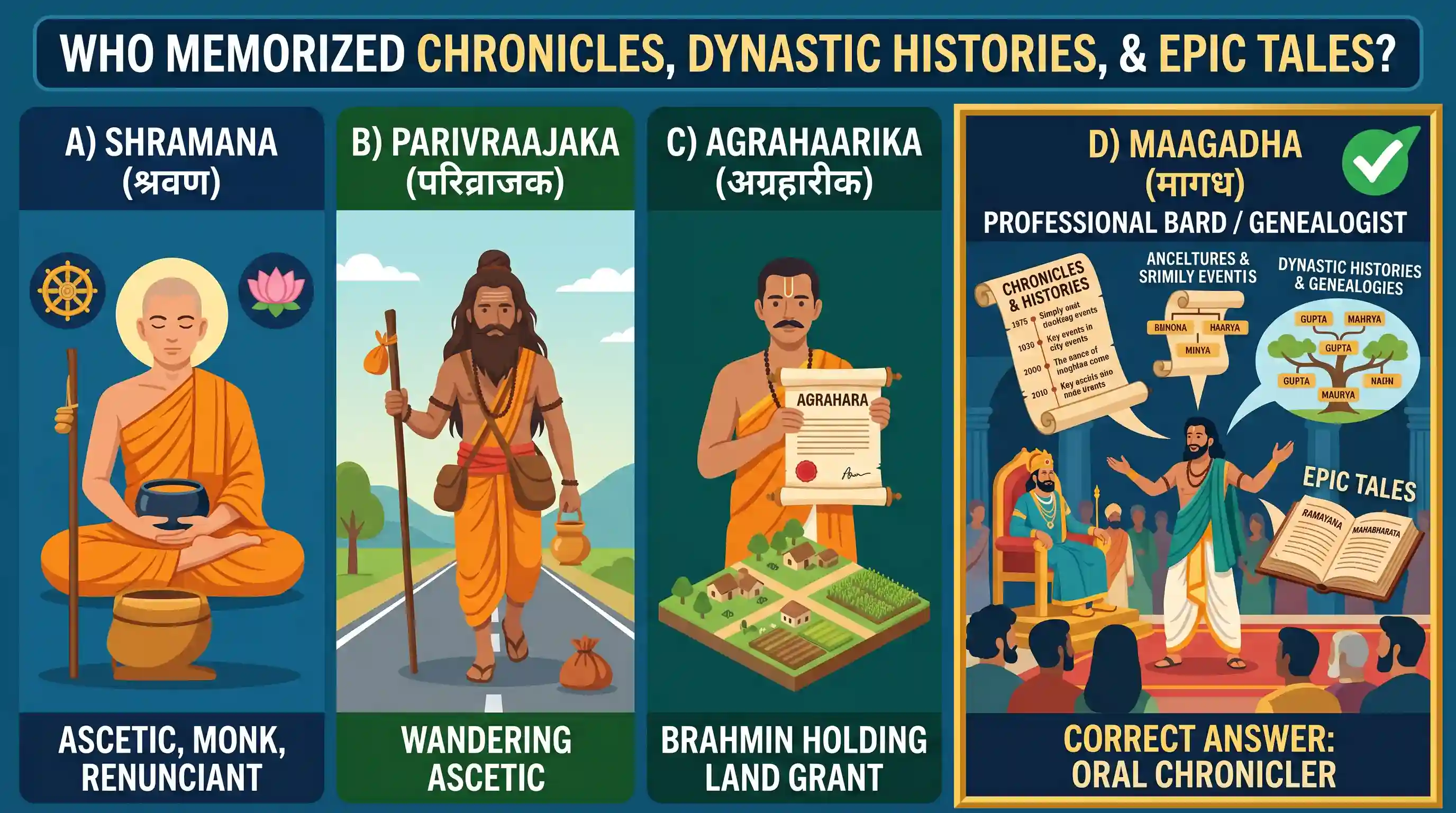
With reference to the cultural history of India, the memorizing of chronicles, dynastic histories and epic tales was the profession of who of the following?

- AShramana
- BParivraajaka
- CAgrahaarika
- DMaagadhaCorrect
Explanation
In ancient and medieval Indian society, the 'Maagadha' (also spelled as Magadha) was a professional bard or genealogist. Their hereditary profession involved memorizing and reciting chronicles, dynastic histories, epic tales, and genealogies of kings and noble families. They were often patronized by royal courts and played a crucial role in preserving historical and cultural traditions through oral narration.
Shramana: Refers to ascetics, renunciants, or monks, particularly in Jainism and Buddhism. Parivraajaka: Means a wandering ascetic or mendicant. Agrahaarika: While Agraharas were land grants to Brahmins, 'Agrahaarika' is not the specific term for the profession described. Thus, 'Maagadha' best fits the description of those who memorized chronicles, dynastic histories, and epic tales.
Related questions
More UPSC Prelims practice from the same subject and topic.
- Prelims 2016GS1history
Which one of the following books of ancient India has the love story of the son of the founder of Sunga dynasty?
- Prelims 2016GS1history
Who of the following had first deciphered the edicts of Emperor Ashoka?
- Prelims 2016GS1history
In the context of the history of India, consider the following pairs: Term : Description 1. Eripatti : Land, revenue from which was set apart for the maintenance of the village tank 2. Taniyurs : Vill…
- Prelims 2016GS1history
Regarding the taxation system of Krishna Deva, the ruler of Vijayanagar, consider the following statements: 1. The tax rate on land was fixed depending on the quality of the land. 2. Private owners of…
- Prelims 2016GS1history
With reference to the cultural history of medieval India, consider the following statements: 1. Siddhas (Sittars) of Tamil region were monotheistic and condemned idolatry. 2. Lingayats of Kannada regi…
- Prelims 2016GS1history
Banjaras during the medieval period of Indian history were generally