With reference to the religious practices in India, the "Sthanakvasi" sect belongs to

- ABuddhism
- BJainismCorrect
- CVaishnavism
- DShaivism
Explanation
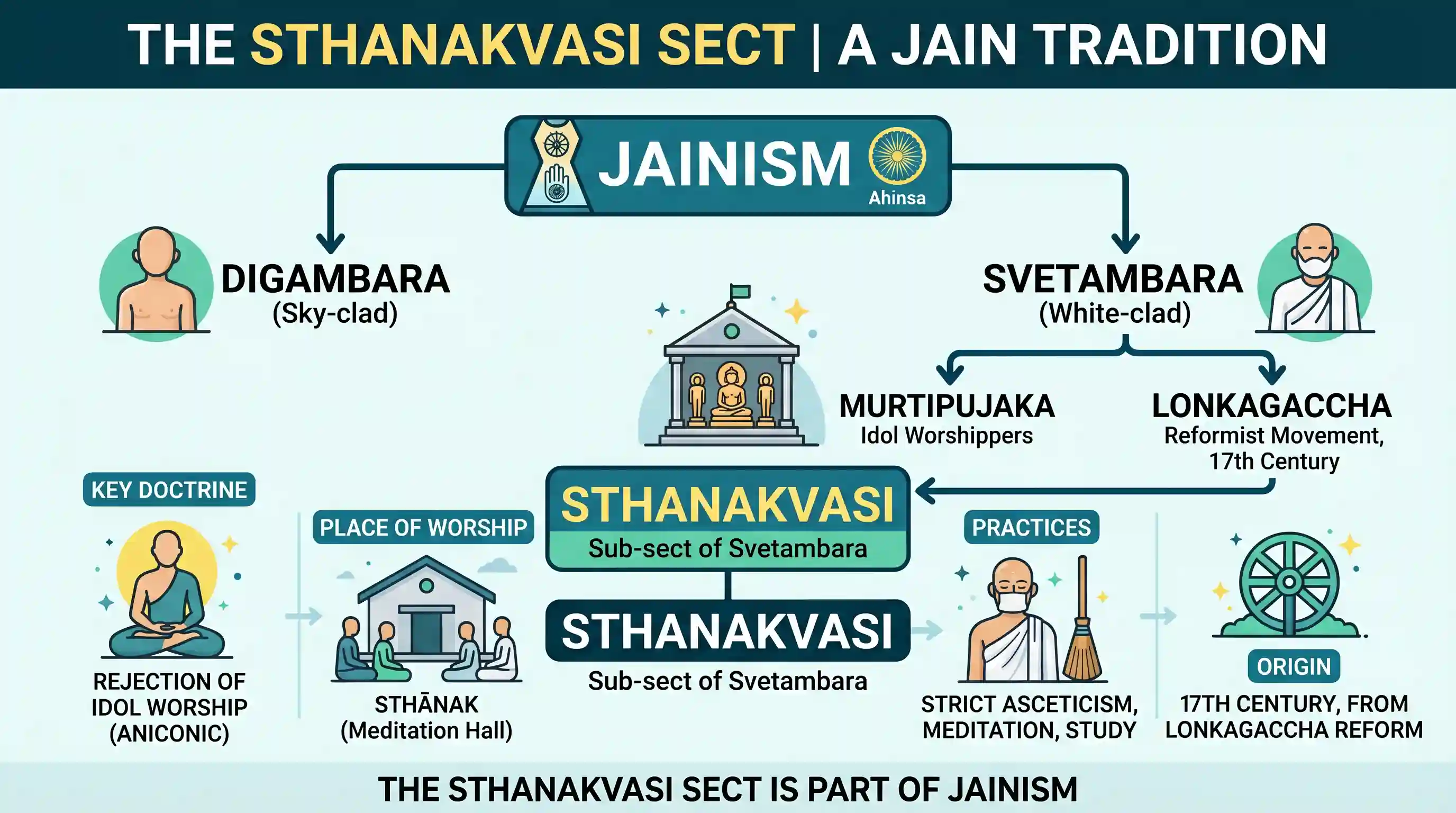
The "Sthanakvasi" sect is a significant sub-sect within Jainism. They belong to the Svetambara (white-clad) tradition of Jainism.
Key characteristics of the Sthanakvasi sect include:
Rejection of idol worship: Unlike other Jain sects, Sthanakvasis do not believe in idol worship and instead practice meditation and prayer in special halls called Sthanaks (hence their name, meaning 'dwellers in halls'). Emphasis on asceticism: They adhere strictly to the ascetic principles of Jainism. Origin: The sect emerged in the 17th century from the Lonkāgaccha, a reformist movement within the Svetambara tradition. Therefore, the Sthanakvasi sect is an integral part of Jain religious practices.
Related questions
More UPSC Prelims practice from the same subject and topic.
- Prelims 2018GS1art-and-culture
With reference to Indian history, who among the following is a future Buddha, yet to come to save the world?
- Prelims 2018GS1art-and-culture
Consider the following pairs: Tradition State 1. Chapchar Kut festival Mizoram 2. Khongjom Parba ballad Manipur 3. Thang-Ta dance Sikkim Which of the pairs given above is/are correct?
- Prelims 2018GS1art-and-culture
The well-known painting "Bani Thani" belongs to the
- Prelims 2018GS1art-and-culture
With reference to cultural history of India, consider the following statements: 1. Most of the Tyagaraja Kritis are devotional songs in praise of Lord Krishna. 2. Tyagaraja created several new ragas. …
- Prelims 2018GS1art-and-culture
Consider the following pairs: Craft Heritage of 1. Puthukkuli shawls Tamil Nadu 2. Sujni embroidery Maharashtra 3. Uppada Jamdani saris Karnataka Which of the pairs given above is/are correct?
- Prelims 2018GS1art-and-culture
With reference to the cultural history of India, consider the following statements: 1. White marble was used in making Buland Darwaza and Khankah at Fatehpur Sikri. 2. Red sandstone and marble were us…