With reference to Indian history, who among the following is a future Buddha, yet to come to save the world?

- AAvalokiteshvara
- BLokesvara
- CMaitreyaCorrect
- DPadmapani
Explanation
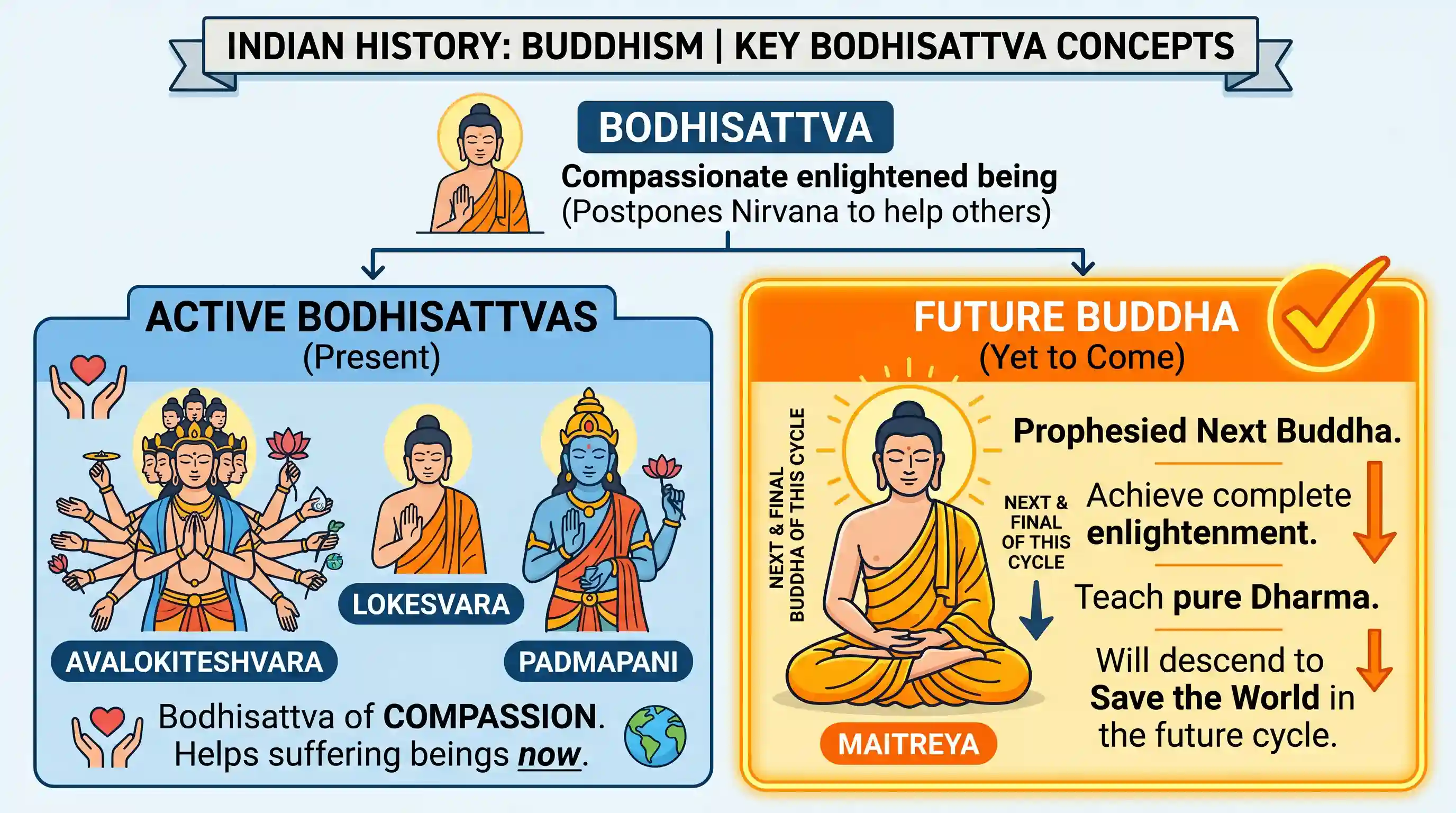
In Buddhist tradition, a Bodhisattva is an enlightened being who postpones their own nirvana to help others achieve enlightenment. The concept of a future Buddha is central to Mahayana Buddhism.
Maitreya: In Buddhist eschatology, Maitreya is a Bodhisattva who is prophesied to appear on Earth in the future, achieve complete enlightenment, and teach the pure dharma. According to Buddhist scriptures, Maitreya will be the next Buddha (the fifth and final Buddha) in this world cycle. He is often depicted as seated, awaiting his time to descend. Avalokiteshvara (also known as Lokesvara or Padmapani): These are different names or forms of a prominent Bodhisattva in Mahayana Buddhism, revered as the Bodhisattva of compassion. They are currently active Bodhisattvas, not future Buddhas. Therefore, Maitreya is the future Buddha yet to come to save the world.
Related questions
More UPSC Prelims practice from the same subject and topic.
- Prelims 2018GS1art-and-culture
With reference to the religious practices in India, the "Sthanakvasi" sect belongs to
- Prelims 2018GS1art-and-culture
Consider the following pairs: Tradition State 1. Chapchar Kut festival Mizoram 2. Khongjom Parba ballad Manipur 3. Thang-Ta dance Sikkim Which of the pairs given above is/are correct?
- Prelims 2018GS1art-and-culture
The well-known painting "Bani Thani" belongs to the
- Prelims 2018GS1art-and-culture
With reference to cultural history of India, consider the following statements: 1. Most of the Tyagaraja Kritis are devotional songs in praise of Lord Krishna. 2. Tyagaraja created several new ragas. …
- Prelims 2018GS1art-and-culture
Consider the following pairs: Craft Heritage of 1. Puthukkuli shawls Tamil Nadu 2. Sujni embroidery Maharashtra 3. Uppada Jamdani saris Karnataka Which of the pairs given above is/are correct?
- Prelims 2018GS1art-and-culture
With reference to the cultural history of India, consider the following statements: 1. White marble was used in making Buland Darwaza and Khankah at Fatehpur Sikri. 2. Red sandstone and marble were us…