Which one of the following sets is correctly matched?

- ADiphtheria, Pneumonia and Leprosy: Hereditary
- BAIDS, Syphilis and Gonorrhoea: Bacterial
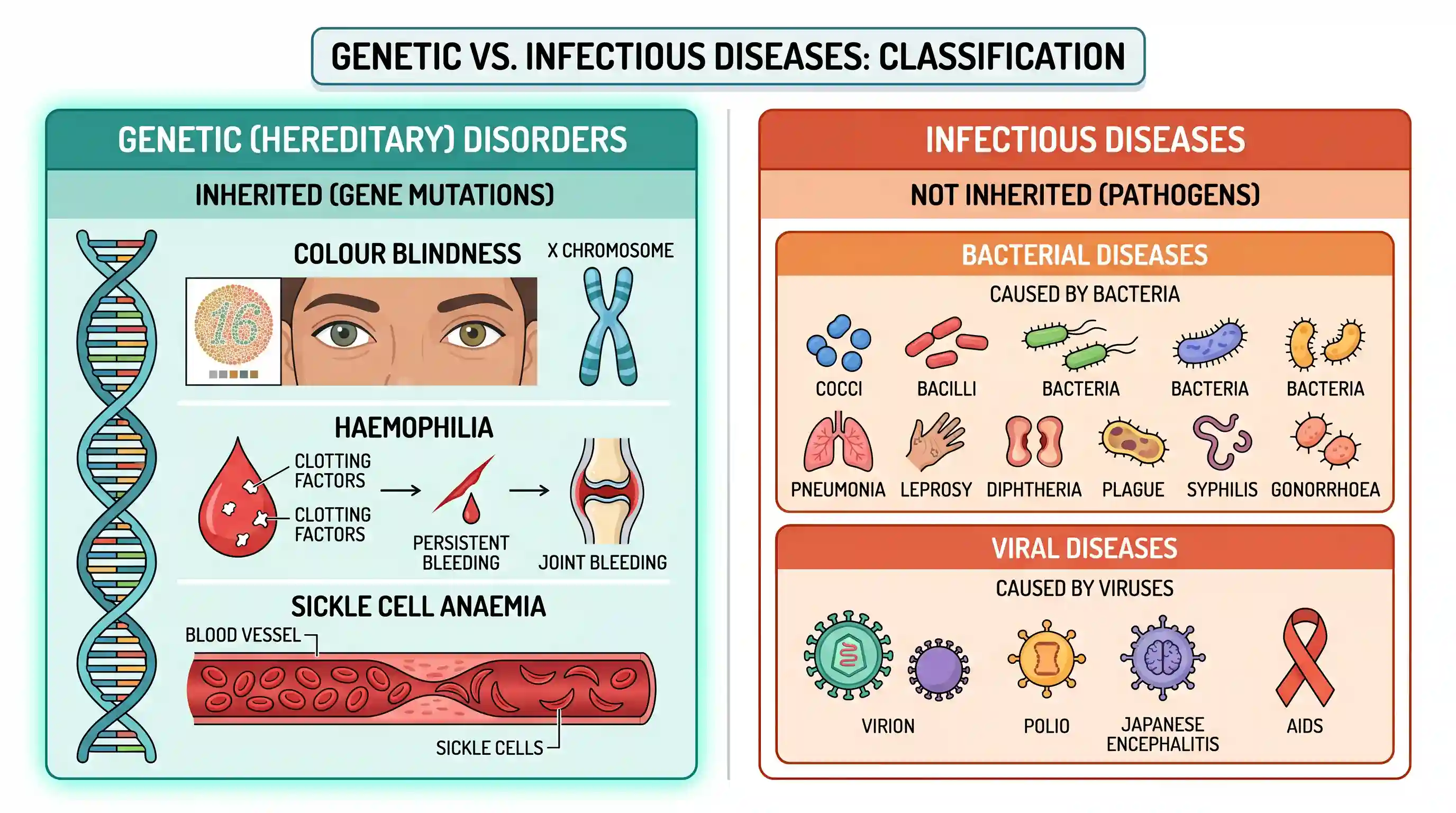
- CColour blindness, Haemophilia and Sickle cell anaemia: Sex linkedCorrect
- DPolio, Japanese B encephalitis and plague: Viral
Explanation
Option C is correctly matched because all three conditions are genetic disorders. Colour blindness and Haemophilia are classic examples of X linked recessive traits, while Sickle cell anaemia is an autosomal recessive genetic disorder. Although they differ in their specific mode of inheritance, they are all categorized under sex linked or genetic hereditary conditions in a broad biological context.
The other options are incorrect because: Option A lists Diphtheria, Pneumonia, and Leprosy, which are all bacterial infections, not hereditary. Option B includes AIDS, which is caused by a virus (HIV), whereas Syphilis and Gonorrhoea are bacterial. Option D includes Plague, which is a bacterial disease caused by Yersinia pestis, whereas Polio and Japanese Encephalitis are viral.
Related questions
More UPSC Prelims practice from the same subject and topic.
- Prelims 1995GS1science-and-technology
The Nobel Prize for deciphering the language of bees was awarded to
- Prelims 1995GS1science-and-technology
Which one of the following is a mixed fertilizer?
- Prelims 1995GS1science-and-technology
The chemical used as a ‘fixer’ in photography is
- Prelims 1995GS1science-and-technology
Which one of the following can be used to confirm whether drinking water contains a gamma emitting isotope or not?
- Prelims 1995GS1science-and-technology
The normal temperature of human body on the Kelvin scale is
- Prelims 1995GS1science-and-technology
When the same note is played on a sitar and a flute, the sound produced can be distinguished from each other because of the difference in