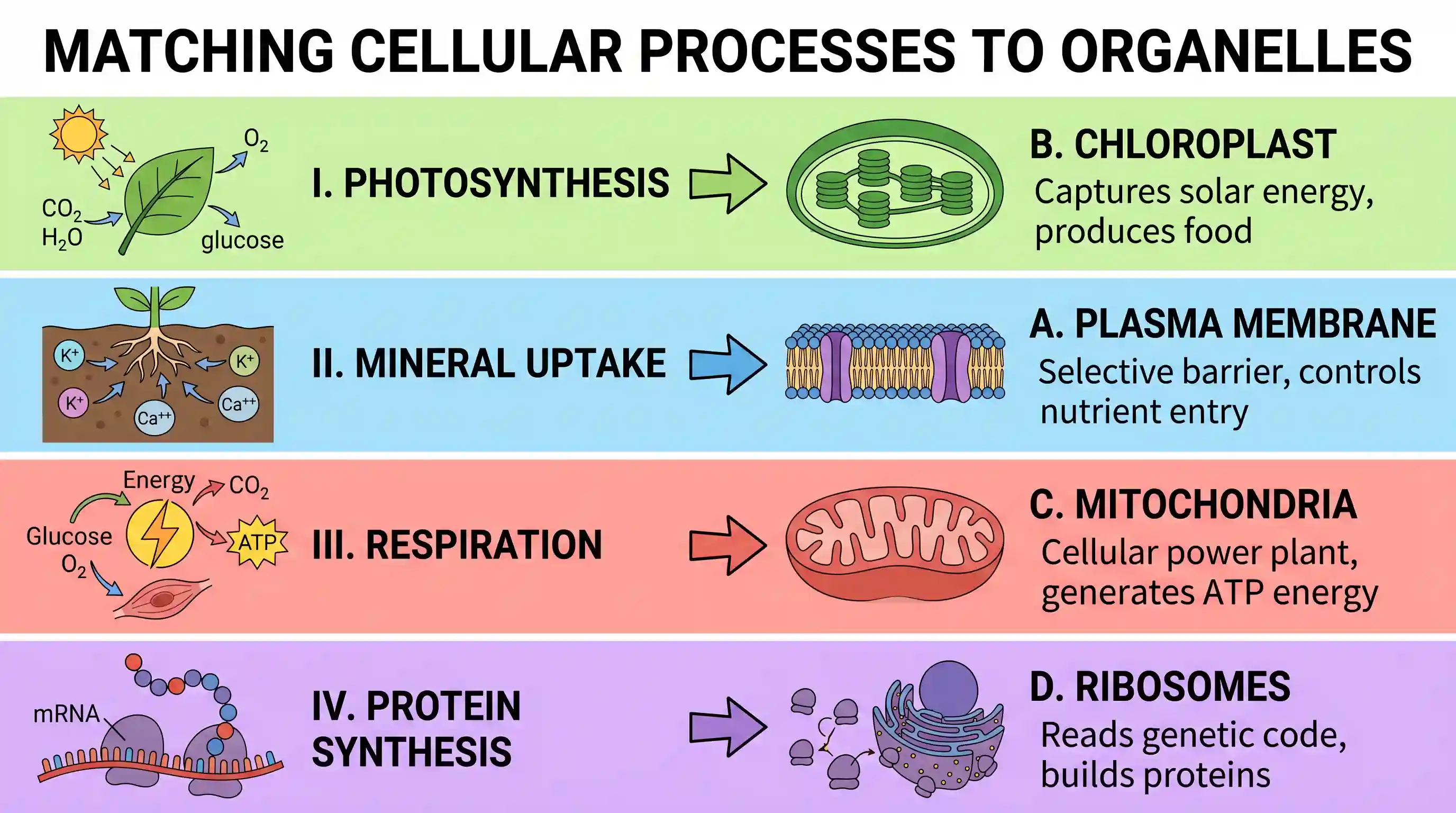
Match List I (Physiological processes) with List II (Cell organelles) and select the correct answer by using the codes given below the lists: List I I. Photosynthesis A) Plasma membrane II. Mineral uptake B) Chloroplast III. Respiration C) Mitochondria IV. Protein Synthesis D) Ribosomes Codes:

- AI - A, II - B, III - C, IV - D
- BI - A, II - B, III - D, IV - C
- CI - B, II - A, III - C, IV - DCorrect
- DI - B, II - A, III - D, IV – C
Explanation
The correct option is C because it correctly matches the physiological functions with their specific cellular sites:
-
Photosynthesis occurs in the Chloroplast. Chloroplasts contain chlorophyll which captures solar energy to convert water and carbon dioxide into food.
-
Mineral uptake occurs through the Plasma membrane. The membrane acts as a selective barrier that regulates the entry of minerals and nutrients from the external environment into the cell.
-
Respiration occurs in the Mitochondria. Often called the powerhouse of the cell, mitochondria are responsible for cellular respiration and the production of energy in the form of ATP.
-
Protein Synthesis occurs in the Ribosomes. Ribosomes are the cellular structures where genetic code is translated into polypeptide chains to form proteins.
Therefore, the correct sequence is I-B, II-A, III-C, and IV-D.
Related questions
More UPSC Prelims practice from the same subject and topic.
- Prelims 1996GS1science-and-technology
Which one of the following is a modified stem?
- Prelims 1996GS1science-and-technology
Fat present below the skin surface in our body, acts as a barrier against
- Prelims 1996GS1science-and-technology
Which of the following professional (s) are more likely to run the risk of a permanent change in their cell’s DNA? I. Researchers using carbon-14 isotope II. X-ray technician III. Coal miner IV. Dyer …
- Prelims 1996GS1science-and-technology
Which one of the following is not an essential micronutrient for plants?
- Prelims 1996GS1science-and-technology
Of the four landmarks in medical history given below, which one was the first to take place?
- Prelims 1996GS1science-and-technology
Living organisms require at least 27 elements of which 15 are metals. Among these, those required in major quantities include