Assertion (A): The temperature of a metal wire rises when an electric current is passed through it. Reason (R): Collision of metal atoms with each other releases heat energy.

- ABoth A and R are true, and R is the correct explanation of A
- BBoth A and R are true, but R is NOT a correct explanation of A
- CA is true, but R is falseCorrect
- DA is false, but R is true
Explanation
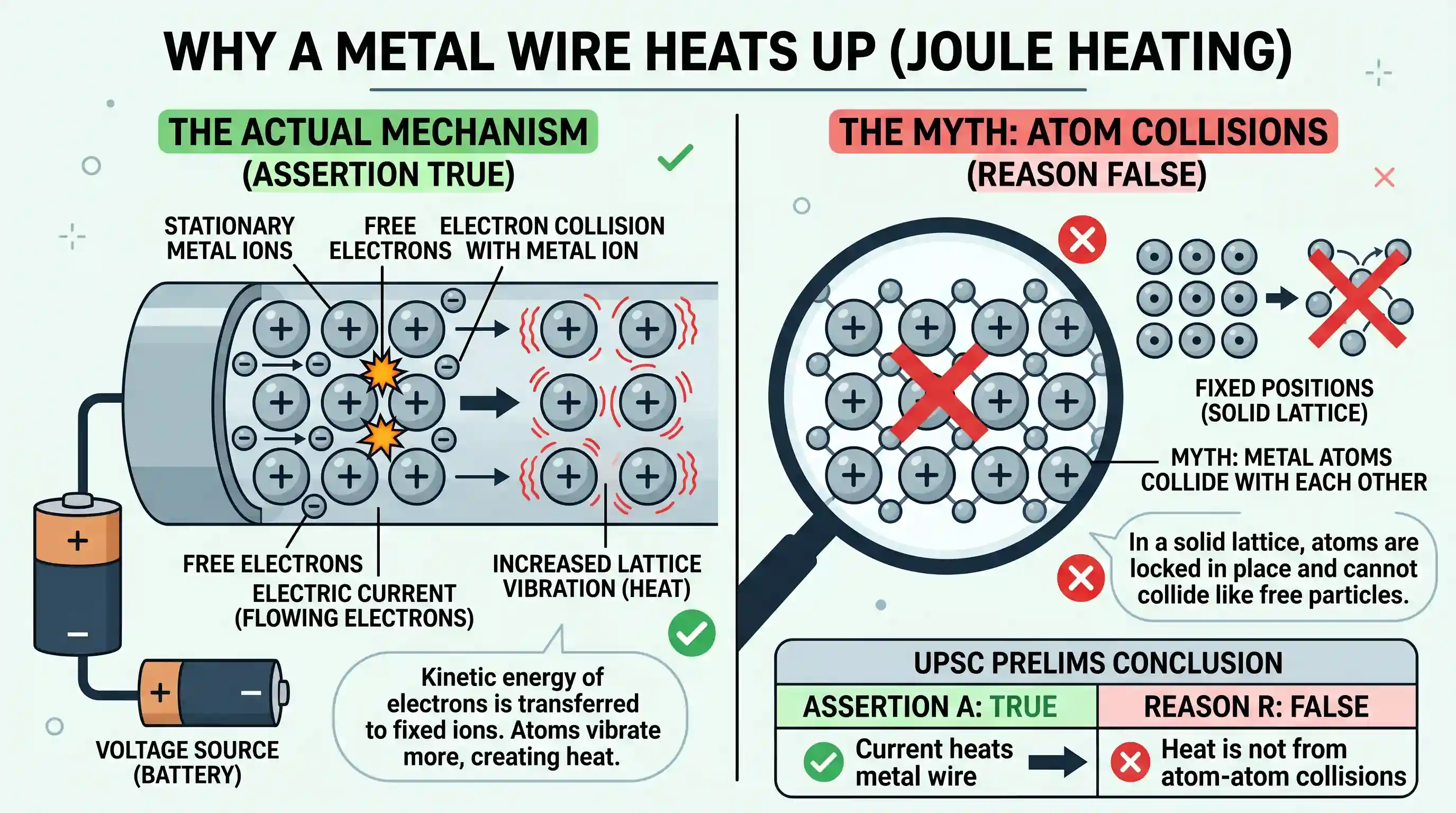
The assertion is true because when an electric current passes through a metal wire, it encounters resistance, which converts electrical energy into heat energy. This is known as the Joule heating effect.
The reason is false because the heat is not generated by the collision of metal atoms with each other. In a solid metal lattice, the atoms are fixed in position and do not collide. Instead, the heat is generated by the collisions between the moving free electrons and the stationary metal ions or atoms. These collisions transfer kinetic energy to the lattice, causing the atoms to vibrate more vigorously and increasing the temperature of the wire. Therefore, assertion A is true but reason R is false.
Related questions
More UPSC Prelims practice from the same subject and topic.
- Prelims 1998GS1science-and-technology
A fuse is used in main electric supply as a safety device. Which one of the following statements about the fuse is correct?
- Prelims 1998GS1science-and-technology
Match List I with List II and select the correct answer using the codes given below the lists: List I (Disease) (Organism) I. Malaria A) Fungi II. Poliomyelitis B) Bacteria III. Tuberculosis C) Virus …
- Prelims 1998GS1science-and-technology
Haemophilia is a genetic disorder which leads to
- Prelims 1998GS1science-and-technology
A ball is dropped from the top of a high building with a constant acceleration of 9.8 m/s². What will be its velocity after 3 seconds?
- Prelims 1998GS1science-and-technology
Which one of the following types of micro-organisms is most widely used in industries?
- Prelims 1998GS1science-and-technology
Match the names of outstanding Indian scientists given in List I with area of their specialised work given in List II and select the correct answer using the codes given below the lists: List I List I…