Neem tree has acquired industrial importance as a source of

- Abiopesticide and anti-fertility compoundCorrect
- Banti-fertility compound, biofertilizer and anti-cancer drug
- Cbiofertilizer, biopesticide and anti- fertility compound
- Danti-cancer drug, biopesticide and biofertilizer
Explanation
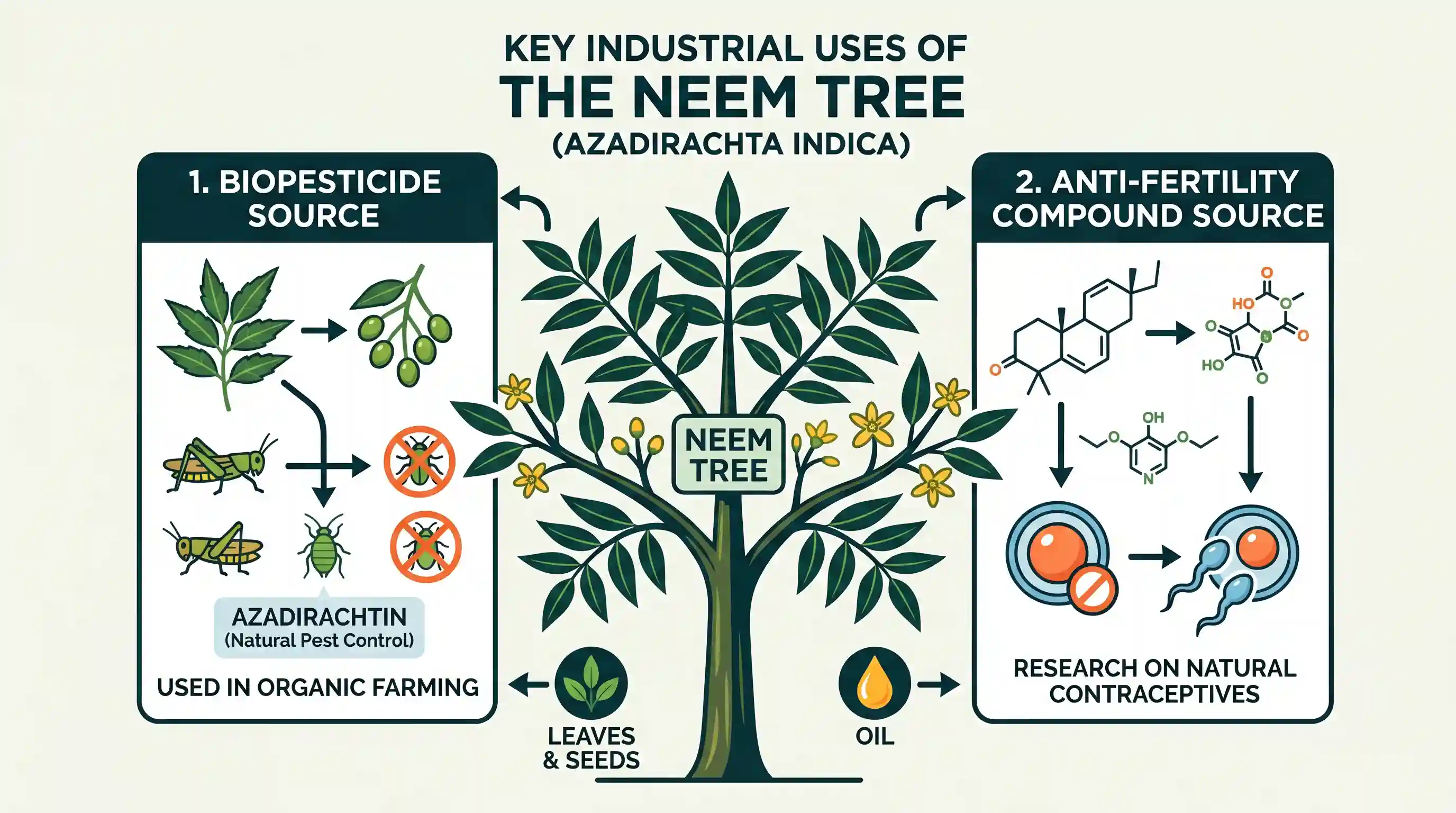
The Neem tree is highly valued in industry primarily for three properties. First, it contains Azadirachtin, which makes it a powerful biopesticide used widely in organic farming to control pests without synthetic chemicals. Second, research has established that compounds in Neem oil and bark act as an effective anti fertility agent, with potential applications in natural contraceptives. Third, Neem cake, the residue left after oil extraction, is used as a biofertilizer and a soil conditioner.
While Neem has some medicinal properties, it is not internationally recognized as a primary industrial source for anti cancer drugs in the same way it is for pesticides and fertility control. Therefore, Option A is the most accurate description of its core industrial utilities.
Related questions
More UPSC Prelims practice from the same subject and topic.
- Prelims 1999GS1science-and-technology
Indian farmers are unhappy over the introduction of “Terminator Seed Technology” because the seeds produced by this technology are expected to
- Prelims 1999GS1science-and-technology
Which one of the following genetic diseases is sex-linked?
- Prelims 1999GS1science-and-technology
Assertion (A): Insect resistant transgenic cotton has been produced by inserting Bt gene. Reason (R): The Bt gene is derived from a bacterium.
- Prelims 1999GS1science-and-technology
Assertion (A): Dolly was the first cloned mammal. Reason (R): Dolly was produced by in vitro fertilization.
- Prelims 1999GS1science-and-technology
Assertion (A): Information technology is fast becoming a very important field of activity in India. Reason (R): Software is one of the major exports of the country and India has a very strong base in …
- Prelims 1999GS1science-and-technology
In eye donation, which one of the following parts of donor’s eye is utilised?