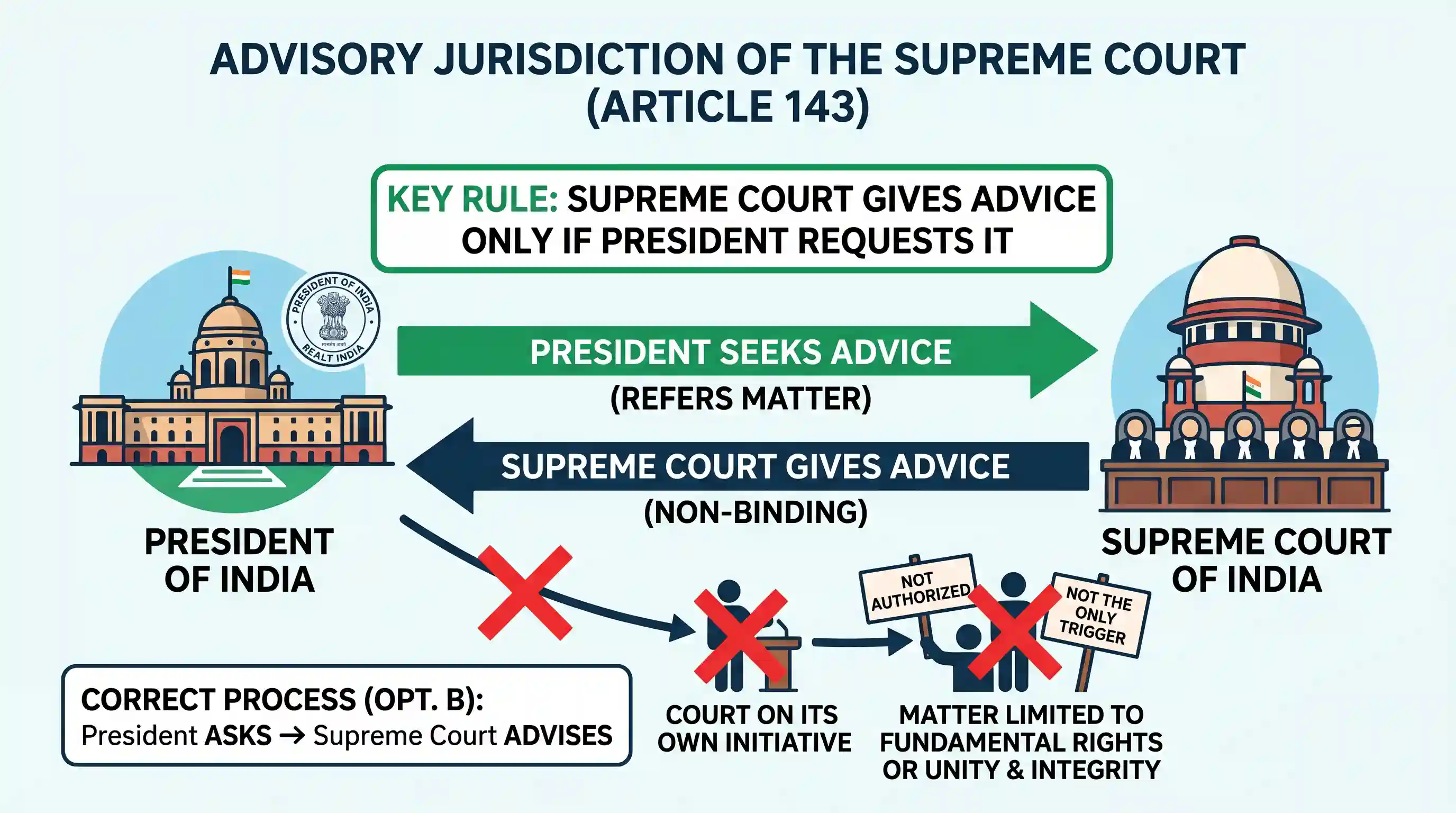
The Supreme Court of India tenders’ advice to the President on a matter of law or fact

- Aon its own initiative
- Bonly if he seeks such adviceCorrect
- Conly if the matter relates to the Fundamental Rights of citizens
- Donly if the issue poses a threat to the unity and integrity of the country
Explanation
The correct option is B because of the Advisory Jurisdiction of the Supreme Court under Article 143 of the Indian Constitution. According to this article, the President may seek the opinion of the Supreme Court on any question of law or fact that is of public importance. The Court does not offer this advice on its own initiative; it only does so when the President specifically refers the matter to it. Furthermore, the advice given by the Supreme Court is not binding on the President.
Related questions
More UPSC Prelims practice from the same subject and topic.
- Prelims 2001GS1polity-and-governance
Consider the following statements regarding the High Courts in India: I. There are eighteen High Courts in the country. II. Three of them have jurisdiction over more than one State. III. No Union Terr…
- Prelims 2001GS1polity-and-governance
In what way does the Indian Parliament exercise control over the administration?
- Prelims 2001GS1polity-and-governance
Consider the following statements about the minorities in India: I. The Government of India has notified five communities, namely, Muslims, Sikhs, Christians, Buddhists and Zoroastrians as Minorities.…
- Prelims 2001GS1polity-and-governance
In which one of the following areas does the State Government NOT have control over its local bodies?
- Prelims 2001GS1polity-and-governance
Mekong Ganga Cooperation Project is
- Prelims 2001GS1polity-and-governance
Match List I with List II and select the correct answer using the codes given below the Lists: List I List II (Amendments to the Constitution) (Contents) I. The Constitution (Sixty-ninth Amendment) Ac…