Which one of the following statements correctly describes the Fourth Schedule of the Constitution of India?

- AIt lists the distribution of power between the Union and the States
- BIt contains the languages listed in the Constitution
- CIt contains the provisions regarding the administration of tribal areas
- DIt allocates seats in the Council of StatesCorrect
Explanation
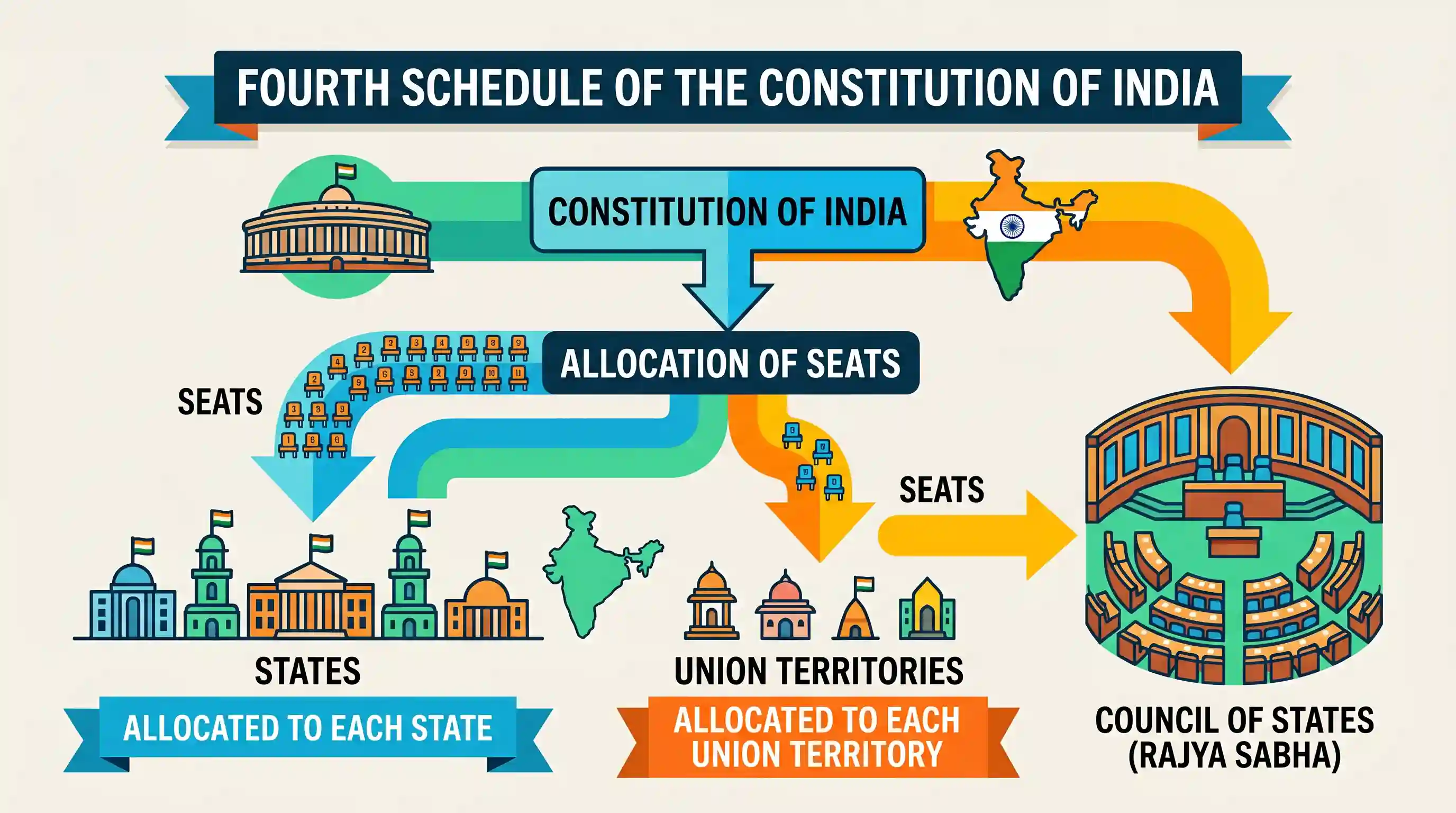
The Fourth Schedule of the Constitution of India specifies the allocation of seats in the Council of States, also known as the Rajya Sabha, to each State and Union Territory.
The other options represent different schedules: Option A refers to the Seventh Schedule, which contains the Union, State, and Concurrent lists. Option B refers to the Eighth Schedule, which lists the official languages. Option C refers to the Fifth and Sixth Schedules, which deal with the administration of Scheduled Areas and Tribal Areas.
Related questions
More UPSC Prelims practice from the same subject and topic.
- Prelims 2001GS1polity-and-governance
Match List I with List II and select the correct answer using the codes given below the Lists: List I List II (Amendments to the Constitution) (Contents) I. The Constitution (Sixty-ninth Amendment) Ac…
- Prelims 2001GS1polity-and-governance
Match List I with List II and select the correct answer using the codes given below the Lists: List I List II (Article of the Constitution) (Content) I. Article 54 A) Election of the President of Indi…
- Prelims 2001GS1polity-and-governance
In what way does the Indian Parliament exercise control over the administration?
- Prelims 2001GS1polity-and-governance
Consider the following statements about the minorities in India: I. The Government of India has notified five communities, namely, Muslims, Sikhs, Christians, Buddhists and Zoroastrians as Minorities.…
- Prelims 2001GS1polity-and-governance
In which one of the following areas does the State Government NOT have control over its local bodies?
- Prelims 2001GS1polity-and-governance
Consider the following statements regarding the High Courts in India: I. There are eighteen High Courts in the country. II. Three of them have jurisdiction over more than one State. III. No Union Terr…