With reference to the history of ancient India, which of the following was/were common to both Buddhism and Jainism? 1. Avoidance of extremities of penance and enjoyment 2. Indifference to the authority of the Vedas 3. Denial of efficacy of rituals Select the correct answer using the codes given below:

- A1 only
- B2 and 3 onlyCorrect
- C1 and 3 only
- D1, 2 and 3
Explanation
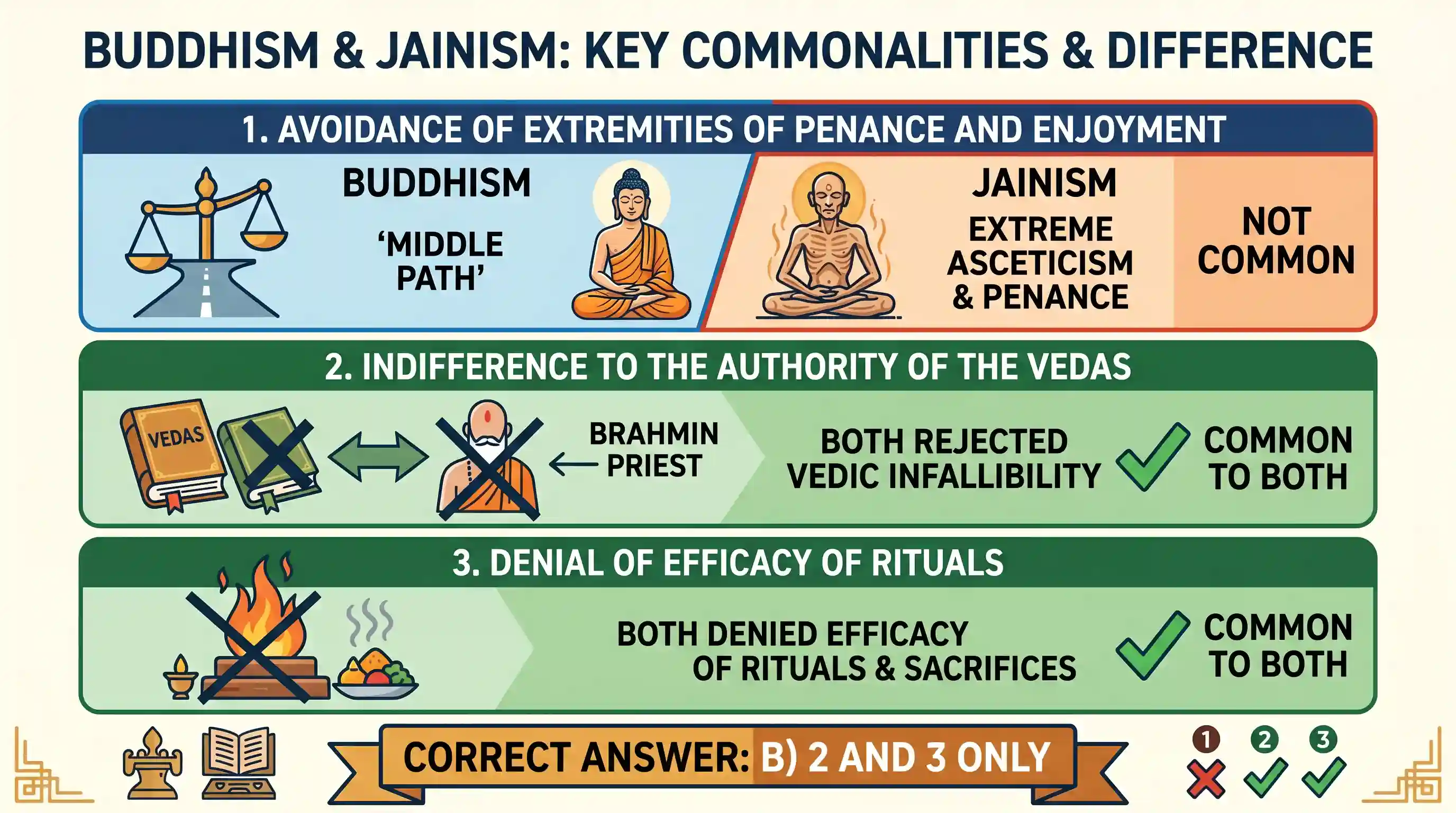
The correct answer is B because statements 2 and 3 apply to both religions, while statement 1 applies only to Buddhism.
Statement 1 is incorrect because Buddhism followed the Middle Path, which avoids the extremes of luxury and self mortification. In contrast, Jainism advocated for extreme penance and rigorous asceticism, including practices like fasting to death. Therefore, this principle was not common to both.
Statement 2 is correct because both religions emerged as heterodox schools that rejected the infallible authority of the Vedas. They challenged the Vedic social hierarchy and the supremacy of the Brahmins.
Statement 3 is correct because both Buddhism and Jainism denied the efficacy of rituals and animal sacrifices as a means to achieve liberation or spiritual growth, focusing instead on ethical conduct and personal discipline.
Related questions
More UPSC Prelims practice from the same subject and topic.
- Prelims 2012GS1history
With reference to the scientific progress of ancient India, which of the statements given below are correct? 1. Different kinds of specialized surgical instruments were in common use by 1st century AD…
- Prelims 2012GS1history
The religion of early Vedic Aryans was primarily of
- Prelims 2012GS1history
Which of the following statements is/are correct regarding Brahmo Samaj? 1. It opposed idolatry. 2. It denied the need for a priestly class for interpreting the religious texts. 3. It popularized the …
- Prelims 2012GS1history
With reference to the guilds (Shreni) of ancient India that played a very important role in the country's economy, which of the following statements is/are correct? 1. Every guild was registered with …
- Prelims 2012GS1history
The Congress ministries resigned in the seven provinces in 1939, because
- Prelims 2012GS1history
During Indian freedom struggle, the National Social Conference was formed. What was the reason for its formation?