The Nagara, the Dravida and the Vesara are the

- Athree main racial groups of the Indian subcontinent
- Bthree main linguistic divisions into which the languages of India can be classified
- Cthree main styles of Indian temple architectureCorrect
- Dthree main musical Gharanas prevalent in India
Explanation
The correct answer is C because Nagara, Dravida, and Vesara refer to the three primary architectural styles used in the construction of ancient and medieval Hindu temples in India.
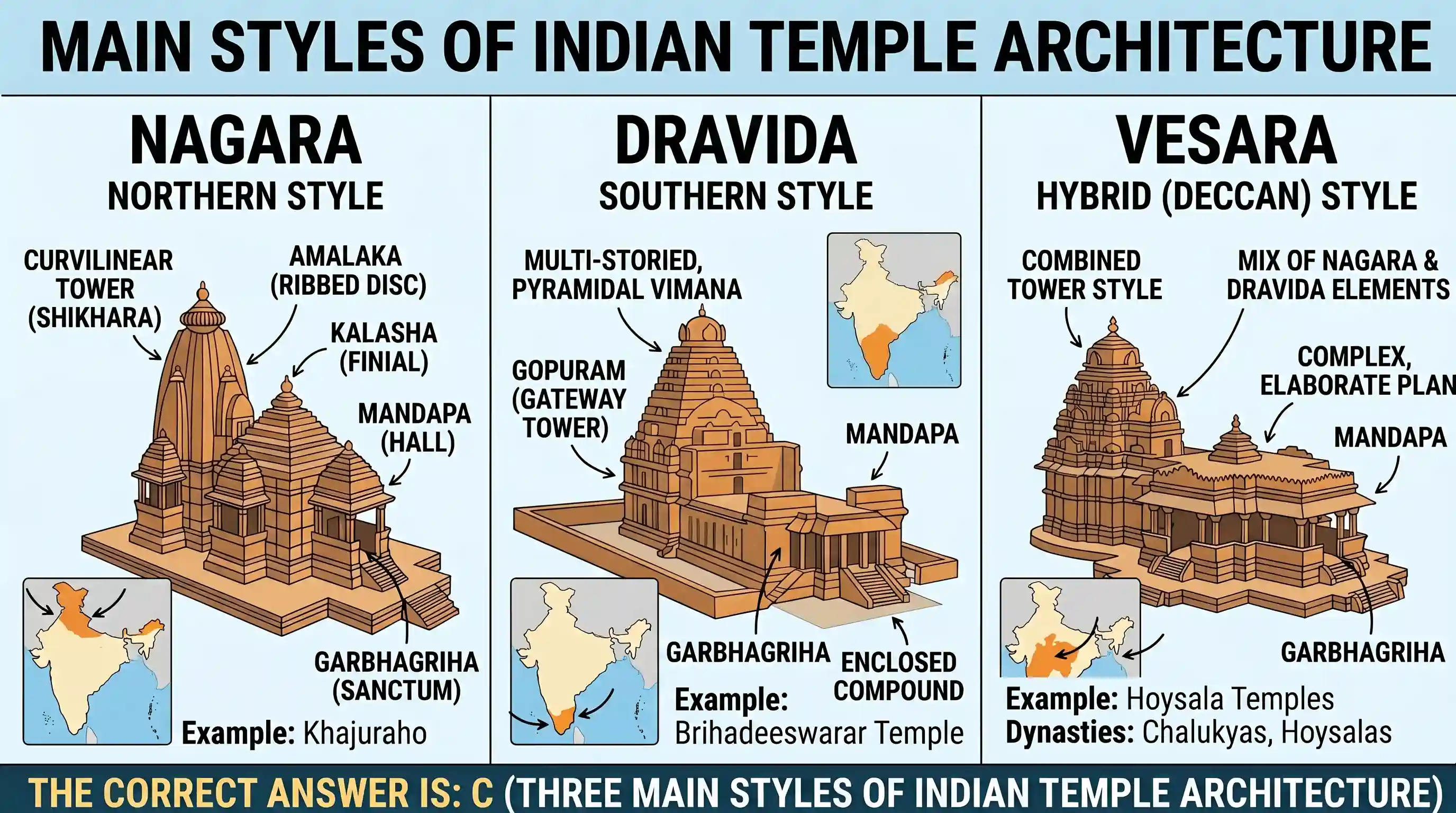
Nagara is the northern style, characterized by a beehive shaped tower called a Shikhara.
Dravida is the southern style, distinguished by pyramid shaped towers called Vimanas and elaborate gateway towers known as Gopurams.
Vesara is a hybrid or mixed style that combines elements of both Nagara and Dravida traditions. This style became prominent in the Deccan region under dynasties like the Chalukyas and Hoysalas.
Related questions
More UPSC Prelims practice from the same subject and topic.
- Prelims 2012GS1art-and-culture
With reference to Dhrupad, one of the major traditions of India that has been kept alive for centuries, which of the following statements are correct? 1. Dhrupad originated and developed in the Rajput…
- Prelims 2012GS1art-and-culture
How do you distinguish between Kuchipudi and Bharatanatyam dances? 1. Dancers occasionally speaking dialogues is found in Kuchipudi dance but not in Bharatanatyam. 2. Dancing on the brass plate by kee…
- Prelims 2012GS1art-and-culture
Lord Buddha's image is sometimes shown with the hand gesture called 'Bhumisparsha Mudra'. It symbolizes
- Prelims 2025GS1art-and-culture
The first Gandharva Mahavidyalaya, a music training school, was set up in 1901 by Vishnu Digambar Paluskar in
- Prelims 2025GS1art-and-culture
Consider the following statements in respect of the first Kho Kho World Cup : I. The event was held in Delhi, India. II. Indian men beat Nepal with a score of 78-40 in the final to become the World Ch…
- Prelims 2025GS1art-and-culture
Consider the following statements : I. In the finals of the 45th Chess Olympiad held in 2024, Gukesh Dommaraju became the world's youngest winner after defeating the Russian player Ian Nepomniachtchi.…