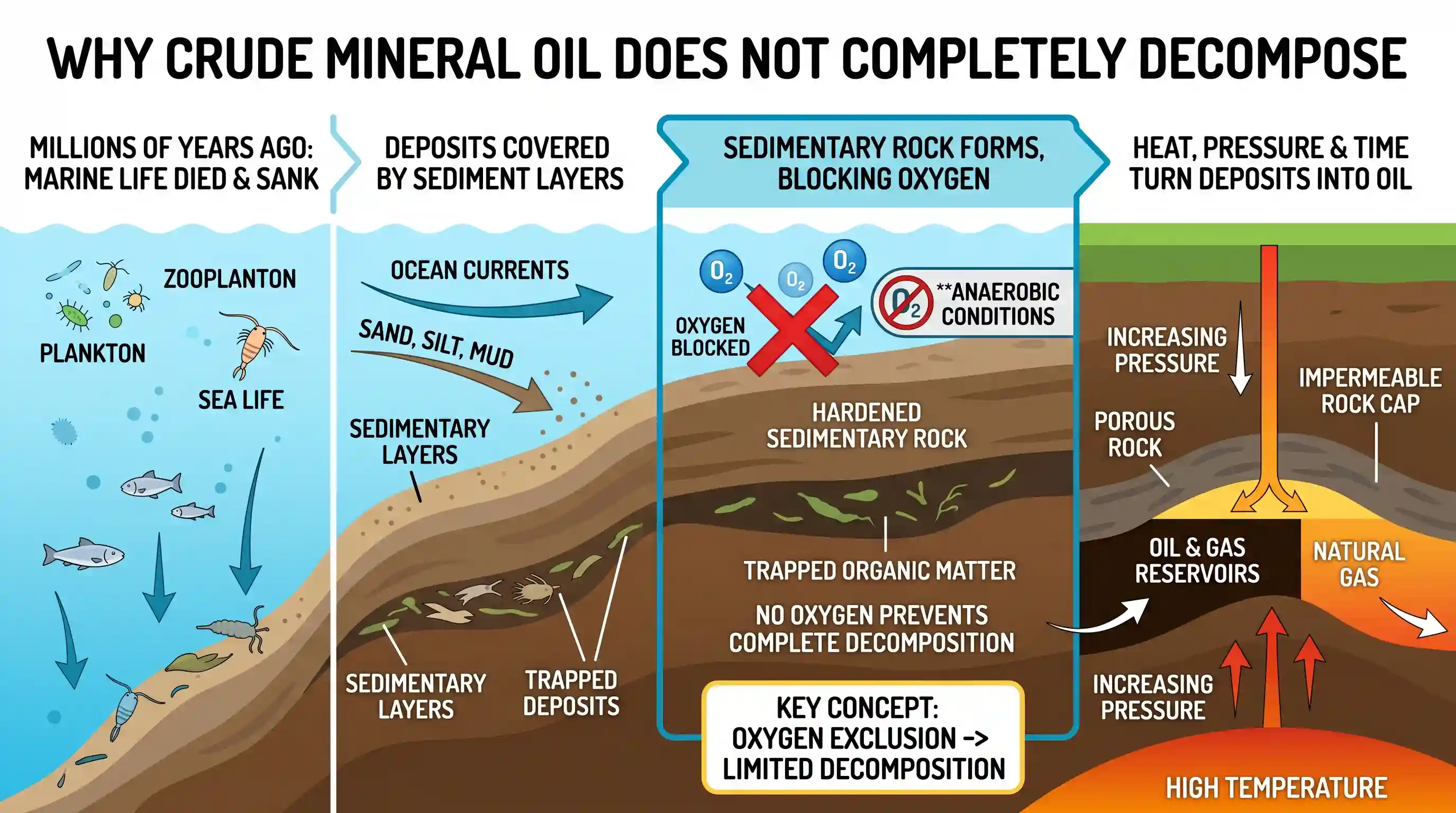
Passage Crude mineral oil comes out of the earth as a thick brown or black liquid with a strong smell. It is a complex mixture of many different substances, each with its own individual qualities. Most of them are combinations of hydrogen and carbon in varying proportions. Such hydrocarbons are also found in other forms such as bitumen, asphalt and natural gas. Mineral oil originates from the carcasses of tiny animals and from plants that live in the sea. Over millions of years, these dead creatures form large deposits under the sea-bed; and ocean currents cover them with a blanket of sand and silt. As this mineral hardens, it becomes sedimentary rock and effectively shuts out the oxygen, so preventing the complete decomposition of the marine deposits underneath. The layers of sedimentary rock become thicker and heavier. Their pressure produces heat, which transforms the tiny carcasses into crude oil in a process that is still going on today. Mineral oil deposits under the sea do not get completely decomposed because they

- Aare constantly washed by the ocean currents
- Bbecome rock and prevent oxygen from entering themCorrect
- Ccontain a mixture'of hydrogen and carbon
- Dare carcasses of organisms lying in saline conditions.
Explanation
The passage states, "As this mineral hardens, it becomes sedimentary rock and effectively shuts out the oxygen, so preventing the complete decomposition of the marine deposits underneath."
Analyzing the options: A) "are constantly washed by the ocean currents" - The passage mentions ocean currents covering deposits with sand and silt, but not that washing prevents decomposition. B) "become rock and prevent oxygen from entering them" - This directly matches the explanation in the passage that sedimentary rock formation "effectively shuts out the oxygen," which prevents complete decomposition. C) "contain a mixture of hydrogen and carbon" - This describes the composition of crude oil, not the reason why the original deposits don't completely decompose. D) "are carcasses of organisms lying in saline conditions" - While the deposits are marine (implying saline conditions), the passage does not attribute incomplete decomposition to salinity. The key factor is the lack of oxygen.
Therefore, B is the correct answer as it directly reflects the reason provided in the passage.
Related questions
More UPSC Prelims practice from the same subject and topic.
- Prelims 2013CSATReading Comprehension
Read the following passage and answer the two items that follow. Your answers to these items should be based on the passage only. Passage Ecological - research over the last quarter of the century has…
- Prelims 2013CSATReading Comprehension
What is the purpose of maintaining the continuity of forested landscapes and corridors? 1. Preservation of biodiversity. 2. Management of mineral resources. 3. Grant of forest lands for human activiti…
- Prelims 2013CSATReading Comprehension
Read the following passages and answer the items that follow passage. Your answers to these items should be based on the passages only The law in many parts of the world increasingly restricts the dis…
- Prelims 2013CSATReading Comprehension
Read the following passages and answer the items that follow passage. Your answers to these items should be based on the passages only The law in many parts of the world increasingly restricts the dis…
- Prelims 2013CSATReading Comprehension
Read the following passages and answer the items that follow passage. Your answers to these items should be based on the passages only The law in many parts of the world increasingly restricts the dis…
- Prelims 2013CSATReading Comprehension
Read the following passages and answer the items that follow passage. Your answers to these items should be based on the passages only . The law in many parts of the world increasingly restricts the d…