Which one of the following pairs does not form part of the six systems of Indian Philosophy?

- AMimamsa and Vedanta
- BNyaya and Vaisheshika
- CLokayata and KapalikaCorrect
- DSankhya and Yoga
Explanation
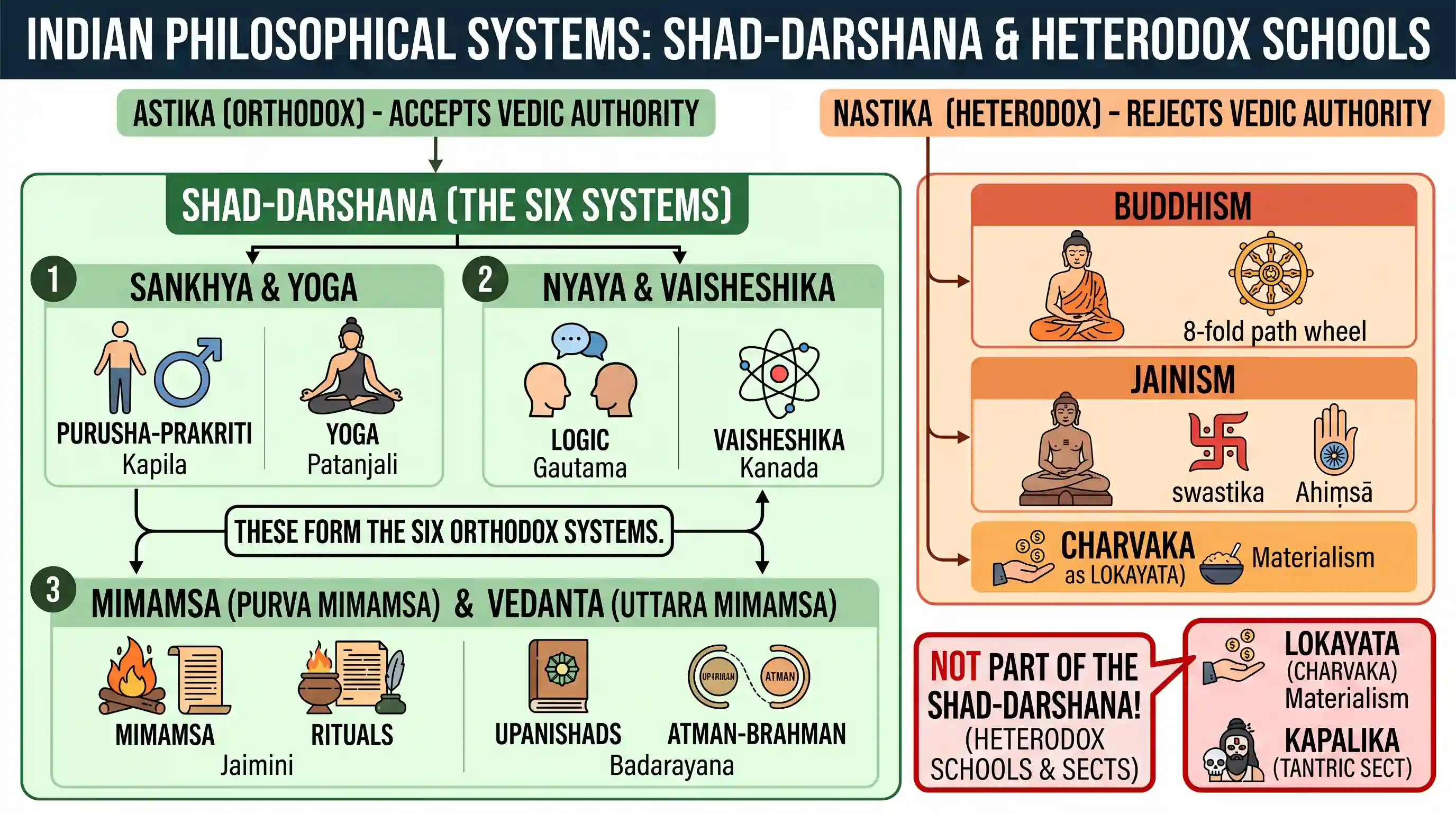
The traditional "six systems" (Shad-darshana) of Indian Philosophy are considered the orthodox (Astika) schools that accept the authority of the Vedas. These six schools are:
Mimamsa (Purva Mimamsa) Vedanta (Uttara Mimamsa) Nyaya Vaisheshika Sankhya Yoga Let's look at the given options:
Mimamsa and Vedanta: These are two of the six orthodox systems. Nyaya and Vaisheshika: These are also two of the six orthodox systems. Sankhya and Yoga: These are two of the six orthodox systems. Lokayata and Kapalika: Lokayata (also known as Charvaka) is a heterodox (Nastika) school of Indian philosophy, meaning it does not accept the authority of the Vedas. It is known for its materialistic and atheistic views. Kapalika was a tantric Shaivite sect, primarily a religious and ascetic order rather than one of the six formal philosophical systems. Therefore, Lokayata and Kapalika do not form part of the six systems of Indian Philosophy.
Related questions
More UPSC Prelims practice from the same subject and topic.
- Prelims 2014GS1art-and-culture
Consider the following languages: 1. Gujarati 2. Kannada 3. Telugu Which of the above has/have been declared as 'Classical Language/Languages' by the Government?
- Prelims 2014GS1art-and-culture
The national motto of India, 'Satyameva Jayate' inscribed below the Emblem of India is taken from
- Prelims 2014GS1art-and-culture
Consider the following towns of India: 1. Bhadrachalam 2. Chanderi 3. Kancheepuram 4. Karnal Which of the above are famous for the production of traditional sarees/fabric?
- Prelims 2014GS1art-and-culture
Chaitra 1 of the national calendar based on the Saka Era corresponds to which one of the following dates of the Gregorian calendar in a normal year of 365 days?
- Prelims 2014GS1art-and-culture
With reference to Buddhist history, tradition and culture in India, consider the following pairs: Famous shrine Location 1. Tabo monastery and temple complex : Spiti Valley 2. Lhotsava Lhakhang temple…
- Prelims 2014GS1art-and-culture
Consider the following statements : 1. 'Bijak' is a composition of the teachings of Saint Dadu Dayal. 2. The Philosophy of Pushti Marg was propounded by Madhvacharya. Which of the statements given abo…