With reference to the art and archaeo-logical history of India, which one among the following was made earliest?

- ALingaraja Temple at Bhubaneswar
- BRock-cut Elephant at DhauliCorrect
- CRock-cut Monuments at Mahabalipuram
- DVaraha Image at Udayagiri
Explanation
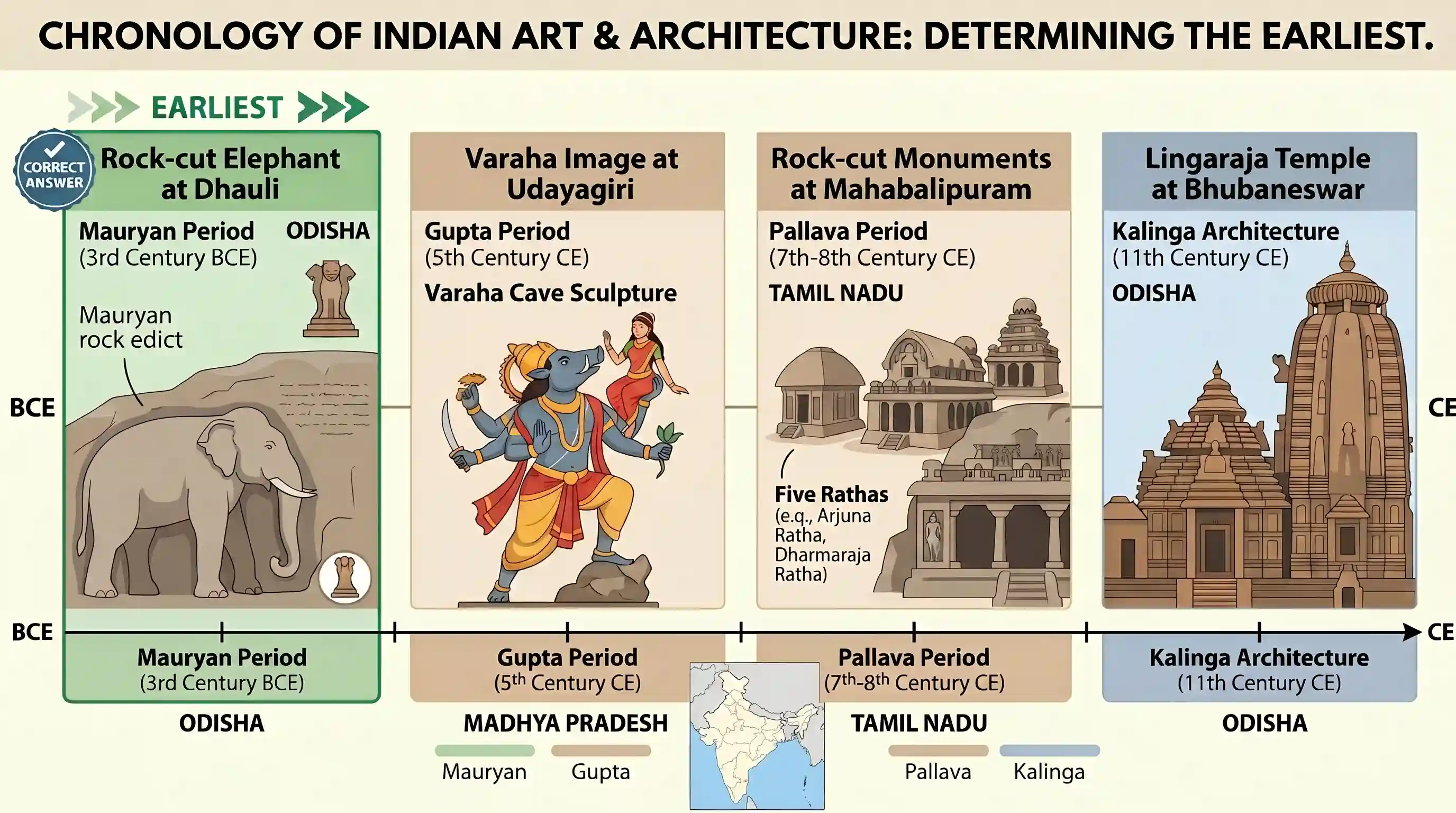
To determine which of the given architectural/artistic works was made earliest, one needs to know their approximate periods of creation:
Rock-cut Elephant at Dhauli: This famous elephant sculpture, located in Odisha, is associated with the Ashokan rock edicts and dates back to the Mauryan period, specifically the 3rd century BCE. It is considered one of the earliest rock-cut sculptures in India. Varaha Image at Udayagiri: The Udayagiri Caves in Madhya Pradesh, including the magnificent Varaha (boar) avatar of Vishnu, belong to the Gupta period, dating to the early 5th century CE. Rock-cut Monuments at Mahabalipuram: These include the Rathas and mandapas, created by the Pallava dynasty in Tamil Nadu, primarily during the 7th and 8th centuries CE. Lingaraja Temple at Bhubaneswar: This grand temple in Odisha is a classic example of Kalinga architecture and was largely completed in the 11th century CE. Comparing these periods, the Rock-cut Elephant at Dhauli (3rd century BCE) predates all the others by several centuries, making it the earliest.
Related questions
More UPSC Prelims practice from the same subject and topic.
- Prelims 2015GS1art-and-culture
Consider the following pairs: Place of Pilgrimage Location 1. Srisailam : Nallamala Hills 2. Omkareshwar : Satmala Hills 3. Pushkar : Mahadeo Hills Which of the above pairs is/are correctly matched?
- Prelims 2015GS1art-and-culture
Which one of the following was given classical language status recently?
- Prelims 2015GS1art-and-culture
Kalamkari painting refers to
- Prelims 2025GS1art-and-culture
The first Gandharva Mahavidyalaya, a music training school, was set up in 1901 by Vishnu Digambar Paluskar in
- Prelims 2025GS1art-and-culture
Consider the following statements in respect of the first Kho Kho World Cup : I. The event was held in Delhi, India. II. Indian men beat Nepal with a score of 78-40 in the final to become the World Ch…
- Prelims 2025GS1art-and-culture
Consider the following statements : I. In the finals of the 45th Chess Olympiad held in 2024, Gukesh Dommaraju became the world's youngest winner after defeating the Russian player Ian Nepomniachtchi.…