Which of the following have species that can establish symbiotic relationship with other organisms? 1. Cnidarians 2. Fungi 3. Protozoa Select the correct answer using the code given below.

- A1 and 2 only
- B2 and 3 only
- C1 and 3 only
- D1, 2 and 3Correct
Explanation
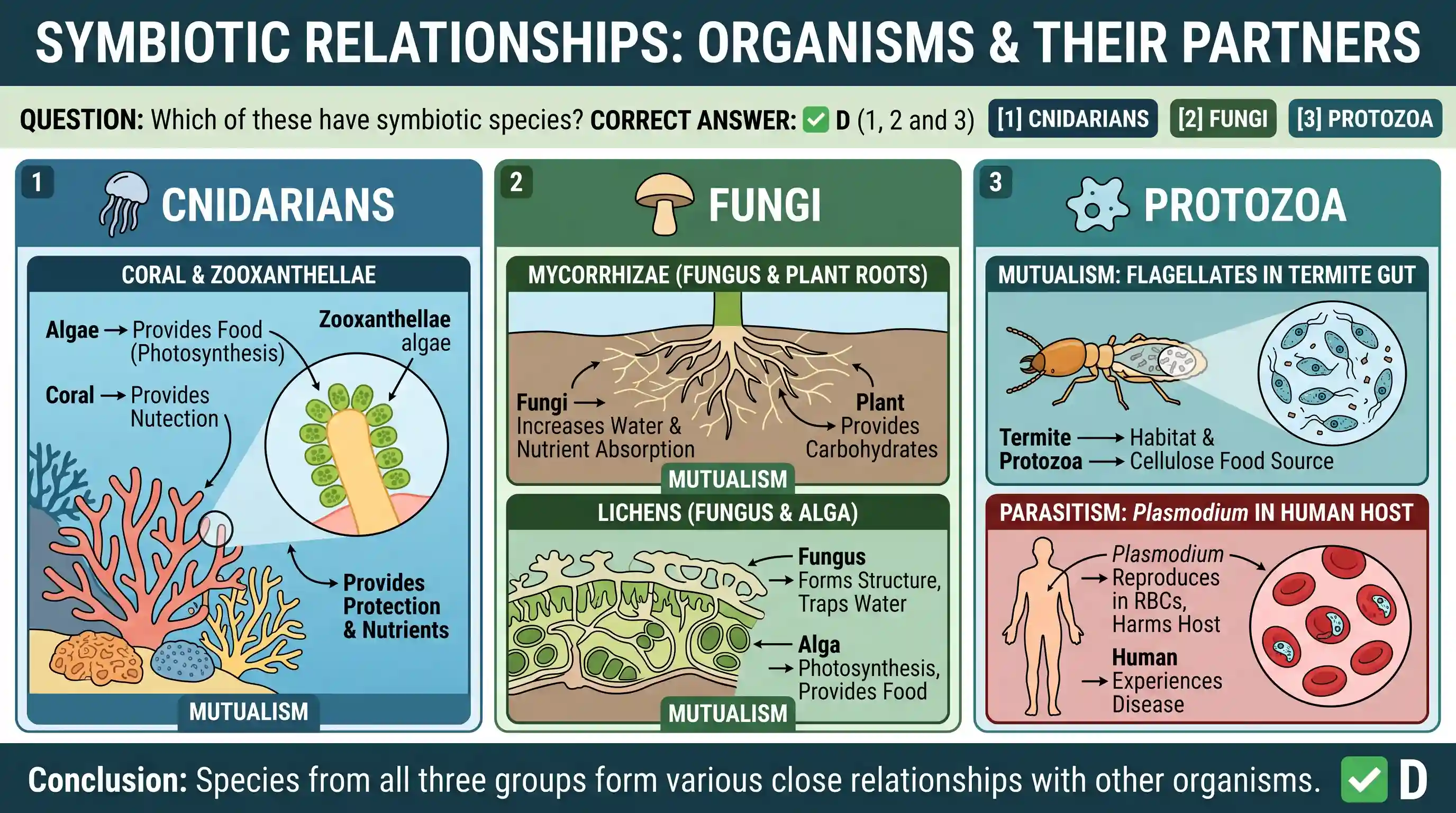
Symbiotic relationships involve close and long-term interactions between two different biological organisms. These can be mutualistic (both benefit), commensalistic (one benefits, other unaffected), or parasitic (one benefits, other harmed). All three groups listed exhibit various forms of symbiotic relationships:
-
Cnidarians: Many cnidarians, particularly corals, form a crucial mutualistic symbiosis with photosynthetic algae called zooxanthellae. The algae provide food to the coral, and the coral provides a protected environment for the algae.
-
Fungi: Fungi are well-known for their diverse symbiotic relationships. Examples include mycorrhizae, a mutualistic association with plant roots, where fungi help plants absorb nutrients, and lichens, a mutualistic partnership between a fungus and an alga or cyanobacterium.
-
Protozoa: Many protozoa engage in symbiotic relationships. For instance, flagellate protozoa live in the guts of termites, helping them digest cellulose (mutualism). Other protozoa are well-known parasites, causing diseases in humans and animals, which is a form of symbiosis where one organism benefits at the expense of the other.
Therefore, all three groups have species that establish symbiotic relationships with other organisms.
Related questions
More UPSC Prelims practice from the same subject and topic.
- Prelims 2021GS1geography
'R2 Code of Practices' constitutes a tool available for promoting the adoption of
- Prelims 2021GS1geography
Why is there a concern about copper smelting plants? 1. They may release lethal quantities of carbon monoxide into environment. 2. The copper slag can cause the leaching of some heavy metals into envi…
- Prelims 2021GS1geography
What is blue carbon?
- Prelims 2021GS1geography
In the nature, which of the following is/are most likely to be found surviving on a surface without soil? 1. Fern 2. Lichen 3. Moss 4. Mushroom Select the correct answer using the code given below.
- Prelims 2021GS1geography
Consider the following kinds of organisms : 1. Copepods 2. Cyanobacteria 3. Diatoms 4. Foraminifera Which of the above are primary producers in the food chains of oceans?
- Prelims 2021GS1geography
Consider the following animals : 1. Hedgehog 2. Marmot 3. Pangolin To reduce the chance of being captured by predators, which of the above organisms rolls up/roll up and protects/ protect its/their vu…