Consider the following information (Archaeological Site — State — Description): 1. Chandraketugarh — Odisha — Trading port town 2. Inamgaon — Maharashtra — Chalcolithic site 3. Mangadu — Kerala — Megalithic site 4. Salihundam — Andhra Pradesh — Rock-cut cave shrines In which of the above rows is the given information correctly matched?

- A1 and 2
- B2 and 3Correct
- C3 and 4
- D1 and 4
Explanation
Let's analyze each pair:
-
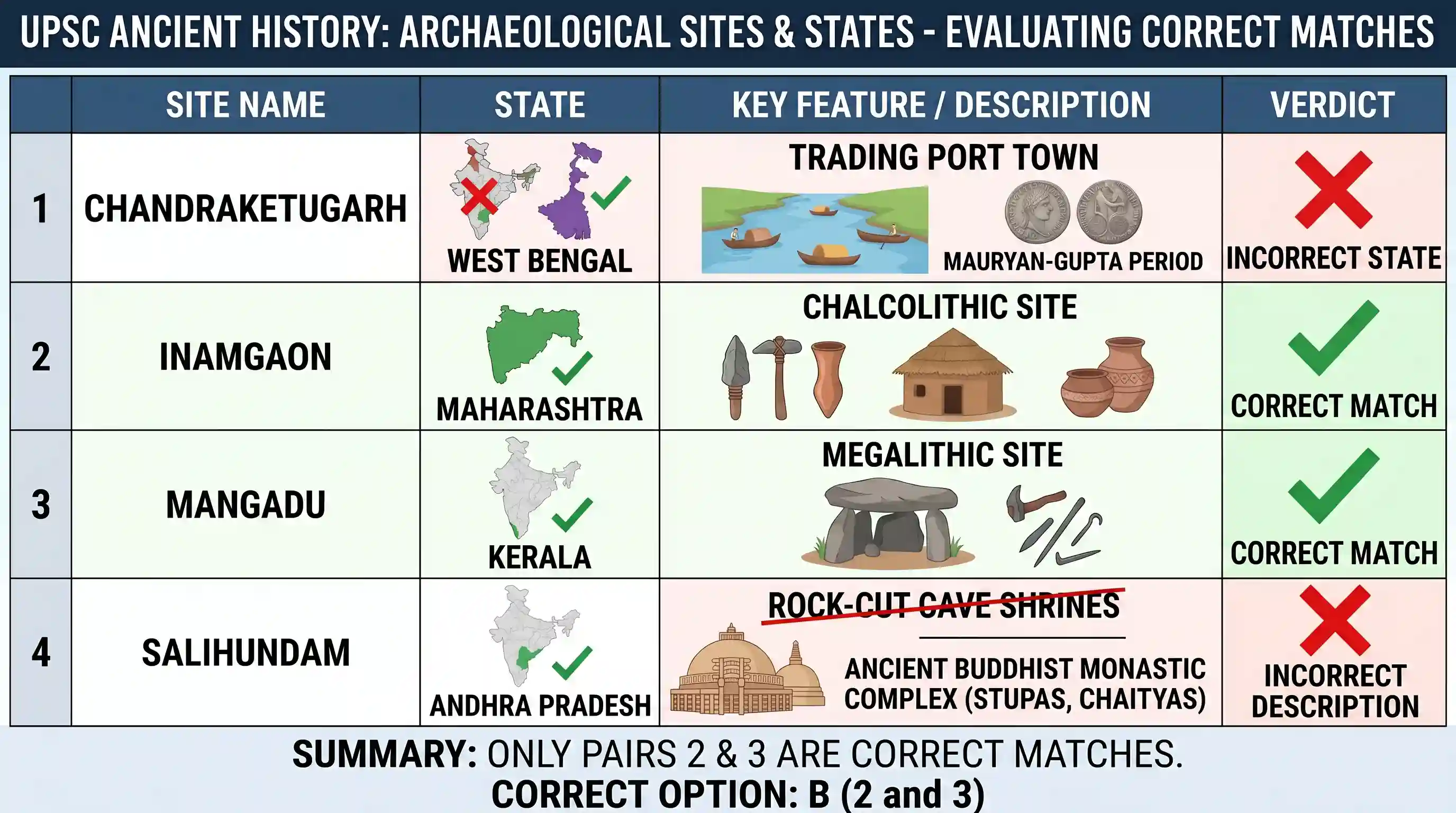
Chandraketugarh (Odisha, Trading Port town): Incorrect. Chandraketugarh is a prominent archaeological site in West Bengal, not Odisha. It was an ancient city and a significant trading port town from the Mauryan to Gupta periods.
-
Inamgaon (Maharashtra, Chalcolithic site): Correct. Inamgaon is a well-known Chalcolithic site located in Maharashtra, representing one of the largest and most extensively excavated Chalcolithic settlements in India.
-
Mangadu (Kerala, Megalithic site): Correct. Mangadu is a megalithic site in Kerala, known for its megalithic monuments, typically associated with burial practices from the Iron Age.
-
Salihundam (Andhra Pradesh, Rock-cut cave shrines): Incorrect. Salihundam is an ancient Buddhist monastic complex located in Andhra Pradesh, known for its stupas, chaityas, and viharas. While it features rock-cut structures and shrines, the primary description 'Rock-cut cave shrines' (which might imply more extensive cave temple complexes like Ajanta/Ellora) is not the most precise or complete description for Salihundam, which is predominantly a structural Buddhist site, though some rock-cut features exist. More critically, it's known as a Buddhist site, not primarily for 'rock-cut cave shrines' in the same vein as major Hindu or Jain cave temples.
Given the standard classifications, pairs 2 and 3 are correctly matched.
Related questions
More UPSC Prelims practice from the same subject and topic.
- Prelims 2024GS1history
With reference to ancient India, Gautama Buddha was generally known by which of the following epithets? 1. Nayaputta 2. Shakyamuni 3. Tathagata Select the correct answer using the code given below:
- Prelims 2024GS1history
Sanghabhuti, an Indian Buddhist monk, who travelled to China at the end of the fourth century AD, was the author of a commentary on:
- Prelims 2024GS1history
Who of the following rulers of medieval India gave permission to the Portuguese to build a fort at Bhatkal?
- Prelims 2024GS1history
With reference to revenue collection by Cornwallis, consider the following statements: 1. Under the Ryotwari Settlement of revenue collection, the peasants were exempted from revenue payment in case o…
- Prelims 2024GS1history
Consider the following pairs (Party — Its Leader): 1. Bharatiya Jana Sangh — Dr. Shyama Prasad Mukherjee 2. Socialist Party — C. Rajagopalachari 3. Congress for Democracy — Jagjivan Ram 4. Swatantra P…
- Prelims 2026GS1history
Which of the following pairs of ancient and modern names of rivers is/are correctly matched ? 1. Vitasta : Chenab 2. Asikni : Jhelum 3. Parushni : Ravi 4. Yavyavati : Beas Select the answer using the …