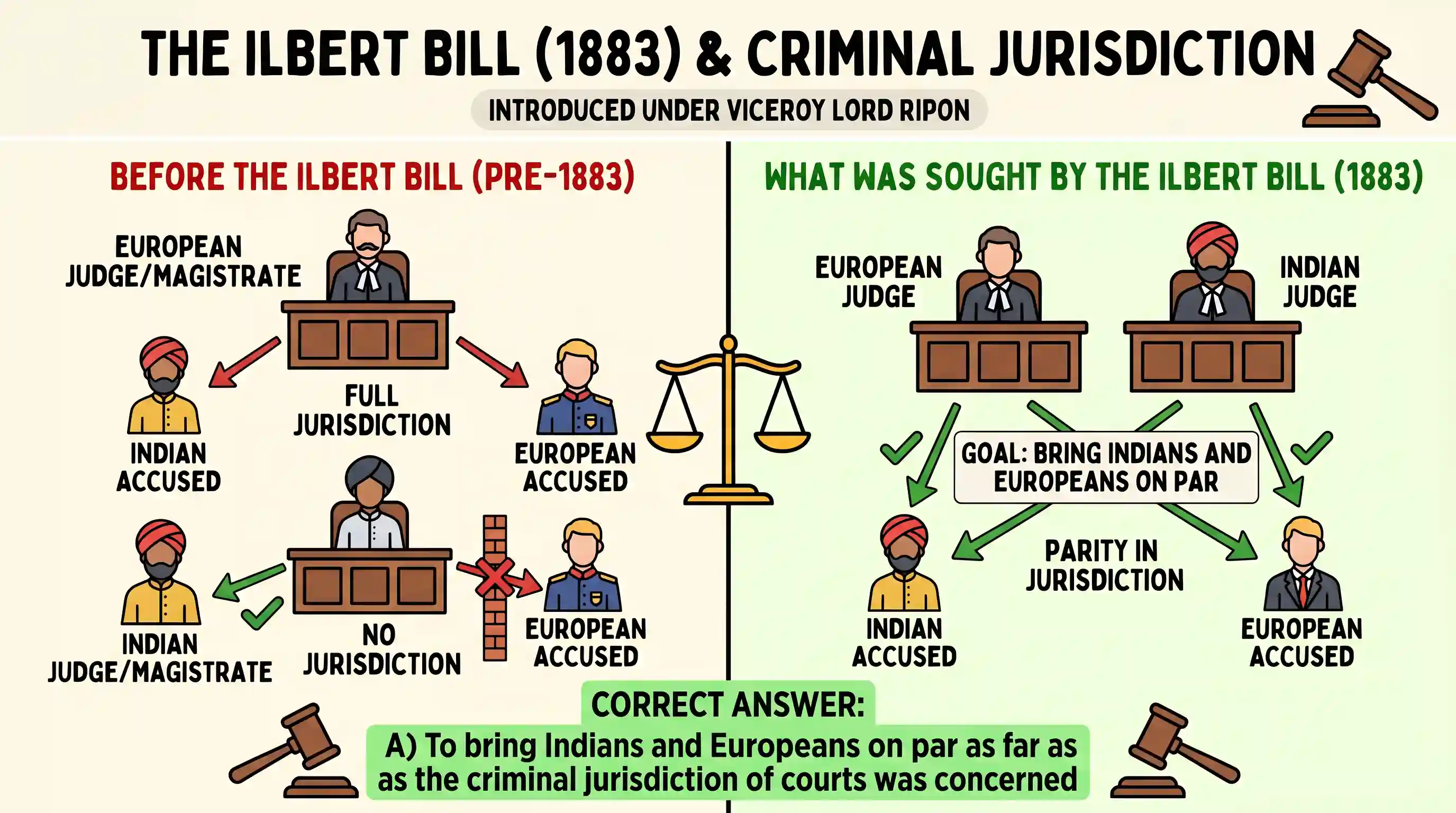
With reference to colonial rule in India, what was sought by the Ilbert Bill in 1883?

- ATo bring Indians and Europeans on par as far as the criminal jurisdiction of courts was concernedCorrect
- BTo impose severe restrictions on the freedom of the native press as it was perceived to be hostile to colonial rulers
- CTo encourage the native Indians to appear for civil service examinations by conduction them in India
- DTo allow native Indians to possess arms by amending the Arms Act
Explanation
The correct answer is A because the Ilbert Bill, introduced during the viceroyalty of Lord Ripon, aimed to remove racial discrimination in the judicial system. Before this bill, Indian magistrates and judges were not allowed to try cases involving European subjects in criminal courts. The bill sought to grant Indian judges the same authority as their European counterparts, thereby bringing Indians and Europeans on par regarding criminal jurisdiction. This move faced heavy opposition from the British community in India, leading to a compromise that significantly modified the original proposal.
Related questions
More UPSC Prelims practice from the same subject and topic.
- Prelims 2003GS1history
Which one of the following statements is correct?
- Prelims 2003GS1history
The aim of education as stated by the Wood’s despatch of 1854 was
- Prelims 2003GS1history
With reference to the entry of European powers into India, which one of the following statements is correct?
- Prelims 2003GS1history
With reference to Indian freedom struggle, which one of the following statements is correct?
- Prelims 2003GS1history
The leader of the Bardoli Satyagraha (1928) was
- Prelims 2003GS1history
During the colonial period in India, what was the purpose of the Whitley Commission?