According to the Constitution of India, which of the following are fundamental for the governance of the country?

- A(a) Fundamental Rights
- B(b) Fundamental Duties
- C(c) Directive Principles of State PolicyCorrect
- D(d) Fundamental Rights and Fundamental Duties
Explanation
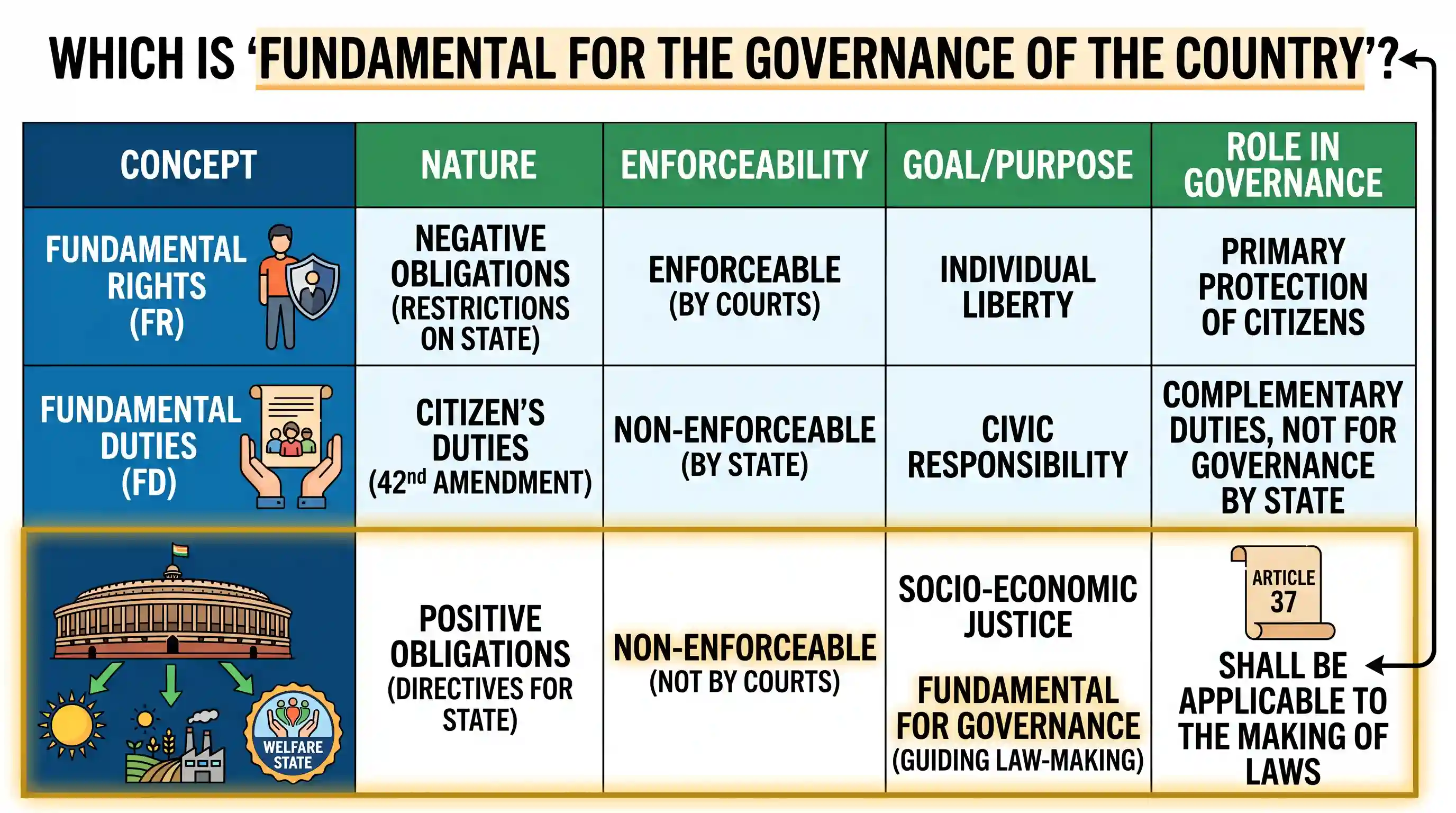
The correct answer is (c) Directive Principles of State Policy. While Fundamental Rights and Duties are crucial, the Constitution explicitly states that Directive Principles are fundamental in the governance of the country, even if not legally enforceable. Article 37 of the Constitution states that these principles are 'not enforceable by any court' but 'shall be applicable to the making of laws'. They aim to create a welfare state.
Why other options are incorrect:
(a) Fundamental Rights: These are important, but they primarily protect citizens from the state. They don't, in themselves, define the overall governance framework.
(b) Fundamental Duties: These were added later (42nd Amendment) and are meant to complement Fundamental Rights, but are not fundamental for governance in the same way as DPSP.
(d) Fundamental Rights and Fundamental Duties: While both are important components of the Constitution, they don't collectively define the fundamental basis of governance as comprehensively as the DPSP.
The DPSP lay down the socio-economic objectives that the state should strive to achieve, guiding policy-making and legislation. They represent the positive obligations of the state towards its citizens.
Related questions
More UPSC Prelims practice from the same subject and topic.
- Prelims 2013GS1polity-and-governance
‘Economic Justice’ as one of the objectives of the Indian Constitution has been provided in
- Prelims 2013GS1polity-and-governance
What will follow if a Money Bill is substantially amended by the Rajya Sabha?
- Prelims 2013GS1polity-and-governance
Which one of the following statements is correct?
- Prelims 2013GS1polity-and-governance
Which of the following bodies does not/do not find mention in the Constitution? 1. National Development Council 2. Planning Commission 3. Zonal Councils Select the correct answer using the codes given…
- Prelims 2013GS1polity-and-governance
Which of the following bodies does not/do not find mention in the Constitution? 1. National Development Council 2. Planning Commission 3. Zonal Councils Select the correct answer using the codes given…
- Prelims 2013GS1polity-and-governance
The Parliament can make any law for whole or any part of India for implementing international treaties