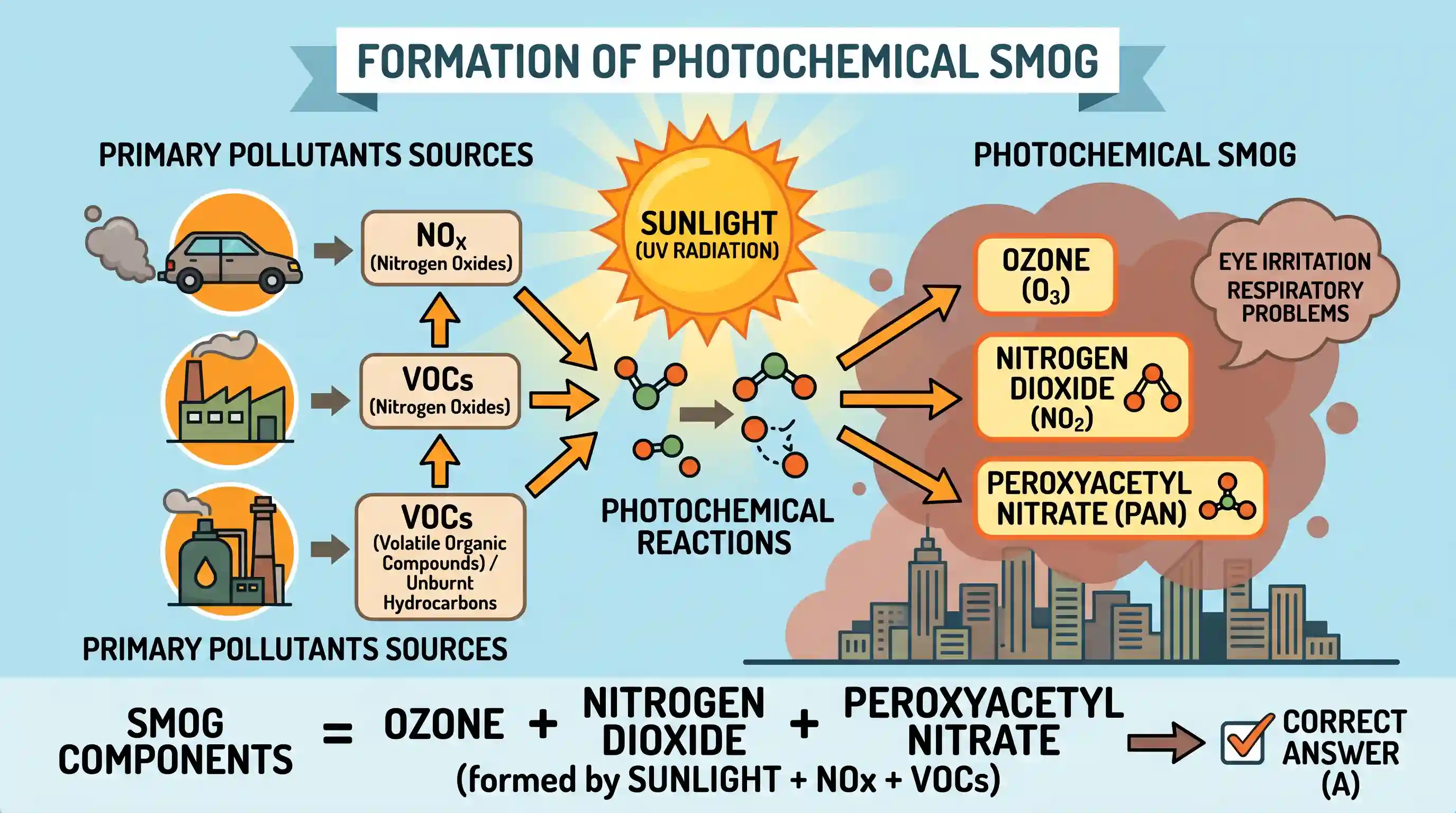
Photochemical smog is a resultant of the reaction among

- ANO2, 03 and peroxyacetyl nitrate in the presence of sunlightCorrect
- BCO, O2 and peroxyacetyl nitrate in the presence of sunlight
- CCO, CO2 and NO2 at low temperature
- Dhigh concentration of NO2, O3 and CO in the evening
Explanation
Photochemical smog is a complex mixture of pollutants formed through the interaction of sunlight with certain primary pollutants. Here's a breakdown:
Correct Answer (A): NO2, O3 and peroxyacetyl nitrate (PAN) in the presence of sunlight. This is the correct answer because these are the key components formed during photochemical reactions. NO2 absorbs sunlight and breaks down, releasing oxygen atoms that combine with O2 to form ozone (O3). PAN is a strong oxidant formed from the reaction of unburnt hydrocarbons with NOx in sunlight, and is a major contributor to the irritating effects of smog.
Incorrect Option (B): CO, O2 and peroxyacetyl nitrate in the presence of sunlight. While PAN is involved, CO doesn't directly participate in the formation of photochemical smog. CO is a pollutant, but not a primary reactant in the smog-forming process.
Incorrect Option (C): CO, CO2 and NO2 at low temperature. Photochemical smog is formed by reactions initiated by sunlight (high energy), not at low temperatures. CO2 is a greenhouse gas but not a direct component of smog formation.
Incorrect Option (D): high concentration of NO2, O3 and CO in the evening. Smog formation is highest during the day when sunlight is available. Concentrations may persist into the evening, but the formation process requires sunlight.
Therefore, understanding the role of sunlight and the key reactants (NO2, O3, and PAN) is crucial to answering this question.
Related questions
More UPSC Prelims practice from the same subject and topic.
- Prelims 2013GS1geography
Which of the following can be found as pollutants in the drinking water in some parts of India? 1. Arsenic 2. Sorbitol 3. Fluoride 4. Formaldehyde 5. Uranium Select the correct answer using the codes …
- Prelims 2013GS1geography
In the grasslands, trees do not replace the grasses as a part of an ecological succession because of
- Prelims 2013GS1geography
Which one of the following is the correct sequence of ecosystems in the order of decreasing productivity?
- Prelims 2013GS1geography
Contour bunding is a method of soil conservation used in
- Prelims 2013GS1geography
Due to improper/indiscriminate disposal of old and used computers or their parts, which of the following are released into the environment as e-waste? 1. Beryllium 2. Cadmium 3. Chromium 4. Heptachlor…
- Prelims 2013GS1geography
Acid rain is caused by the pollution of environment by