With reference to India's culture and tradition, what is 'Kalaripayattu'?

- AIt is an ancient Bhakti cult of Shaivism still prevalent in some parts of South India
- BIt is an ancient style bronze and brasswork still found in southern part of Coromandel area
- CIt is an ancient form of dance-drama and a living tradition in the northern part of Malabar
- DIt is an ancient martial art and a living tradition in some parts of South IndiaCorrect
Explanation
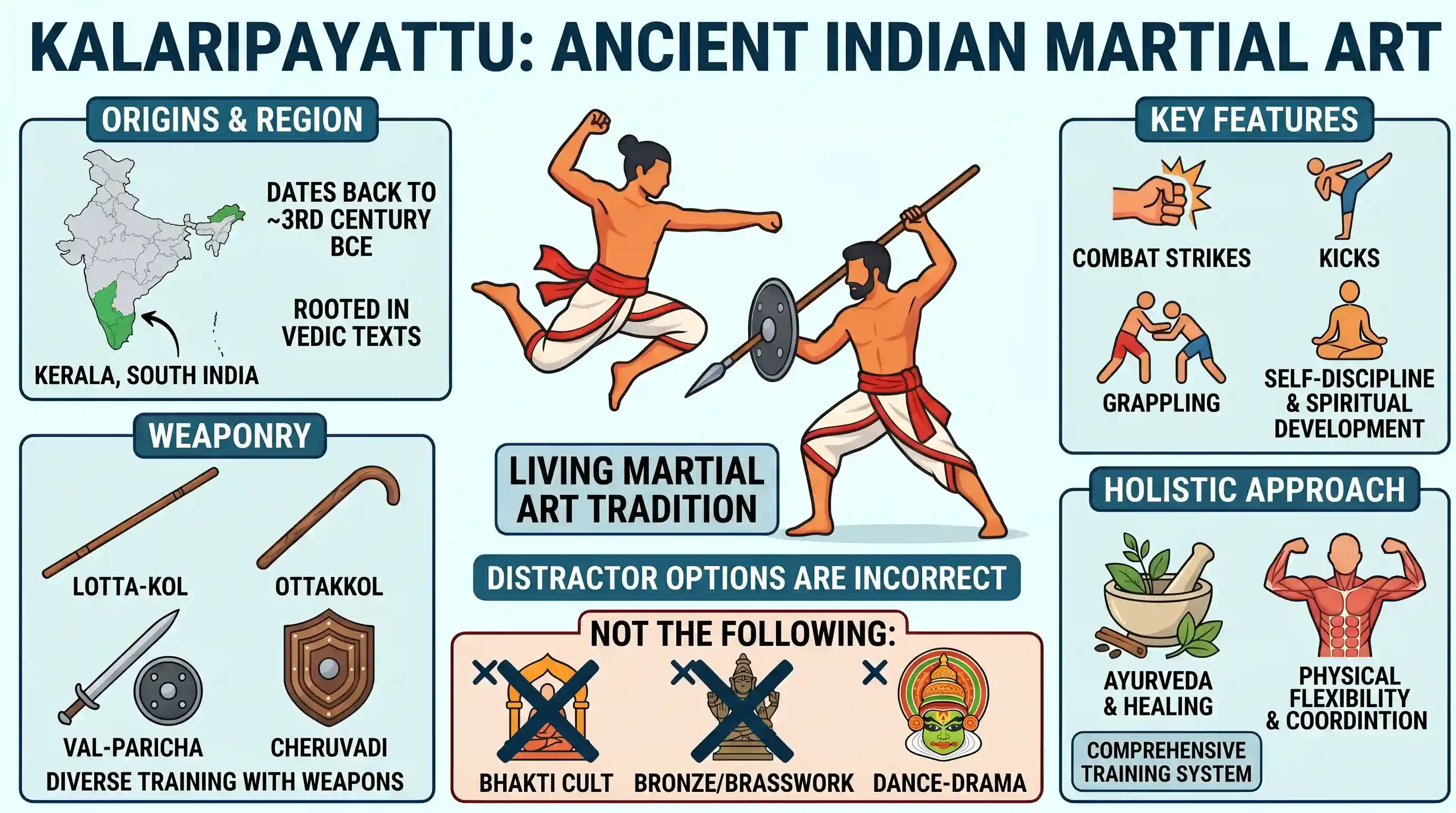
Kalaripayattu is an ancient martial art form originating from Kerala, a state in South India. It is considered one of the oldest surviving martial arts traditions in the world, with roots dating back possibly to the 3rd century BCE.
Key features of Kalaripayattu:
It involves a combination of strikes, kicks, grappling, preset forms, weaponry, and healing methods. It emphasizes agility, flexibility, and coordination, often involving acrobatic movements. It is not just a combat system but also encompasses elements of self-discipline, spiritual development, and traditional medicine (Ayurveda). It is still practiced and taught as a living tradition in various parts of Kerala and other South Indian regions.
The other options are incorrect:
It is not a Bhakti cult, bronze/brasswork style, or dance-drama. While it might influence some dance forms, it is fundamentally a martial art.
Related questions
More UPSC Prelims practice from the same subject and topic.
- Prelims 2014GS1art-and-culture
With reference to the famous Sattriya dance, consider the following statements: 1. Sattriya is a combination of music, dance and drama. 2. It is a centuries-old living tradition of Vaishnavites of Ass…
- Prelims 2014GS1art-and-culture
Consider the following pairs: 1. Garba : Gujarat 2. Mohiniattam : Odisha 3. Yakshagana : Karnataka Which of the pairs given above is/are correctly matched?
- Prelims 2014GS1art-and-culture
A community of people called Manganiyars is well-known for their
- Prelims 2014GS1art-and-culture
Consider the following languages: 1. Gujarati 2. Kannada 3. Telugu Which of the above has/have been declared as 'Classical Language/Languages' by the Government?
- Prelims 2014GS1art-and-culture
With reference to the cultural history of India, the term 'Panchayatan' refers to
- Prelims 2014GS1art-and-culture
Which one of the following pairs does not form part of the six systems of Indian Philosophy?