Which one of the following movements has contributed to a split in the Indian National Congress resulting in the emergence of 'moderates' and 'extremists?

- ASwadeshi MovementCorrect
- BQuit India Movement
- CNon-Cooperation Movement
- DCivil Disobedience Movement
Explanation
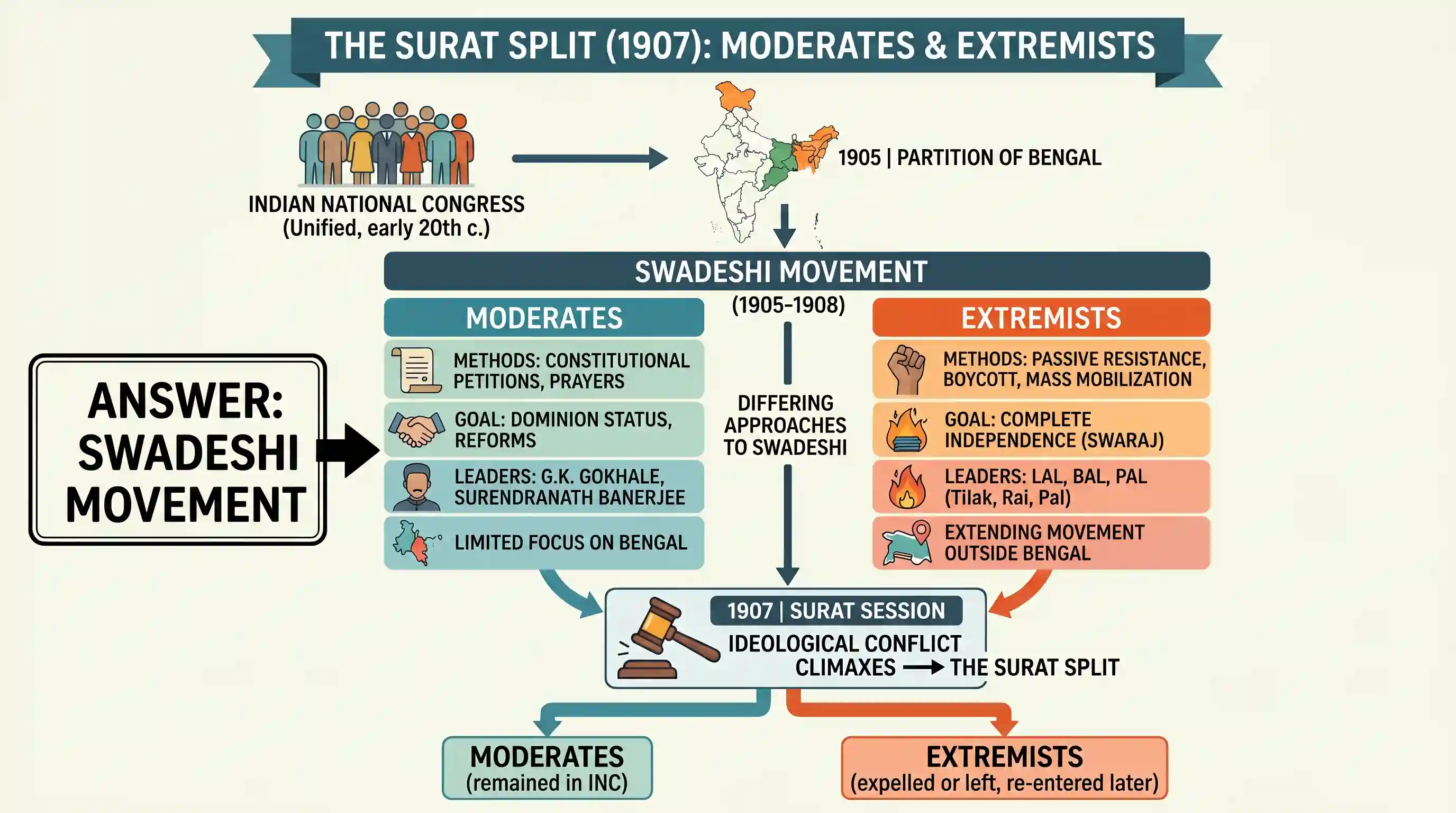
The split in the Indian National Congress into 'Moderates' and 'Extremists' culminated at the Surat Session in 1907. This ideological divergence had been brewing for some time, but it became particularly pronounced during and after the Swadeshi Movement (1905-1908).
The Swadeshi Movement, launched in response to the Partition of Bengal in 1905, saw differing approaches between the Moderates and Extremists. The Moderates preferred constitutional methods and petitions, limiting the movement to Bengal, while the Extremists advocated for more aggressive methods like boycott, passive resistance, and extending the movement beyond Bengal. The differing views on the goals, methods, and leadership of the Swadeshi Movement exacerbated the existing fissures between the two factions, leading to the open split at Surat in 1907. The other movements (Quit India Movement, Non-Cooperation Movement, Civil Disobedience Movement) occurred much later and involved different phases of the nationalist struggle, with the Congress largely united under Mahatma Gandhi's leadership, though internal differences always existed.
Related questions
More UPSC Prelims practice from the same subject and topic.
- Prelims 2015GS1history
With reference to Rowlatt Satyagraha, which of the following statements is/are correct? 1. The Rowlatt Act was based on the recommendations of the 'Sedition Committee'. 2. In Rowlatt Satyagraha, Gandh…
- Prelims 2015GS1history
With reference to Congress Socialist Party, consider the following statements: 1. It advocated the boycott of British goods and evasion of taxes. 2. It wanted to establish the dictatorship of proletar…
- Prelims 2015GS1history
The Government of India Act of 1919 clearly defined
- Prelims 2015GS1history
Who of the following organized a march on the Tanjore coast to break the Salt Law in April 1930?
- Prelims 2015GS1history
Consider the following statements: 1. The first woman President of the Indian National Congress was Sarojini Naidu. 2. The first Muslim President of the Indian National Congress was Badruddin Tyabji. …
- Prelims 2015GS1history
With reference to the Cabinet Mission, which of the following statements is/are correct? 1. It recommended a federal government. 2. It enlarged the powers of the Indian courts. 3. It provided for more…