The term "sixth mass extinction/sixth extinction" is often mentioned in the news in the context of the discussion of

- AWidespread monoculture practices in agriculture and large-scale commercial farming with indiscriminate use of chemicals in many parts of the world that may result in the loss of good native ecosystems.
- BFears of a possible collision of a meteorite with the Earth in the near future in the manner it happened 65 million years ago that caused the mass extinction of many species including those of dinosaurs.
- CLarge scale cultivation of genetically modified crops in many parts of the world and promoting their cultivation in other parts of the world which may cause the disappearance of good native crop plants and the loss of food biodiversity.
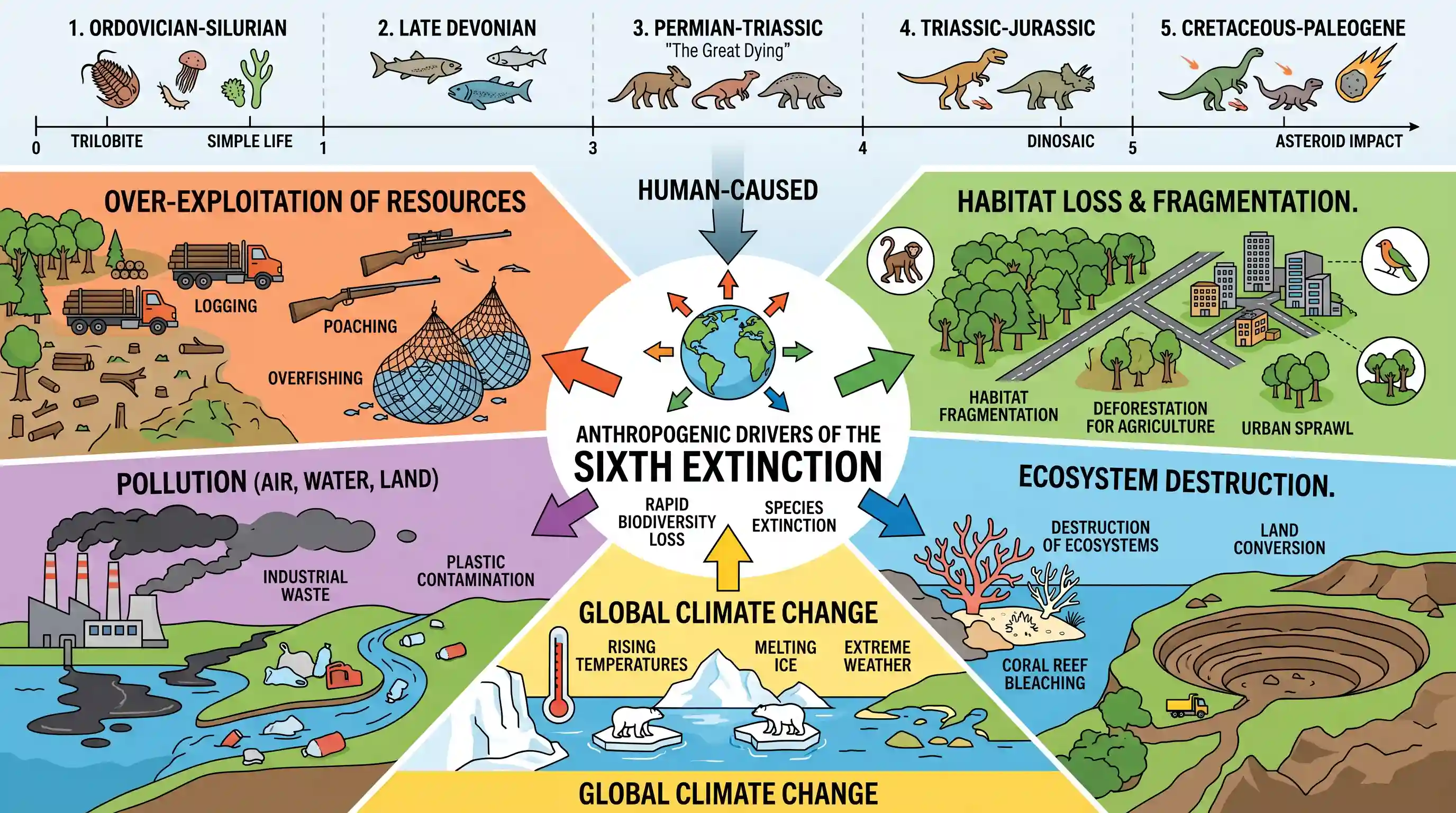
- DMankind's over-exploitation/misuse of natural resources, fragmentation/loss of natural habitats, destruction of ecosystems, pollution and global climate change.Correct
Explanation
The term "sixth mass extinction" or "sixth extinction" refers to the ongoing extinction event on Earth, characterized by a rapid and significant loss of biodiversity across various species. Unlike previous mass extinctions caused by natural geological or astronomical events, the current extinction event is primarily attributed to human activities.
Option D comprehensively lists the key anthropogenic drivers of this mass extinction: over-exploitation of natural resources (e.g., overfishing, deforestation), fragmentation and loss of natural habitats (due to urbanization, agriculture, infrastructure), direct destruction of ecosystems, various forms of pollution (air, water, soil), and global climate change (leading to habitat shifts, extreme weather, ocean acidification). These factors together are causing species to disappear at rates far exceeding natural background extinction rates.
Other options describe some aspects but not the complete picture (A: monoculture, C: GM crops) or past events (B: meteorite collision).
Related questions
More UPSC Prelims practice from the same subject and topic.
- Prelims 2018GS1geography
Which of the following leaf modifications occur(s) in the desert areas to inhibit water loss? 1. Hard and waxy leaves 2. Tiny leaves 3. Thorns instead of leaves Select the correct answer using the cod…
- Prelims 2018GS1geography
Which of the following has/have shrunk immensely/dried up in the recent past due to human activities? 1. Aral Sea 2. Black Sea 3. Lake Baikal Select the correct answer using the code given below:
- Prelims 2018GS1geography
With reference to the 'Global Alliance for Climate-Smart Agriculture (GACSA)', which of the following statements is/are correct? 1. GACSA is an outcome of the Climate Summit held in Paris in 2015. 2. …
- Prelims 2018GS1geography
With reference to the circumstances in Indian agriculture, the concept of "Conservation Agriculture" assumes significance. Which of the following fall under the Conservation Agriculture? 1. Avoiding t…
- Prelims 2018GS1geography
Which of the following statements best describes "carbon fertilization"?
- Prelims 2018GS1geography
Which of the following is/are the possible consequence/s of heavy sand mining in riverbeds? 1. Decreased salinity in the river 2. Pollution of groundwater 3. Lowering of the water-table Select the cor…