In the context of any country, which one of the following would be considered as part of its social capital?

- AThe proportion of literates in the population
- BThe stock of its buildings, other infrastructure and machines
- CThe size of population in the working age group
- DThe level of mutual trust and harmony in the societyCorrect
Explanation
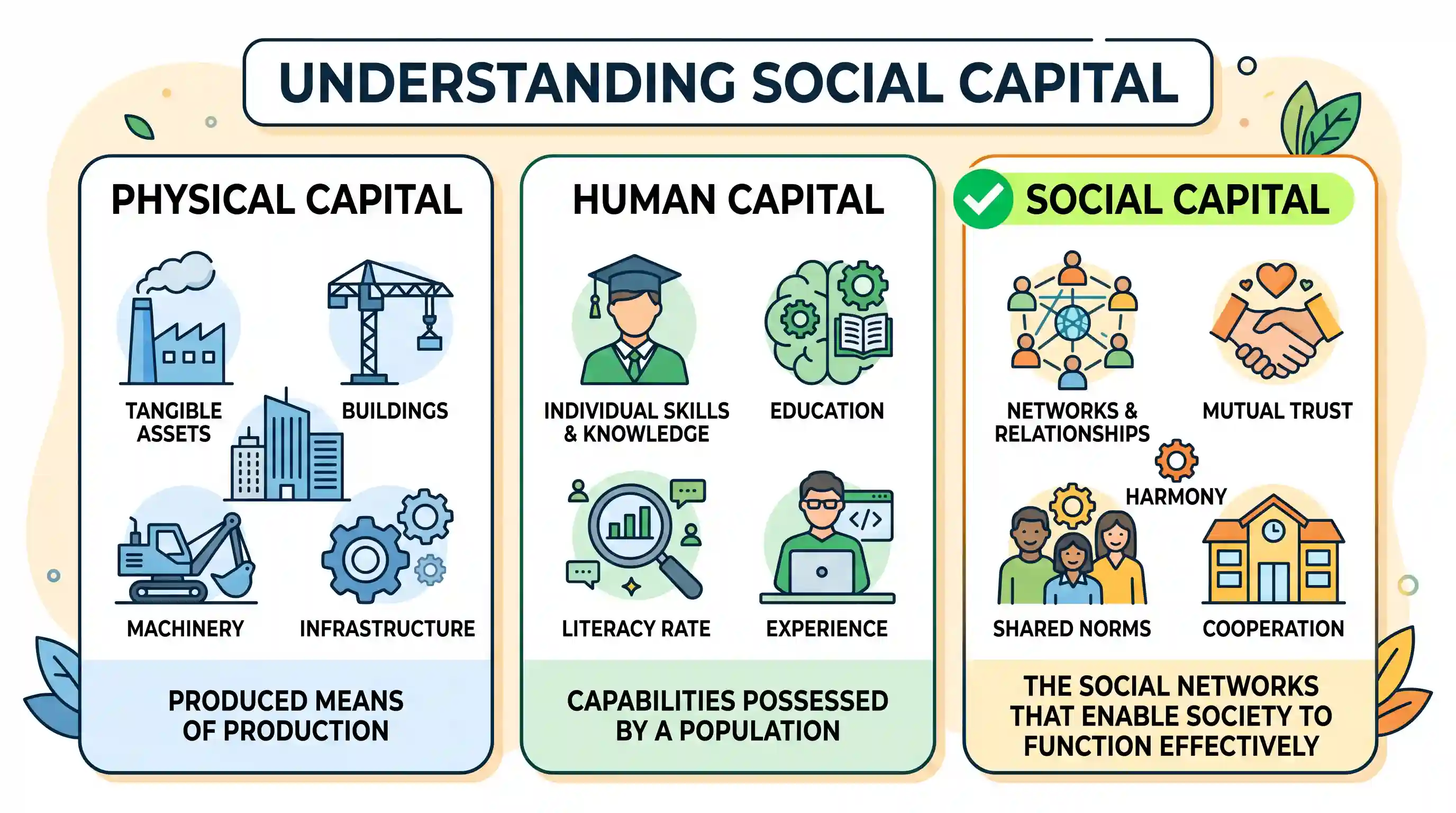
Social capital refers to the networks of relationships among people in a society that enable that society to function effectively. It includes features of social organization such as networks, norms, and social trust that facilitate coordination and cooperation for mutual benefit.
Let's examine the options:
A) The proportion of literates in the population: This is a measure of human capital, which refers to the skills, knowledge, and experience possessed by an individual or population. B) The stock of its buildings, other infrastructure and machines: This refers to physical capital, which includes tangible assets used in production. C) The size of population in the working age group: This relates to demographic structure and potential labor force, which is part of human capital or demographic dividend. D) The level of mutual trust and harmony in the society: This directly embodies the core elements of social capital – the intangible assets derived from social connections, shared norms, and trust that enable collective action and societal cohesion. Therefore, the level of mutual trust and harmony in the society is the most appropriate definition of social capital among the given options.
Related questions
More UPSC Prelims practice from the same subject and topic.
- Prelims 2019GS1economy
The Global Competitiveness Report is published by the
- Prelims 2019GS1economy
In a given year in India, official poverty lines are higher in some States than in others because
- Prelims 2019GS1economy
Consider the following statements: 1. Purchasing Power Parity (PPP) exchange rates are calculated by comparing the prices of the same basket of goods and services in different countries. 2. In terms o…
- Prelims 2019GS1economy
With reference to land reforms in independent India, which one of the following statements is correct?
- Prelims 2019GS1economy
Among the following, which one is the largest exporter of rice in the world in the last five years?
- Prelims 2019GS1economy
Consider the following statements: 1. Coal sector was nationalized by the Government of India under Indira Gandhi. 2. Now, coal blocks are allocated on lottery basis. 3. Till recently, India imported …