Which one of the following is not the most likely measure the Government/RBI takes to stop the slide of Indian rupee?

- ACurbing imports of non-essential goods and promoting exports
- BEncouraging Indian borrowers to issue rupee denominated Masala Bonds
- CEasing conditions relating to external commercial borrowing
- DFollowing an expansionary monetary policyCorrect
Explanation
To stop the slide of the Indian rupee (i.e., to strengthen or appreciate the rupee), the Government/RBI would typically take measures that increase the demand for the rupee or decrease its supply in the foreign exchange market. Let's analyze the options:
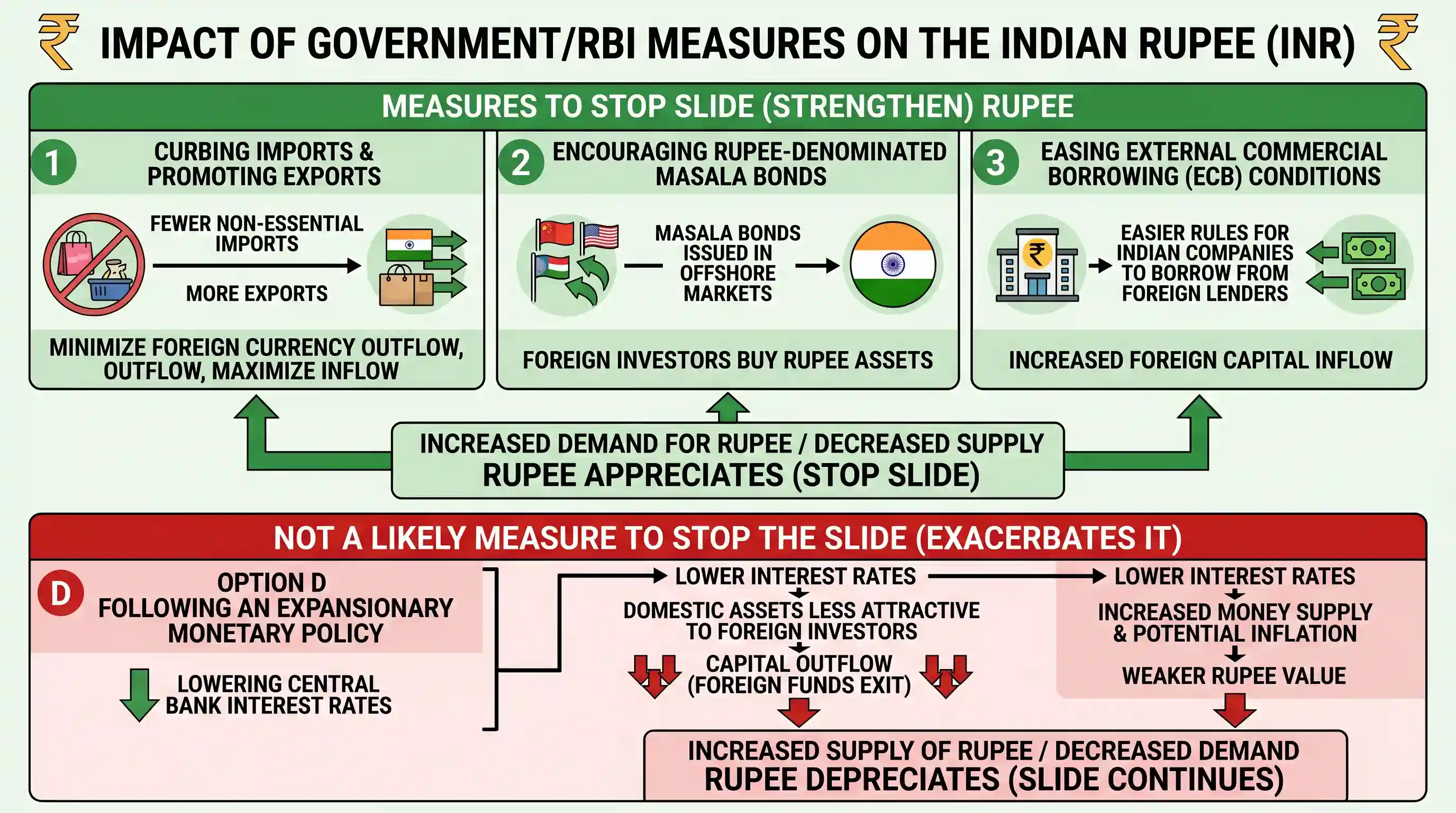
A) Curbing imports of non-essential goods and promoting exports: This would reduce the outflow of foreign currency (by reducing import bills) and increase the inflow of foreign currency (through exports), thereby increasing the demand for the rupee and strengthening it. This is a likely measure. B) Encouraging Indian borrowers to issue rupee denominated Masala Bonds: Masala Bonds are rupee-denominated bonds issued by Indian entities in offshore capital markets. Encouraging these would lead to foreign investors buying rupee-denominated assets, thereby increasing the demand for the rupee. This is a likely measure. C) Easing conditions relating to external commercial borrowing (ECB): Easier ECB norms would encourage Indian companies to borrow more from foreign sources. This leads to an inflow of foreign currency into India, which increases the supply of foreign currency relative to demand, thus strengthening the rupee. This is a likely measure. D) Following an expansionary monetary policy: An expansionary monetary policy (e.g., cutting interest rates, increasing money supply) aims to stimulate economic growth. However, it typically leads to lower interest rates, making domestic assets less attractive to foreign investors, and can also lead to higher inflation. Both these factors tend to weaken the domestic currency (depreciate the rupee). Therefore, this is NOT a likely measure to stop the slide of the Indian rupee; in fact, it would likely exacerbate it.
Related questions
More UPSC Prelims practice from the same subject and topic.
- Prelims 2019GS1economy
Which of the following is not included in the assets of a commercial bank in India?
- Prelims 2019GS1economy
Which of the following is issued by registered foreign portfolio investors to overseas investors who want to be part of the Indian stock market without registering themselves directly?
- Prelims 2019GS1economy
What was the purpose of Inter-Creditor Agreement signed by Indian banks and financial institutions recently?
- Prelims 2019GS1economy
Consider the following statements: The Reserve Bank of India's recent directives relating to 'Storage of Payment System Data', popularly known as data diktat, command the payment system providers that…
- Prelims 2019GS1economy
The money multiplier in an economy increases with which one of the following?
- Prelims 2019GS1economy
With reference to land reforms in independent India, which one of the following statements is correct?