The Ilbert Bill controversy was related to the

- Aimposition of certain restrictions to carry arms by the Indians
- Bimposition of restrictions on newspapers and magazines published in Indian languages
- Cremoval of disqualifications imposed on the Indian magistrates with regard to the trial of the EuropeansCorrect
- Dremoval of a duty on imported cotton cloth
Explanation
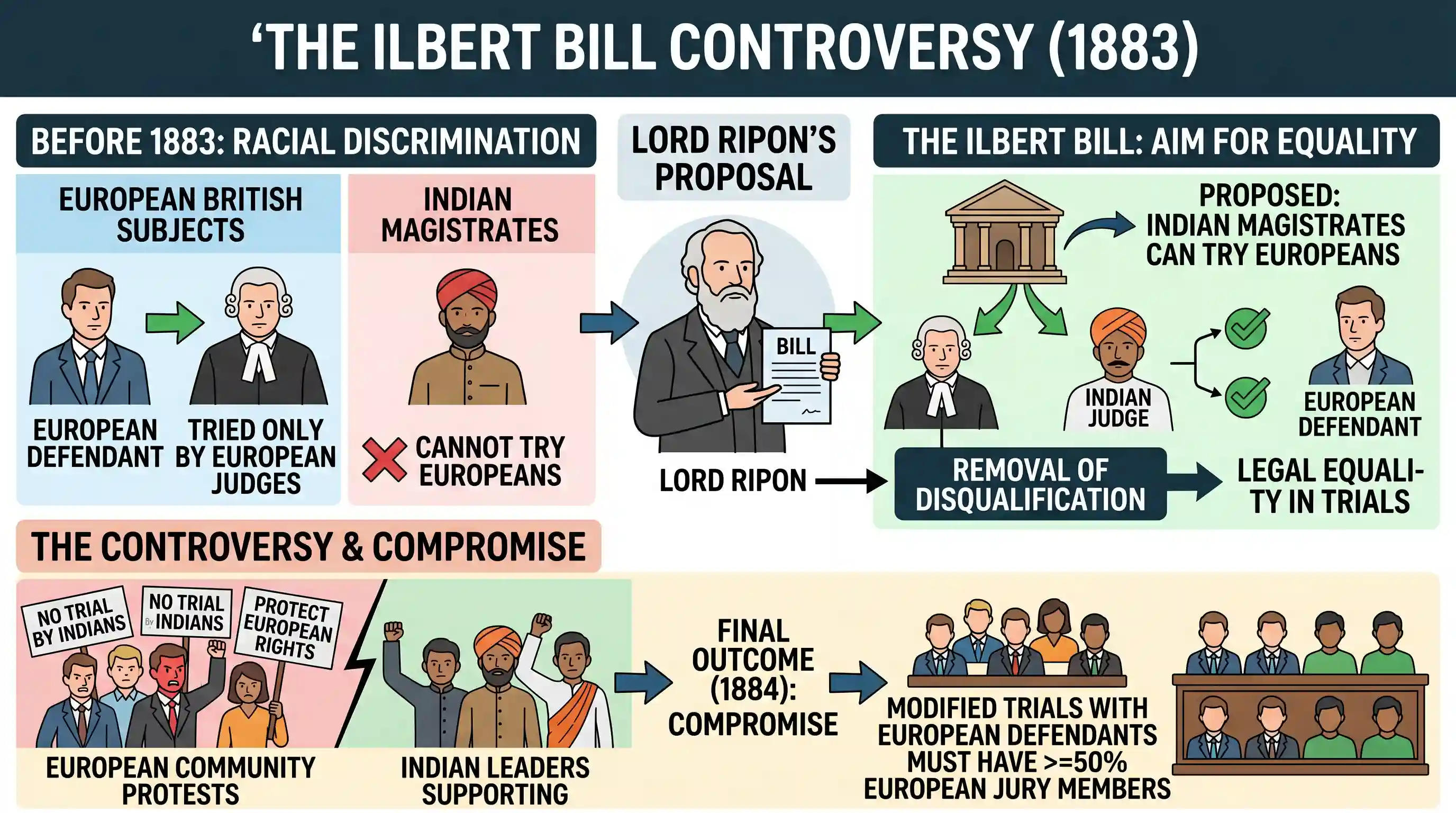
The Ilbert Bill, introduced in 1883 by Lord Ripon, aimed to abolish racial discrimination in the Indian legal system. Specifically, it sought to remove the disqualification that prevented Indian magistrates from trying European British subjects. Prior to this, European British subjects could only be tried by European judges.
Why C is correct: The core of the controversy revolved around granting Indian judges the same legal authority as their British counterparts in cases involving Europeans.
Why A is incorrect: Restrictions on carrying arms were a separate issue, not directly related to the Ilbert Bill.
Why B is incorrect: While there were press restrictions during British rule (like under the Vernacular Press Act), the Ilbert Bill wasn't about newspapers or magazines.
Why D is incorrect: The removal of duties on imported cotton cloth relates to economic policies and the Swadeshi movement, not the Ilbert Bill.
The Bill sparked fierce opposition from the European community in India, who feared being subjected to the perceived lower standards of Indian justice. This led to widespread protests and ultimately, a compromise where the Bill was modified to retain some level of racial distinction in trials.
Related questions
More UPSC Prelims practice from the same subject and topic.
- Prelims 2013GS1history
With reference to Indian History, the Members of the Constituent Assembly from the Provinces were
- Prelims 2013GS1history
The demand for the Tebhaga Peasant Movement in Bengal was for (a) the reduction of the share of the landlords from one-half of the crop to one-third (b) the grant of ownership of land to peasants as t…
- Prelims 2013GS1history
What was the demand of the Bengal Trikati Kisan Andolan?
- Prelims 2013GS1history
The people of India agitated against the arrival of Simon Commission because
- Prelims 2013GS1history
Quit India Movement was launched in response to
- Prelims 2013GS1history
Annie Besant was 1. responsible for starting the Home Rule Movement 2. the founder of the Theosophical Society 3. once the President of the Indian National Congress Select the correct statement/statem…