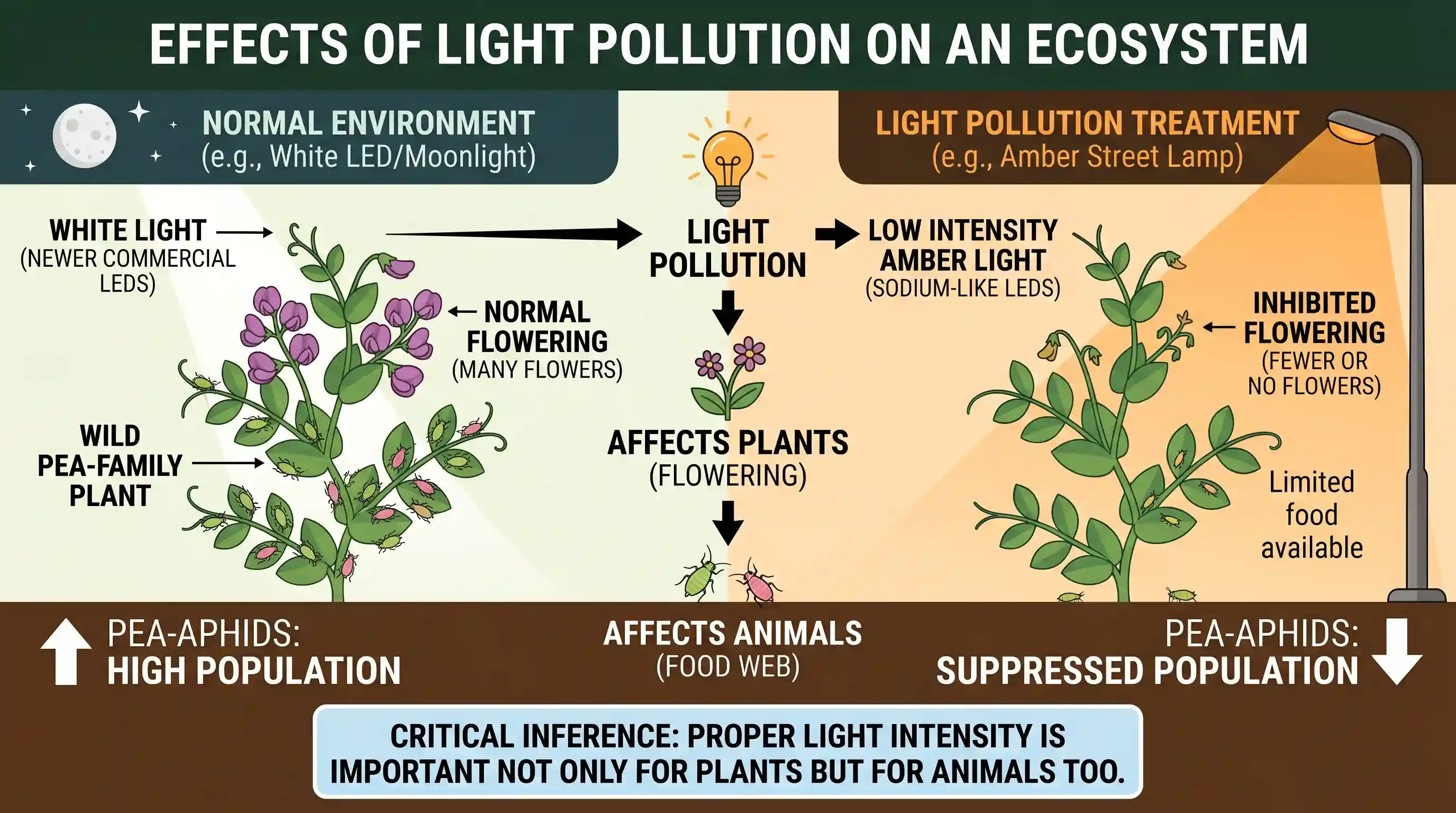
Researchers simulated street lighting on artificial grassland plots containing pea- aphids, sap- sucking insects, at night. These were exposed to two different types of light - a white light similar to newer commercial LED lights and an amber light similar to sodium street lamps. The low intensity amber light was shown to inhibit, rather than induce, flowering in a wild plant of the pea family which is a source of food for the pea- aphids in grasslands. The number of aphids was also significantly suppressed under the light treatment due to the limited amount of food available. Which one of the following statements best reflects the most critical inference that can be made from the passage given above?

- ALow intensity light has more adverse effect on the plants as compared to high intensity light
- BLight pollution can have a permanent adverse impact on an ecosystem
- CWhite light is better for the flowering of plants 'as compared to the light of other colours
- DProper intensity of light in an ecosystem is important not only for plants but for animals too.Correct
Explanation
The passage describes how a specific type of light (low intensity amber light) inhibited flowering in a plant, which then led to a suppression of aphids that feed on that plant. This demonstrates a chain reaction: light affects plants, and the effect on plants subsequently impacts animals (aphids) that depend on those plants for food. Therefore, the proper intensity and type of light in an ecosystem are crucial for both plants and animals.
Analyzing the options: A) Low intensity light has more adverse effect on the plants as compared to high intensity light - The passage mentions "low intensity amber light" but doesn't compare its adverse effects to high intensity light. It's about the type of light (amber) and its effect, not a general comparison of intensity levels. B) Light pollution can have a permanent adverse impact on an ecosystem - While light pollution can have adverse impacts, the passage describes a specific, immediate effect (inhibition of flowering, suppression of aphids). It doesn't provide information to conclude the impact is "permanent" as the most critical inference from this specific experiment. C) White light is better for the flowering of plants 'as compared to the light of other colours - The passage only states that amber light inhibited flowering. It does not provide sufficient information to conclude that white light is "better" for flowering; it only served as a comparison point. D) Proper intensity of light in an ecosystem is important not only for plants but for animals too - This statement perfectly reflects the core finding. The light (amber light) directly affected the plant's flowering, and this plant's reduced food availability then directly affected the animal (aphids). This shows the interconnected importance of light for both.
Related questions
More UPSC Prelims practice from the same subject and topic.
- Prelims 2021CSATReading Comprehension
India faces a challenging immediate future in energy and climate policy- making. The problems are multiple: sputtering fossil fuel production capabilities; limited access to electricity and modern coo…
- Prelims 2021CSATReading Comprehension
There are reports that some of the antibiotics sold in the market are fed to poultry and other livestock as growth promoters. Overusing these substances can create superbugs, pathogens that are resist…
- Prelims 2021CSATReading Comprehension
Policymakers and media have placed the blame for skyrocketing food prices on a variety of factors, including high fuel prices, bad weather in key food producing countries, and the diversion of land to…
- Prelims 2021CSATReading Comprehension
A central message of modern development economics is the importance of income growth, by which is meant growth in Gross Domestic Product (GDP). In theory, rising GDP creates employment and investment …
- Prelims 2021CSATReading Comprehension
Approximately 80 percent of all flowering plant species are pollinated by animals, including birds and mammals, but the main pollinators are insects. Pollination is responsible for providing us with a…
- Prelims 2021CSATReading Comprehension
A study conducted on the impacts of climate change over the Cauvery basin of Tamil Nadu using regional climate models showed an increasing trend for maximum and minimum temperatures, and a decrease in…