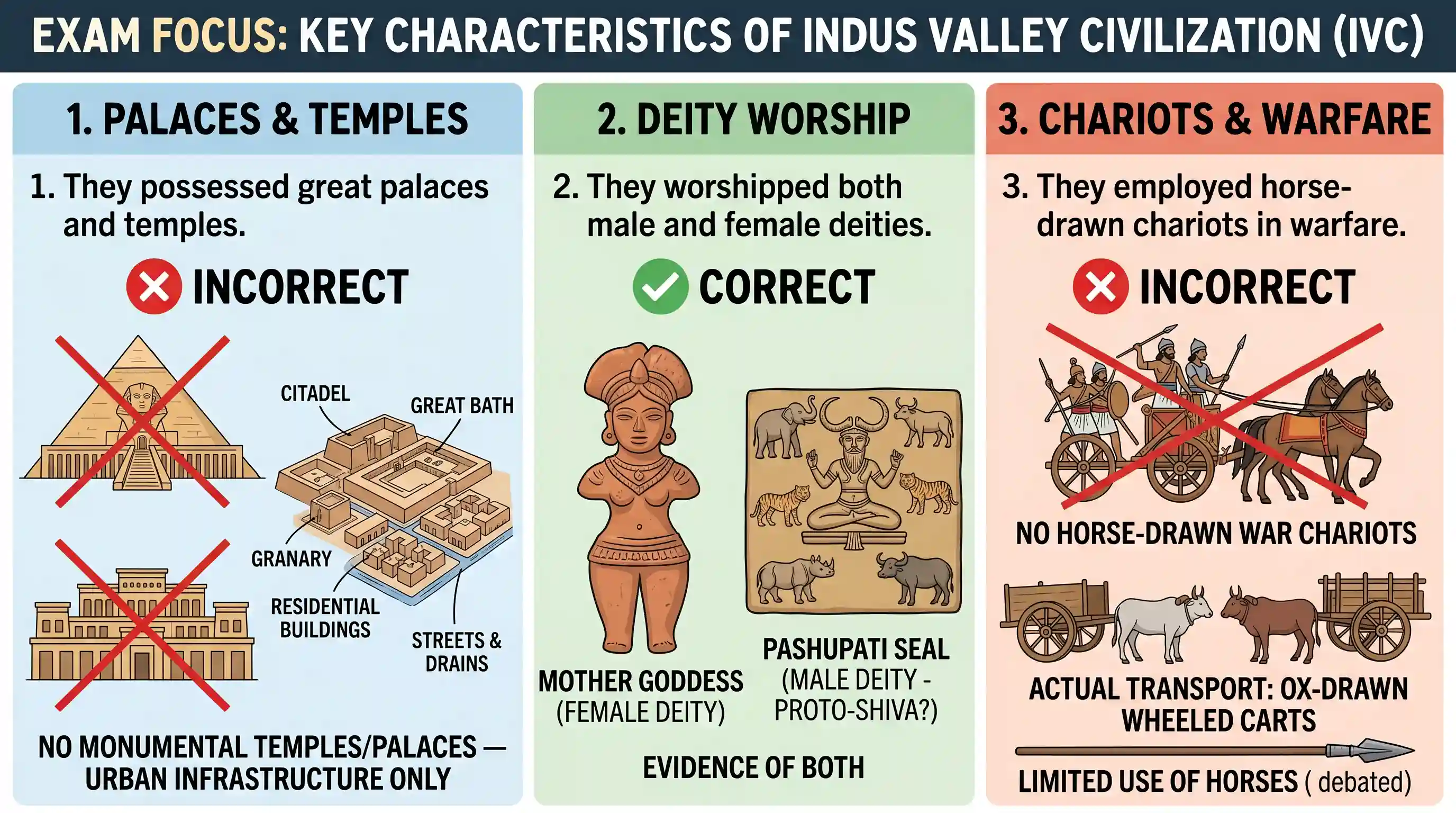
Which of the following characterizes/characterize the people of Indus Civilization? 1. They possessed great palaces and temples. 2. They worshipped both male and female deities. 3. They employed horse-drawn chariots in warfare. Select the correct statement/statements using the codes given below.

- A1 and 2 only
- B2 onlyCorrect
- C1, 2 and 3
- DNone of the statements given above is correct
Explanation
Explanation:
-
They possessed great palaces and temples. This statement is incorrect. Archaeological evidence from Indus Valley Civilization sites does not suggest the existence of great palaces or monumental temples. The structures found were primarily residential, public baths (like the Great Bath), granaries, and assembly halls, but not dedicated palaces for rulers or large-scale temples for deities.
-
They worshipped both male and female deities. This statement is correct. Numerous terracotta figurines of women, often interpreted as Mother Goddesses, indicate the worship of a female deity associated with fertility. Additionally, a seal depicting a seated horned figure, often identified as 'Pashupati Mahadeva' (proto-Shiva), surrounded by animals, suggests the worship of a male deity.
-
They employed horse-drawn chariots in warfare. This statement is incorrect. While the wheel was known, there is no conclusive archaeological evidence to suggest the widespread use of horses or horse-drawn chariots for warfare in the Indus Valley Civilization. The presence of horses itself is debated and limited to certain later Harappan sites, and their use in chariots for warfare is not characteristic of the civilization.
Based on the analysis, only statement 2 is correct.
The final answer is B.
Related questions
More UPSC Prelims practice from the same subject and topic.
- Prelims 2013GS1history
The Chinese traveller Yuan Chwang (Hiuen Tsang) who visited India recorded the general conditions and culture of India at that time. In this context, which of the following statements is/are correct? …
- Prelims 2013GS1history
With reference to Indian History, the Members of the Constituent Assembly from the Provinces were
- Prelims 2013GS1history
The demand for the Tebhaga Peasant Movement in Bengal was for (a) the reduction of the share of the landlords from one-half of the crop to one-third (b) the grant of ownership of land to peasants as t…
- Prelims 2013GS1history
What was the demand of the Bengal Trikati Kisan Andolan?
- Prelims 2013GS1history
The people of India agitated against the arrival of Simon Commission because
- Prelims 2013GS1history
Quit India Movement was launched in response to