In the context of cultural history of India, a pose in dance and dramatics called 'Tribhanga' has been a favourite of Indian artists from ancient times till today. Which one of the following statements best describes this pose?

- AOne leg is bent and the body is slightly but oppositely curved at waist and neckCorrect
- BFacial expressions, hand gestures and make-up are combined to symbolize certain epic or historic characters
- CMovements of body, face and hands are used to express oneself or to tell a story
- DA little smile, slightly curved waist and certain hand gestures are emphasized to express the feelings of love or eroticism
Explanation
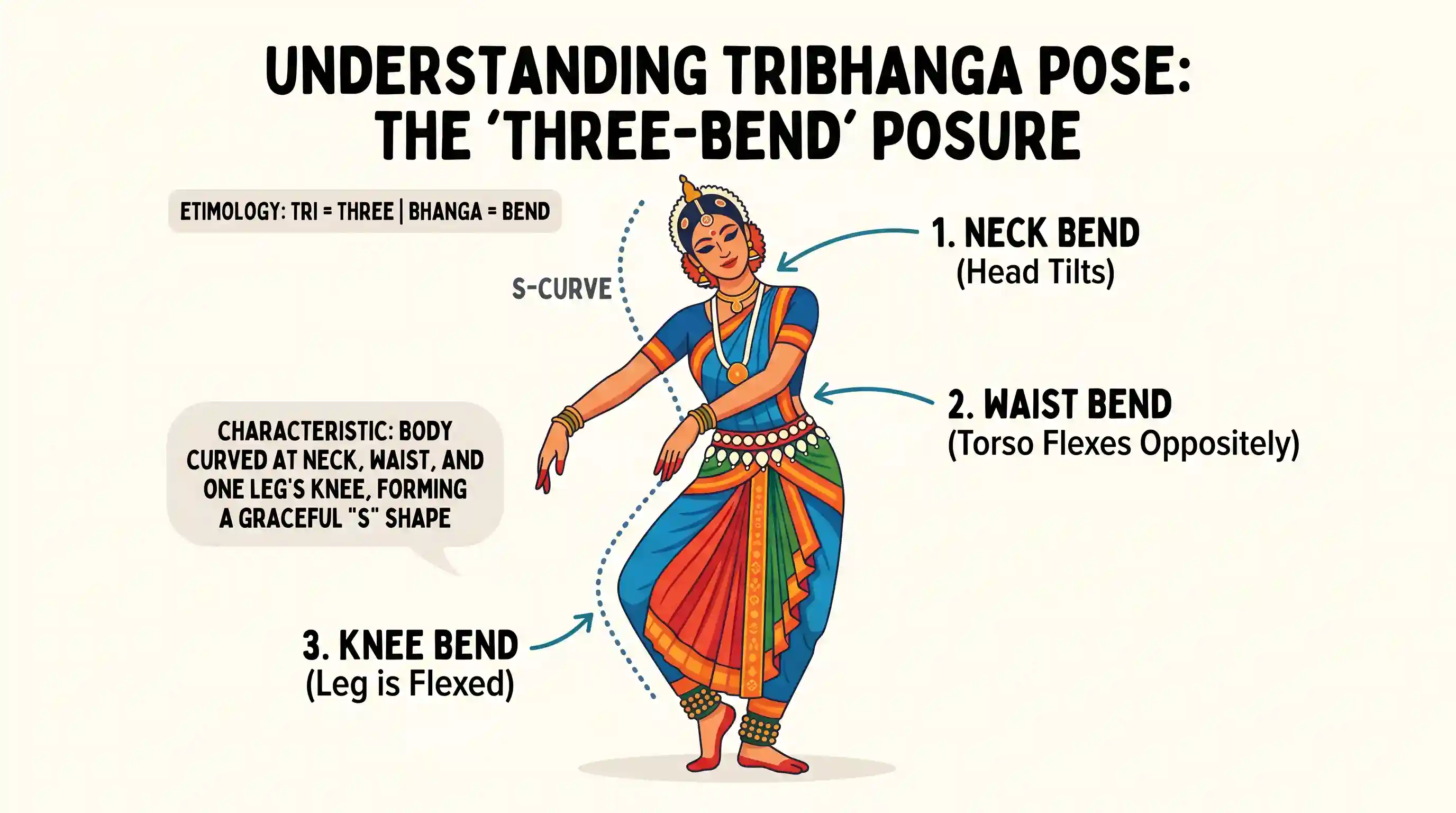
The correct answer is A) One leg is bent and the body is slightly but oppositely curved at waist and neck. Tribhanga, literally meaning 'three bends', is a classic pose in Indian art, particularly sculpture and dance. It's characterized by the body being flexed at the neck, waist, and knee, creating a graceful, S-shaped curve. This pose is frequently seen in depictions of deities and dancers.
Why other options are incorrect:
B) This describes Rasas and Abhinaya – the expressive elements of Indian performing arts, but doesn't define the Tribhanga pose itself.
C) This is a general description of dance and dramatics, not specific to Tribhanga.
D) While Tribhanga can convey feelings like love or eroticism, it's not defined by them. The pose itself is the key characteristic, independent of the emotion expressed.
Understanding the etymology (Tri = three, Bhanga = bend) helps in remembering the core feature of this pose.
Related questions
More UPSC Prelims practice from the same subject and topic.
- Prelims 2013GS1art-and-culture
With reference to the history of Indian rock-cut architecture, consider the following statements: 1. The caves at Badami are the oldest surviving rock-cut caves in India. 2. The Barabar rock-cut caves…
- Prelims 2013GS1art-and-culture
Some Buddhist rock-cut caves are called Chaityas, while the others are called Viharas. What is the difference between the two?
- Prelims 2013GS1art-and-culture
Which one of the following describes best the concept of Nirvana in Buddhism?
- Prelims 2013GS1art-and-culture
Which of the following statements is/are applicable to Jain doctrine? 1. The surest way of annihilating Karma is to practice penance. 2. Every object, even the smallest particle has a soul. 3. Karma i…
- Prelims 2013GS1art-and-culture
Consider the following historical places: 1. Ajanta Caves 2. Lepakshi Temple 3. Sanchi Stupa Which of the above places is/are also known for mural paintings?
- Prelims 2013GS1art-and-culture
With reference to the history of philosophical thought in India, consider the following statements regarding Sankhya school : 1. Sankhya does not accept the theory of rebirth or transmigration of soul…