Which of the following statements about Real-World Assets (RWA) Tokenization are correct? 1. Tokenization is the process of turning real world assets into digital tokens using blockchain technology. 2. Tokenization of real world assets offers 24 x 7 access, promoting financial inclusion. 3. Tokenization of real world assets will allow the access to high growth investment opportunities for individuals in India. Select the answer using the code given below :

- A1, 2 and 3Correct
- B2 and 3 only
- C1 and 2 only
- D1 and 3 only
Explanation
The correct answer is A) 1, 2 and 3.
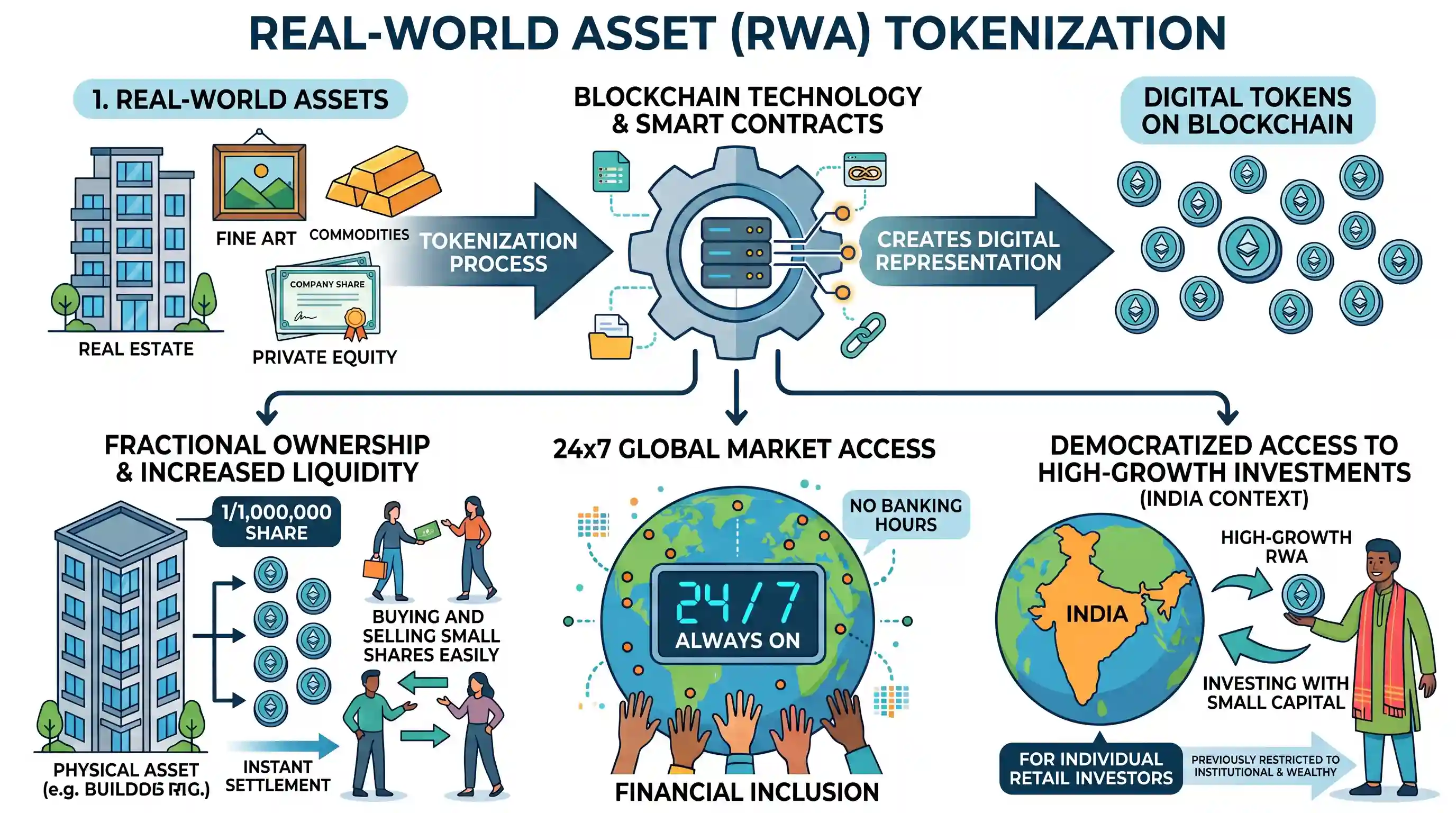
Statement 1 is correct: Real-World Asset (RWA) Tokenization is the process of creating a digital representation of a physical or traditional financial asset (like real estate, bonds, or commodities) on a blockchain or distributed ledger.
Statement 2 is correct: Tokenization promotes financial inclusion by allowing "fractionalization"—breaking large, illiquid assets into smaller, affordable digital shares. Because these tokens operate on blockchain technology, they utilize smart contracts to bypass traditional banking hours, enabling seamless 24x7 global market access, enhanced liquidity, and instant settlement.
Statement 3 is correct: In India, RWA tokenization is democratizing access to high-growth investment opportunities that were previously restricted to institutional or ultra-wealthy investors. Recent regulatory developments, such as the International Financial Services Centres Authority (IFSCA) consultation on RWA tokenization and active pilot projects in GIFT City, are paving the way for retail individuals to invest in premium domestic real estate and private credit with minimal capital.
Why other options are incorrect:
- Option B is incorrect because it omits Statement 1, which provides the fundamental, globally accepted definition of asset tokenization.
- Option C is incorrect because it excludes Statement 3; tokenization is a highly relevant technological shift for Indian retail investors seeking high-yield domestic opportunities.
- Option D is incorrect because it ignores Statement 2, failing to recognize the borderless, round-the-clock trading benefits that drive the financial inclusion aspect of decentralized finance.
Takeaway: Remember the 3 Fs of RWA Tokenization: Fractional ownership, Frictionless 24x7 trading, and Financial inclusion.
Related questions
More UPSC Prelims practice from the same subject and topic.
- Prelims 2026GS1economy
Consider the following statements with reference to the Sagarmala Programme of the Government of India : I. The Sagarmala Programme seeks to achieve port-led economic growth through cost-effective and…
- Prelims 2026GS1economy
In what way(s) does the Vizhinjam International Seaport represent a structural shift in India's maritime trade and logistics policy? 1. By functioning exclusively as a domestic cargo hub to reduce rel…
- Prelims 2026GS1economy
An e-commerce revenue model where the seller has control over pricing but doesn't keep products in stock and instead transfers customer orders and shipment details to a third-party supplier, who then …
- Prelims 2026GS1economy
Which one of the following correctly represents the three key sub-indices of the Financial Inclusion Index (FI-Index) of the Reserve Bank of India (RBI) ?
- Prelims 2026GS1economy
Which one of the following best describes the key objective of India's 'Open Network for Digital Commerce' (ONDC) initiative ?
- Prelims 2026GS1economy
Which one of the following statements about Unified Payments Interface (UPI) and Central Bank Digital Currency (Digital Rupee) is not correct ?